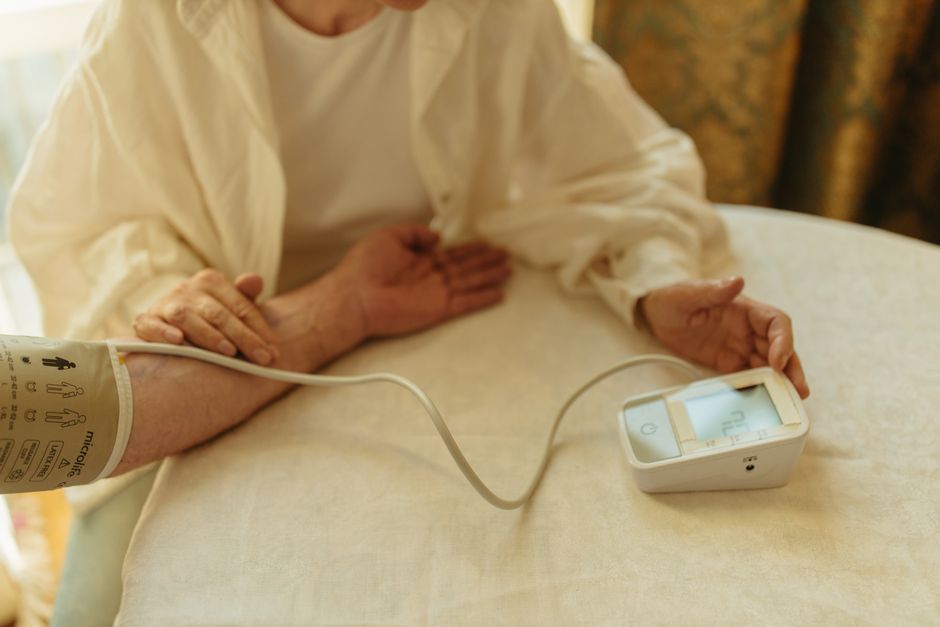
High blood pressure tingling in hands and feet is one of the most misunderstood symptom combinations a person can experience — and one of the most important not to ignore.
Is it a pinched nerve? Poor circulation? A medication side effect? A warning sign of something serious? The answer is often all of the above — and sorting it out matters.
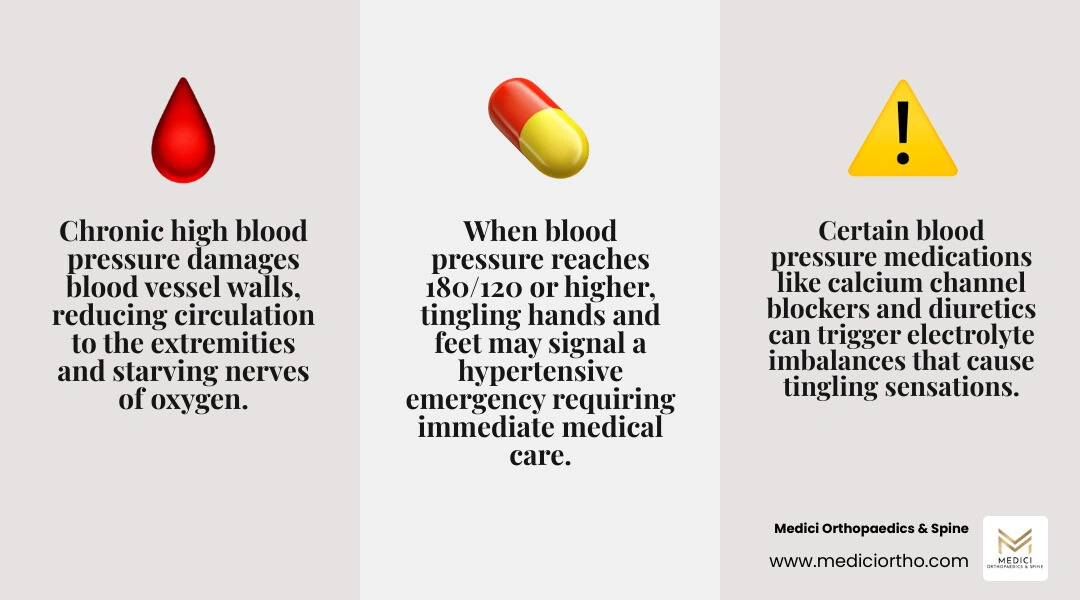
Here is a quick breakdown of the most common reasons this happens:
Nearly 1 in 2 American adults has hypertension, and up to 50% of those with long-standing, uncontrolled high blood pressure may develop some form of peripheral neuropathy. Yet many people dismiss tingling hands and feet as nothing more than sitting in the wrong position too long.
The tricky part? Both cardiovascular and orthopedic problems can feel exactly the same from the inside. That diagnostic confusion is exactly what this guide is here to untangle.
When you feel a buzzing, prickling, or "pins and needles" sensation in your fingers or toes, your body is telling you that a nerve is unhappy. However, nerves don't exist in a vacuum. They rely on a constant, highly pressurized plumbing system to deliver the oxygen and nutrients they need to function.
If either the plumbing (cardiovascular) or the structural framing (spine and joints) fails, the nerves are the first to complain. This is the core reason behind the diagnostic puzzle of high blood pressure tingling hands and feet.

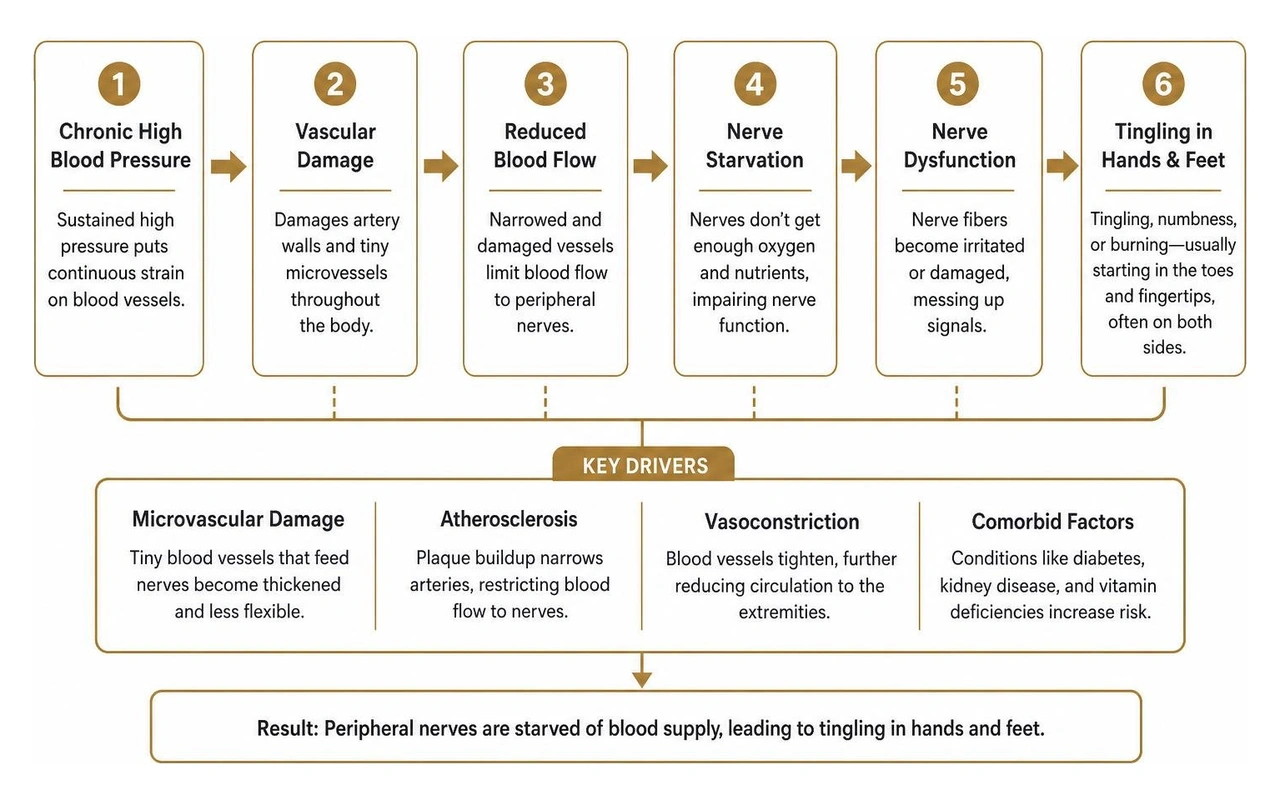
To understand how these systems interact, we must look at how chronic high blood pressure directly impacts nerve tissue. When blood pressure remains consistently high, it causes endothelial dysfunction — a condition where the inner lining of your blood vessels becomes stiff, scarred, and less responsive. This leads to microvascular damage, which specifically targets the tiny, microscopic blood vessels (the vasa nervorum) that feed your peripheral nerves.
When these tiny vessels narrow or clog, your nerves are starved of oxygen and nutrients. This slow starvation leads to peripheral neuropathy, mimicking the exact sensations of a compressed nerve in your spine. For a deep dive into these overlapping mechanisms, you can explore our guide on What Causes Tingling and Numbness in Hands and Feet.
To help you visualize where your symptoms might be originating, we have put together this comparison:
| Feature | Orthopedic Nerve Compression | Vascular / Systemic (Hypertension) |
|---|---|---|
| Primary Cause | Physical pressure on a nerve root or peripheral nerve pathway. | Reduced blood flow, microvascular damage, or medication side effects. |
| Symptom Pattern | Follows a specific dermatome (nerve path) and is often unilateral (one-sided). | "Glove-and-stocking" distribution, affecting both hands or both feet symmetrically. |
| Triggers | Specific physical movements, changes in posture, or prolonged sitting/standing. | Changes in temperature, physical exertion, blood pressure spikes, or medication timing. |
| Accompanying Signs | Muscle weakness in a specific path, localized neck or back pain, diminished reflexes. | Cold hands and feet, pale or bluish skin tone, slow-healing cuts, leg cramping during walking. |
If you visit one of our Metro Atlanta clinics, our first goal is to determine whether your symptoms are structural or systemic.
Orthopedic nerve compression typically occurs when physical structures in the body compress or pinch a nerve. The most common culprits include:
In contrast, systemic tingling caused by high blood pressure is rarely confined to a single nerve path. Because vascular damage affects blood vessels throughout the entire body, the resulting tingling is usually bilateral (affecting both sides symmetrically) and often starts at the tips of the toes or fingers, gradually moving upward.
For more context on recognizing these subtle systemic clues, read about the Warning Signs: High Blood Pressure and Tingling Hands You Shouldn't Ignore.
When high blood pressure goes uncontrolled, it damages the larger arterial highways as well as the tiny microvessels. This damage accelerates atherosclerosis — the buildup of fatty plaques in your arteries. Over time, this restriction in blood flow can develop into peripheral artery disease (PAD), which affects about 6.5 million Americans aged 40 and older.
PAD drastically reduces blood flow to your lower extremities. This can cause your feet to feel cold to the touch, turn pale or bluish, lose hair, and experience persistent numbness or tingling. In fact, podiatric specialists frequently note that the feet are the first place high blood pressure shows physical symptoms. To learn more about this connection, see High Blood Pressure and Your Feet - Northside Podiatry.
Furthermore, hypertension rarely travels alone. It frequently overlaps with other chronic conditions that independently damage nerves:
While most cases of tingling hands and feet develop gradually over months or years, there are critical times when these sensations are warning signs of an acute cardiovascular crisis.
A hypertensive emergency occurs when blood pressure rises suddenly and severely — typically to 180/120 mmHg or higher — and causes acute damage to vital organs (the brain, heart, kidneys, or eyes). These emergencies account for 1% to 2% of all emergency department visits and require immediate, life-saving intervention.
If your blood pressure spikes to this level and you experience sudden numbness, tingling, or weakness, it may signal that your brain is being deprived of blood flow due to a stroke or temporary blockage. To understand how these acute symptoms present, read about Dizziness and Tingling in Hands and Feet: Causes, Getting Help.
If you or a loved one experiences any of the following "red flag" symptoms alongside elevated blood pressure, call 911 immediately:
How do you tell the difference between a life-threatening cardiovascular event and an urgent orthopedic issue?
While a hypertensive crisis or stroke can cause sudden, one-sided numbness and weakness, certain severe spinal conditions also require immediate emergency medical attention to prevent permanent paralysis.
The most prominent orthopedic emergency is cauda equina syndrome. This occurs when the bundle of nerve roots at the very bottom of the spinal cord (the cauda equina) becomes severely compressed, often by a massive lumbar disc herniation.
While it won't cause a stroke's slurred speech or facial drooping, cauda equina syndrome will cause:
If your tingling is accompanied by saddle numbness or bladder changes, head to the nearest emergency room for urgent spinal decompression surgery. If your tingling is accompanied by one-sided weakness, facial drooping, or chest pain, it is a cardiovascular emergency.
Once emergency situations have been ruled out, we can focus on long-term relief. At Medici Orthopaedics & Spine, we believe in a patient-centered approach. We always explore conservative, non-surgical options first to manage both your pain and your nerve symptoms.
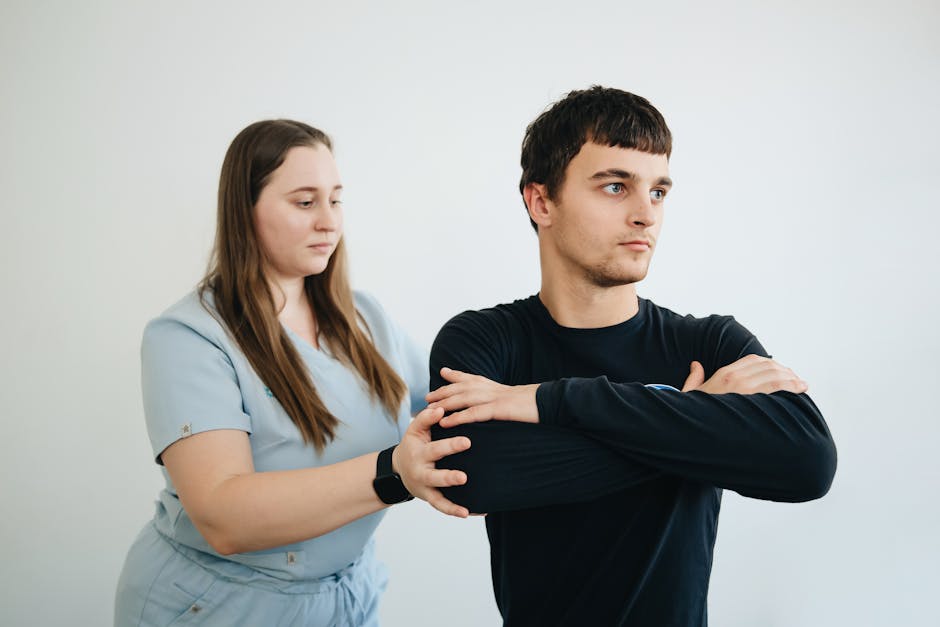
Our primary goal is to restore your quality of life using the most effective, least invasive, and least drug-dependent programs medically available. For patients dealing with chronic nerve discomfort across Metro Atlanta, we offer comprehensive evaluations to pinpoint the exact root cause of your symptoms. Learn more about our approach to Chronic Pain Treatment in Georgia.
For many patients, a combination of conservative therapies can dramatically reduce or even eliminate tingling sensations while supporting healthy blood pressure. These non-surgical options include:
While we exhaust every conservative avenue first, there are times when structural damage in the spine is too severe for physical therapy or injections alone. Surgical intervention may be necessary if you experience:
In these cases, our skilled team can perform highly precise, minimally invasive surgeries such as a spinal decompression or a discectomy to relieve pressure on the pinched nerve. Because these procedures are minimally invasive, they feature smaller incisions, less muscle disruption, and significantly faster recovery times, allowing you to return to your life with minimal downtime.
Yes, surprisingly often! While these medications are vital for protecting your heart and blood vessels, some can cause side effects that mimic or worsen neuropathy:
Always consult your prescribing physician before stopping or changing any blood pressure medication.
While a medical evaluation is necessary for a definitive diagnosis, you can look for several key clues:
To get to the bottom of your symptoms, we use a combination of advanced diagnostic tools:
Whether your tingling hands and feet are caused by a structural spinal issue, chronic high blood pressure, or a complex combination of both, you do not have to live with the discomfort. The human body is an interconnected system, and addressing these symptoms early can prevent long-term nerve and vascular damage.
At Medici Orthopaedics & Spine, Dr. Sonny Dosanjh, M.D., and our entire team are dedicated to helping you find lasting relief. Through integrated, patient-centered care, we focus on treating the root cause of your symptoms with the most advanced, non-surgical recovery options available.
If you are ready to take control of your nerve health and explore natural ways to support your body, read our guide on How to Relieve Tingling Sensation in Hands Naturally.
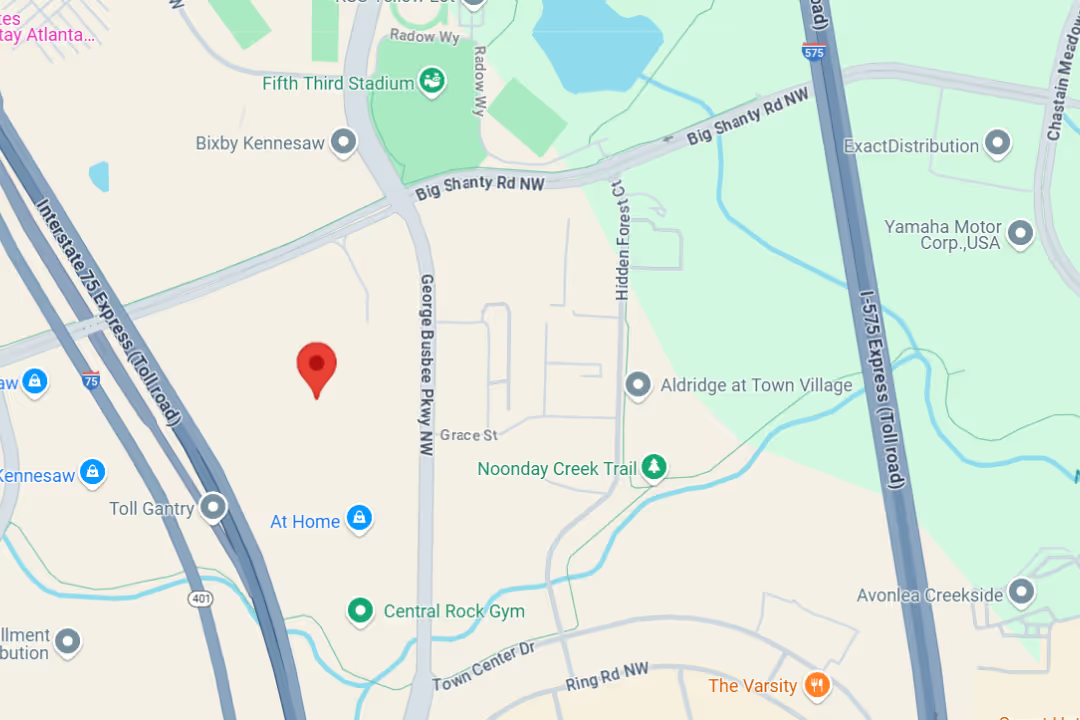
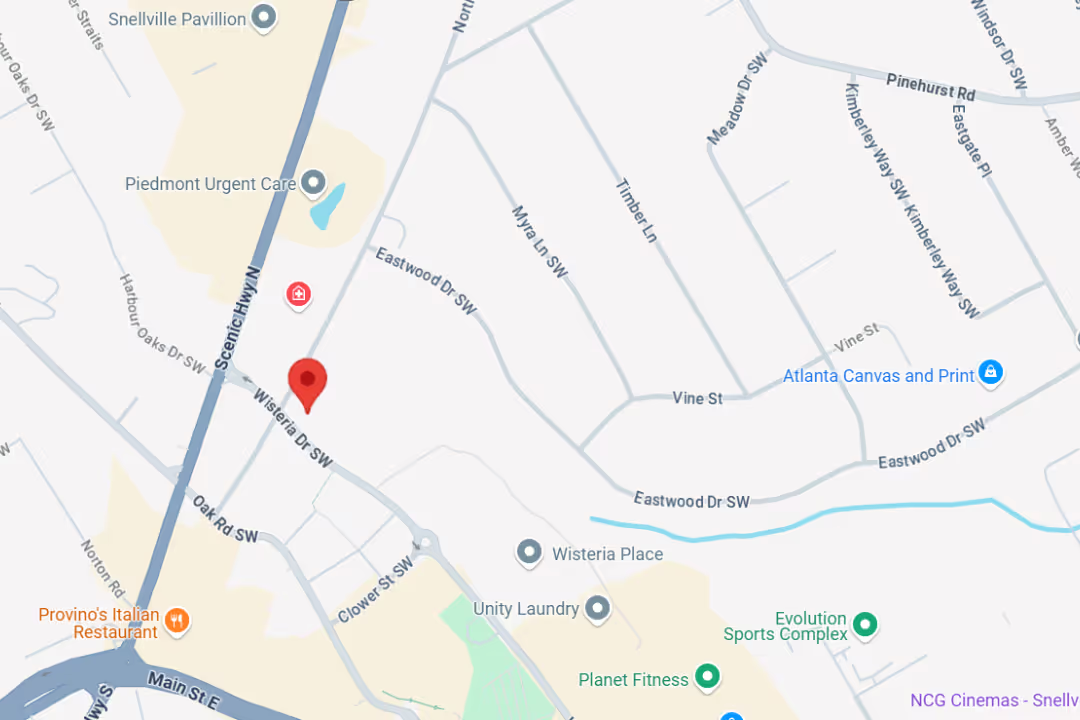
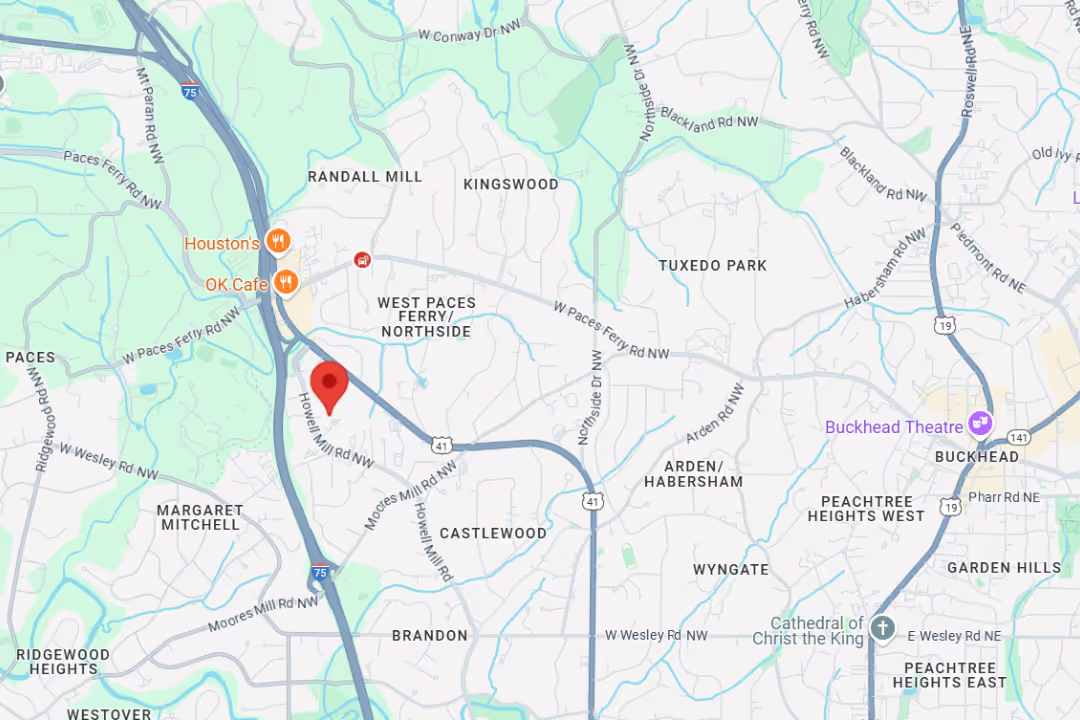
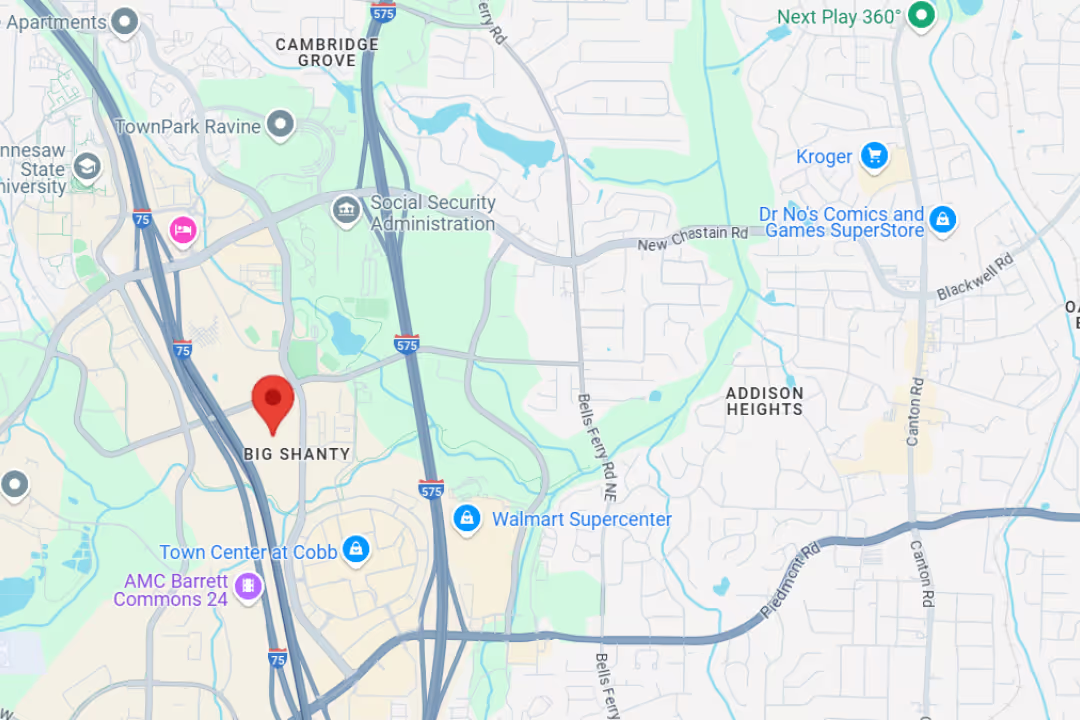
Don't wait for a small whisper from your body to become a loud scream. Contact us today to schedule a comprehensive evaluation at one of our convenient locations in Snellville, Kennesaw, Marietta, or Atlanta. Let us help you optimally restore your quality of life.
At Medici, you’re more than your MRI.
We take time to hear your story, understand your pain, and create a plan that actually works for you.

Our team delivers specialist care at convenient locations across Metro Atlanta:
Get expert tips on injury recovery, pain relief, joint health, and movement strategies—straight from our Fellowship-Trained team.