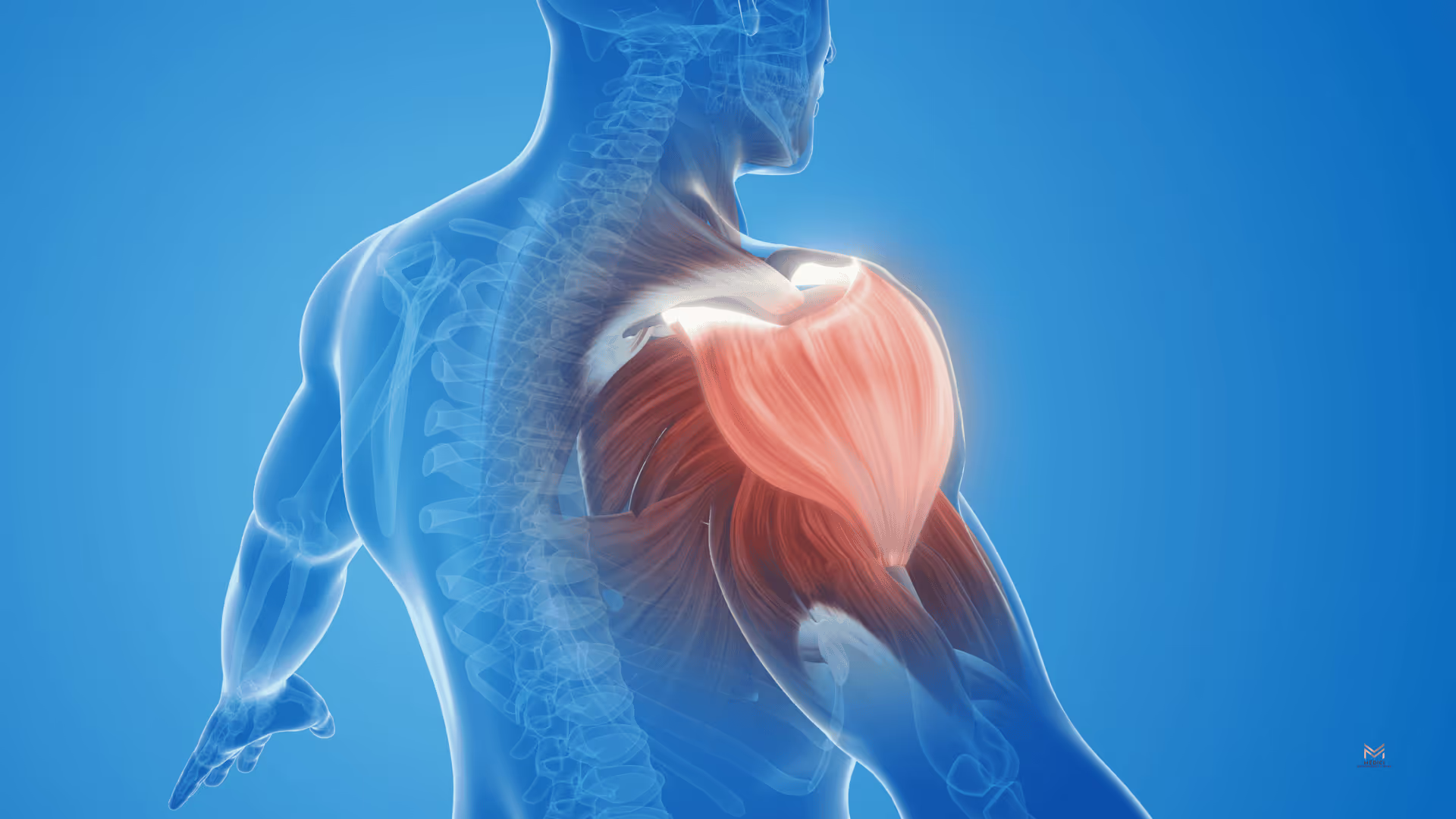
The shoulder is one of the most remarkable joints in the human body—designed for mobility, flexibility, and strength. It allows athletes to throw, lift, swing, and perform dynamic movements that define performance across nearly every sport. But that same mobility comes at a cost. The shoulder is also one of the most vulnerable joints, especially when placed under repeated stress or high-impact conditions.
Athletes face a significantly higher risk of shoulder dislocations due to the physical demands of their activities. Whether it’s the explosive force of a football tackle, the repetitive motion of a baseball pitch, or the overhead reach in tennis or swimming, the shoulder is constantly being pushed to its limits. When stability is compromised, even slightly, it can lead to a dislocation that disrupts not just a season—but potentially an entire athletic career.
A dislocated shoulder doesn’t just cause immediate pain. It often leads to extended recovery time, reduced performance, and an increased likelihood of future instability or chronic joint issues. Over time, repeated injuries can weaken the joint further, making even routine movements feel uncertain.
That’s why prevention is critical. Taking a proactive approach—focusing on strength, stability, and proper mechanics—can significantly reduce the risk of injury and help athletes maintain peak performance without interruption.
Understanding Shoulder Dislocations
What Is a Shoulder Dislocation?
A shoulder dislocation occurs when the head of the upper arm bone (humerus) is forced out of the shallow socket (glenoid) of the shoulder blade. This joint is designed for a wide range of motion, but that flexibility means it relies heavily on muscles, tendons, and ligaments for stability.
It’s important to distinguish between two related conditions:
- Dislocation: The ball completely comes out of the socket, often requiring manual or medical repositioning
- Subluxation: A partial dislocation where the joint slips out and back into place on its own
Types of Shoulder Dislocations
Not all shoulder dislocations are the same. The direction in which the joint is displaced can affect both severity and treatment.
- Anterior Dislocation (Most Common)
- The humeral head moves forward out of the socket
- Frequently seen in athletes during contact or overhead motion
- Posterior Dislocation
- The humeral head moves backward
- Less common, often associated with falls or sudden force
- Inferior Dislocation (Rare but Serious)
- The humeral head is forced downward
- Often involves significant trauma and may affect surrounding nerves or blood vessels
Common Causes in Athletes
Athletes are exposed to a wide range of movements and forces that can increase the likelihood of shoulder dislocation.
- Contact Sports
- Football, wrestling, and hockey involve frequent collisions
- Direct impact can force the shoulder out of alignment
- Overhead Sports
- Baseball, tennis, and swimming require repetitive overhead motion
- Overuse can gradually weaken stabilizing structures
- Falls, Collisions, and Technique Errors
- Landing awkwardly on an outstretched arm
- Poor mechanics during lifting or throwing
- Sudden, uncontrolled movements under fatigue
Risk Factors That Increase Vulnerability
Previous Shoulder Injuries
One of the strongest predictors of a future dislocation is a past one.
- Recurrence rates are especially high in younger athletes
- Ligaments may remain stretched or weakened after the initial injury
- Chronic instability can develop if not properly treated
Muscle Imbalances
The shoulder depends on a delicate balance of muscle strength to stay stable.
- Weak rotator cuff muscles
- Reduced ability to keep the joint centered
- Poor scapular stabilization
- Shoulder blade positioning affects overall mechanics
- Weakness here can place extra strain on the joint
Poor Mechanics and Technique
Even strong athletes can be at risk if movement patterns are flawed.
- Improper throwing mechanics can place excessive stress on the joint
- Lifting weights with poor form increases injury risk
- Overtraining without correcting technique compounds the problem
Lack of Conditioning and Warm-Up
Preparation plays a major role in injury prevention.
- Cold muscles are less flexible and more prone to strain
- Skipping warm-ups reduces joint readiness
- Sudden, high-impact movements without preparation can overwhelm the shoulder
Key Muscles Involved in Shoulder Stability
Rotator Cuff Muscles
The rotator cuff is a group of four small but essential muscles that act as the shoulder’s primary stabilizers. Their main job is to keep the head of the upper arm bone securely centered within the socket during movement.
- These muscles provide dynamic stabilization, especially during overhead or rotational activities
- They counteract larger muscle forces to prevent the joint from shifting out of place
- Weakness or fatigue in the rotator cuff can allow subtle movement that leads to instability over time
Scapular Stabilizers
The shoulder blade (scapula) serves as the foundation for shoulder movement. If it isn’t stable, the entire joint becomes compromised.
- Scapular stabilizers control positioning and movement of the shoulder blade
- Proper alignment allows for efficient, safe arm motion
- Poor control can lead to compensation patterns that increase stress on the shoulder joint
Core and Kinetic Chain Connection
Many athletes are surprised to learn that shoulder stability starts far beyond the shoulder itself. The entire body—referred to as the kinetic chain—plays a role.
- The core provides a stable base for upper body movement
- Force generated from the legs and transferred through the torso reduces strain on the shoulder
- Poor coordination between body segments can overload the shoulder joint
Proven Techniques to Prevent Shoulder Dislocations
Strengthening Exercises
Strength is the foundation of shoulder stability. The goal isn’t just building bigger muscles—it’s developing balanced, functional strength that keeps the joint centered during movement.
- Rotator Cuff Strengthening
- Internal and external rotation exercises using resistance bands or light weights
- Focus on controlled, slow movements rather than heavy loads
- Helps stabilize the humeral head within the socket
- Scapular Stabilization Exercises
- Rows, wall slides, and scapular retraction drills
- Strengthens the muscles that control shoulder blade positioning
- Improves coordination between the shoulder blade and arm
- Functional Strength Training
- Sport-specific movements that mimic real activity
- Examples: medicine ball throws, resistance band patterns, controlled pressing
- Trains the shoulder to handle dynamic, real-world demands
Flexibility and Mobility Training
Mobility is just as important as strength—but it has to be controlled mobility. Too little range of motion increases strain, while too much can lead to instability.
- Dynamic Stretching Before Activity
- Arm circles, band pull-aparts, and controlled swings
- Prepares the joint for movement without overstretching
- Maintaining a Healthy Range of Motion
- Focus on balanced flexibility in the chest, shoulders, and upper back
- Prevents compensations that can stress the joint
- Avoiding Hypermobility
- Excessive looseness can reduce joint stability
- Athletes should avoid overstretching already flexible shoulders
Proper Warm-Up Routines
Jumping straight into intense activity is one of the most common—and preventable—mistakes athletes make.
- Gradual Increase in Intensity
- Start with light movements and progressively build up
- Allows muscles and connective tissues to adapt safely
- Activation Drills
- Target the rotator cuff, upper back, and core
- Examples include banded rotations, scapular push-ups, and light resistance work
Technique Optimization
Even a strong, mobile shoulder can be at risk if movement patterns are inefficient or incorrect.
- Coaching and Form Correction
- Proper throwing mechanics reduce strain on the joint
- Correct lifting form prevents overload in vulnerable positions
- Safe contact techniques minimize injury risk in collisions
- The Role of Biomechanics
- Efficient movement distributes force across the entire body
- Reduces unnecessary stress on the shoulder joint
- Enhances both performance and injury prevention
Protective Equipment and Bracing
In certain situations, additional support can be a valuable layer of protection—especially for athletes with a history of instability.
- When to Consider Shoulder Braces
- After a previous dislocation or subluxation
- During return-to-play phases
- In high-risk sports with frequent contact
- Role in High-Risk Activities
- Helps limit excessive or dangerous ranges of motion
- Provides proprioceptive feedback (awareness of joint position)
- Acts as a safeguard—not a substitute—for proper strength and training
Protecting Your Shoulder for Long-Term Performance
Your shoulder plays a critical role in nearly every athletic movement from explosive power to precise control. Protecting it isn’t just about avoiding injury; it’s about preserving your ability to perform at your highest level for years to come.
The reality is simple: prevention will always be more effective than recovery. Once the shoulder becomes unstable or repeatedly injured, the path back can be longer and more complex. By prioritizing strength, mobility, and proper technique, athletes can build a foundation that supports both performance and durability.
Take the Next Step Toward Pain-Free Performance
If you’re experiencing shoulder instability, recurring pain, or simply want to stay ahead of injury, the team at Medici Orthopedics & Spine is here to support you every step of the way.
📞 Call us today: +1-844-328-4624
🌐 Visit: https://www.mediciortho.com/
Locations:
- Marietta Surgery Center: 792 Church Street, Unit 101, Marietta, GA 30060 | (470) 795-8398
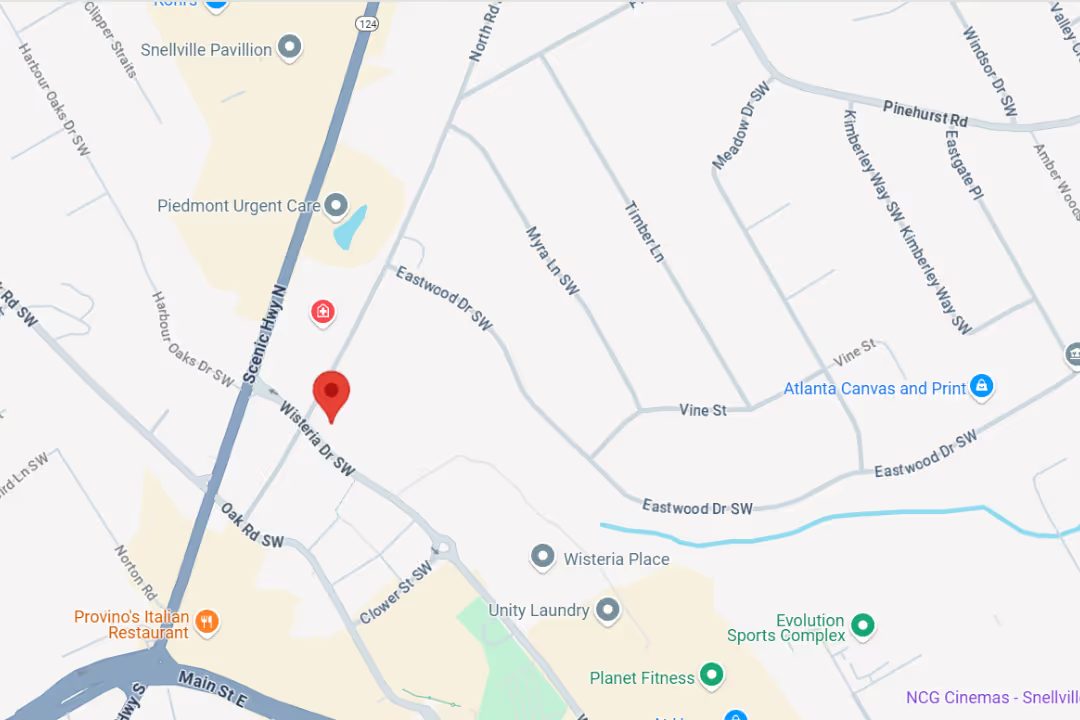
- Snellville Surgery Center: 2220 Wisteria Dr, Unit 100, Snellville, GA 30078 | (470) 795-8398
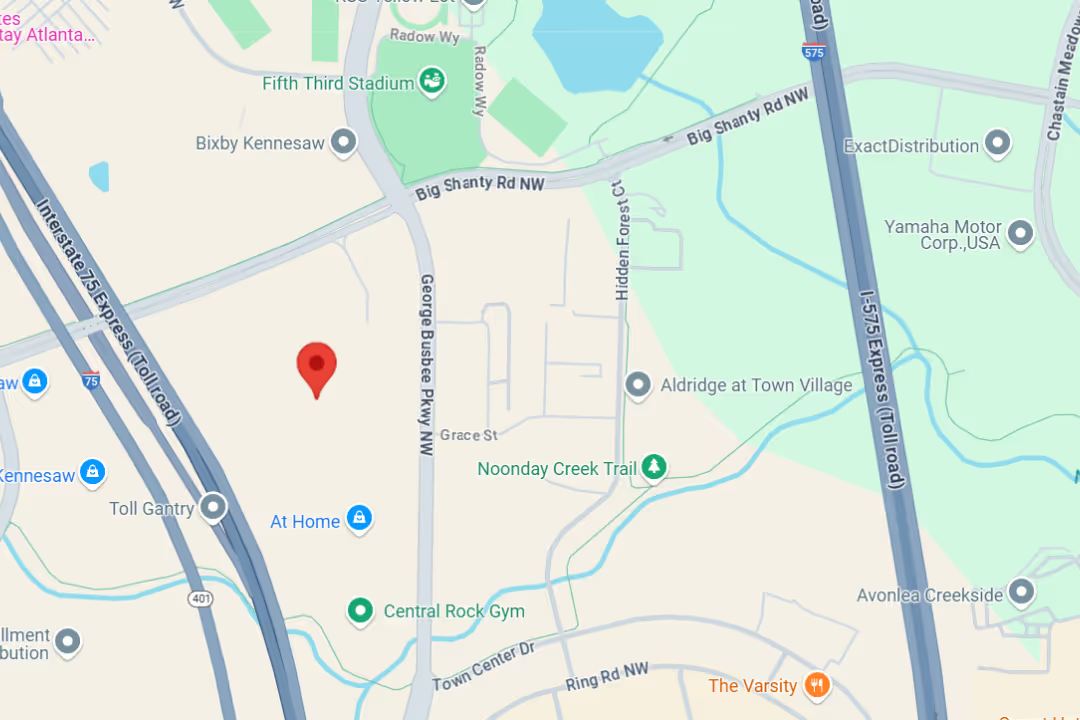
- Kennesaw Clinic: 2911 George Busbee Parkway, Suite 50, Kennesaw, GA 30144 | (770) 545-6404
- Snellville Clinic: 2220 Wisteria Drive, Unit 101, Snellville, GA 30078 | (470) 645-9297
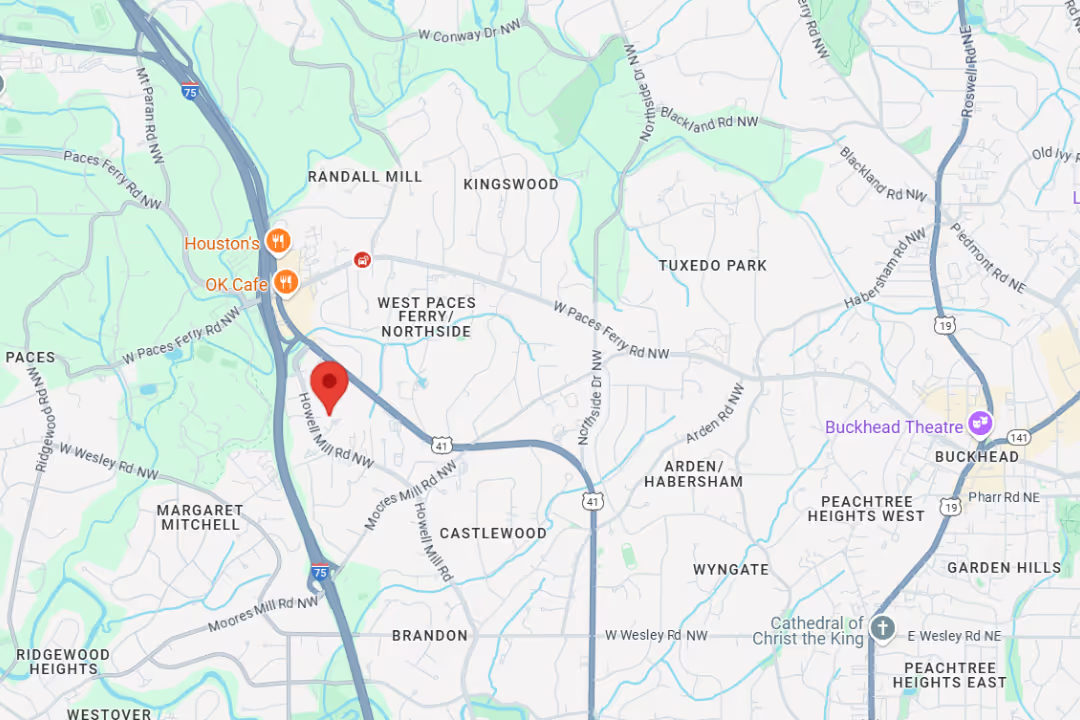
- Buckhead PM&R: 3200 Downwood Circle NW, Suite 520, Atlanta, GA 30327 | (770) 872-7549