Hamstring injuries are one of the most common setbacks for athletes and active individuals alike. Whether you’re sprinting, lifting, or simply staying active, the hamstrings play a critical role in nearly every lower-body movement. Unfortunately, they’re also one of the most frequently strained muscle groups—and one of the most frustrating to fully heal.
What makes hamstring injuries especially challenging is their tendency to linger. Many people feel like they’re improving, only to experience tightness, discomfort, or even re-injury just when they think they’re back to normal. That “almost healed” phase can drag on for weeks—or even months—if not handled correctly.
The reality is, there’s a common mistake that quietly delays recovery for a large percentage of people. It often goes unnoticed, but it can be the difference between a quick recovery and a recurring cycle of pain.
Understanding Hamstring Injuries
What Is a Hamstring Injury?
The hamstrings are a group of three muscles located along the back of the thigh:
- Biceps femoris
- Semitendinosus
- Semimembranosus
These muscles work together to power essential movements such as:
- Running and sprinting
- Jumping and explosive movements
- Bending the knee
- Extending the hip
A hamstring injury occurs when one or more of these muscles are overstretched or torn. The severity can vary depending on the extent of the damage:
- Strains: Mild overstretching of muscle fibers
- Partial tears: More significant damage with loss of strength
- Complete tears: Severe injuries that may require advanced intervention
Grades of Hamstring Strains
Hamstring injuries are typically categorized into three grades:
- Grade 1 (Mild)
- Minor damage to muscle fibers
- Mild discomfort with minimal loss of strength
- Grade 2 (Moderate)
- Partial tearing of the muscle
- Noticeable pain, weakness, and possible bruising
- Grade 3 (Severe)
- Complete tear of the muscle
- Significant pain, swelling, and loss of function
- Often requires more intensive treatment or procedures
Common Causes
Hamstring injuries often occur when the muscle is placed under sudden or excessive stress, especially without proper preparation.
- Sudden Acceleration or Sprinting
- Rapid bursts of speed can overload the muscle
- Common in sports like football, soccer, and track
- Overstretching During Activity
- Movements that push the muscle beyond its limit
- Kicking, lunging, or slipping can trigger injury
- Muscle Fatigue or Imbalance
- Fatigued muscles lose their ability to stabilize and absorb force
- Imbalances between quadriceps and hamstrings increase strain
- Poor Warm-Up or Conditioning
- Cold muscles are less flexible and more prone to injury
- Skipping preparation increases risk significantly
The Mistake That Delays 80% of Recoveries
Returning to Activity Too Soon
One of the biggest mistakes people make is assuming that reduced pain means full recovery.
- Pain may decrease before the tissue has fully healed
- Microscopic damage can still be present even when symptoms improve
- Returning too early places stress on vulnerable tissue
This often leads to setbacks that could have been avoided with a more gradual approach.
Skipping Proper Rehabilitation
Rest alone is not enough to restore a hamstring to full function.
- Ignoring progressive strengthening leaves the muscle weak
- Lack of structured rehab can result in poor healing quality
- The muscle may feel better—but not be ready for real demands
A guided rehabilitation plan ensures that strength, flexibility, and control are rebuilt properly.
Focusing Only on Pain, Not Function
Pain is just one piece of the recovery puzzle.
- Being pain-free does not mean the muscle is fully functional
- Strength deficits can persist even after discomfort fades
- Flexibility and coordination may still be compromised
True recovery means restoring the muscle’s ability to perform—not just eliminating pain.
The Cycle of Re-Injury
When recovery isn’t complete, the risk of reinjury increases significantly.
- Weak or improperly healed tissue is more vulnerable
- Each reinjury can worsen the condition and extend recovery time
- The cycle can become frustrating and difficult to break
This is why taking the right approach from the beginning is so important.
Risk Factors That Slow Hamstring Recovery
Previous Hamstring Injuries
A prior hamstring injury is one of the strongest predictors of future problems.
- High recurrence rates
- Reinjury is common, especially within the first few months of returning to activity
- Incomplete healing often leaves the muscle vulnerable
- Scar tissue and reduced elasticity
- Scar tissue can limit flexibility and alter muscle function
- Reduced elasticity makes the muscle more prone to strain under stress
Without proper rehabilitation, the muscle never fully regains its original strength and resilience.
Muscle Imbalances
The hamstrings don’t work in isolation—they rely on balance with surrounding muscle groups.
- Quadriceps overpowering hamstrings
- When the front of the thigh is significantly stronger, it places excess strain on the hamstrings
- This imbalance increases the risk of overload during activity
- Weak glutes contributing to overload
- The glutes should assist with hip extension and power generation
- If they’re weak, the hamstrings compensate—leading to fatigue and strain
Balanced strength across the lower body is critical for protecting the hamstrings.
Poor Movement Mechanics
How you move matters just as much as how strong you are.
- Inefficient running or lifting form
- Overstriding, poor posture, or improper lifting mechanics increase strain on the hamstrings
- Small inefficiencies can compound over time
- Compensation patterns
- After an injury, the body often shifts movement patterns to avoid discomfort
- These compensations can place uneven stress on the hamstring and surrounding muscles
Correcting these patterns is key to preventing ongoing issues.
Inadequate Recovery Strategies
Recovery doesn’t just happen during rehab sessions—it’s influenced by daily habits.
- Lack of rest between high-intensity sessions
- Muscles need time to repair and rebuild
- Overtraining slows healing and increases fatigue
- Poor sleep and nutrition
- Sleep is when the body performs most of its repair processes
- Proper nutrition provides the building blocks for tissue healing
Without these foundational elements, even the best rehab plan can fall short.
How to Avoid the Most Common Recovery Mistake
Prioritizing a Structured Rehabilitation Plan
A step-by-step recovery plan ensures that healing progresses safely and effectively.
- Phased Recovery Approach
- Rest → Mobility → Strength → Return to sport
- Each phase builds on the previous one
- Professional Guidance
- Ensures exercises are appropriate for your stage of recovery
- Helps identify and correct underlying issues
At Medici Orthopedics & Spine, we emphasize personalized care plans designed to move patients forward without unnecessary setbacks.
Progressive Strengthening
Strength must be rebuilt gradually to restore full function.
- Eccentric Exercises
- Movements like Nordic curls strengthen the muscle as it lengthens
- Proven to reduce reinjury rates
- Gradual Increase in Load
- Progressively adding resistance and intensity
- Avoiding sudden spikes that can re-aggravate the injury
This phase is essential for preparing the hamstring for real-world demands.
Restoring Flexibility and Mobility
Flexibility plays a key role—but it must be approached carefully.
- Controlled Stretching Techniques
- Gentle, consistent stretching improves mobility without overstressing the tissue
- Avoiding Aggressive Overstretching
- Pushing too far too soon can disrupt healing
- Early recovery should focus on controlled range of motion
Balanced mobility helps the muscle function efficiently without increasing risk.
Neuromuscular Training
Recovery isn’t just physical—it’s neurological.
- Rebuilding Coordination and Muscle Activation
- Ensures the hamstrings fire correctly during movement
- Improves timing and control
- Sport-Specific Drills
- Gradual reintroduction of movements like sprinting, cutting, and jumping
- Prepares the body for real performance demands
This step bridges the gap between rehab and full return to activity.
Signs You’re Truly Ready to Return to Activity
Strength Symmetry
- The injured hamstring should be equal in strength to the uninjured side
- Imbalances increase the risk of reinjury
Full Range of Motion Without Pain
- No tightness, pulling, or restriction during movement
- Flexibility should match pre-injury levels
Ability to Perform Sport-Specific Movements
- Sprinting, cutting, and jumping should feel natural and controlled
- No hesitation or compensation during activity
Confidence in Movement
- You should feel stable and in control—not cautious or guarded
- Confidence is often a sign that both physical and neurological recovery are complete
Don’t Let One Mistake Prolong Your Recovery
Hamstring injuries can be deceptively complex. While they may start as a minor strain, improper recovery can turn them into lingering, recurring issues that disrupt your performance and daily life. The key takeaway is simple—rest alone isn’t enough.
Taking the time to recover the right way doesn’t just help you heal—it helps you come back stronger, more resilient, and better prepared for the demands of your activity.
Take the Next Step Toward a Full, Lasting Recovery
If you’re dealing with a hamstring injury that just won’t fully heal—or you want to make sure you recover the right way the first time, Medici Orthopedics & Spine is here for you.
📞 Call us today: +1-844-328-4624
🌐 Visit: https://www.mediciortho.com/
Locations:
- Marietta Surgery Center: 792 Church Street, Unit 101, Marietta, GA 30060 | (470) 795-8398
- Snellville Surgery Center: 2220 Wisteria Dr, Unit 100, Snellville, GA 30078 | (470) 795-8398
- Kennesaw Clinic: 2911 George Busbee Parkway, Suite 50, Kennesaw, GA 30144 | (770) 545-6404
- Snellville Clinic: 2220 Wisteria Drive, Unit 101, Snellville, GA 30078 | (470) 645-9297
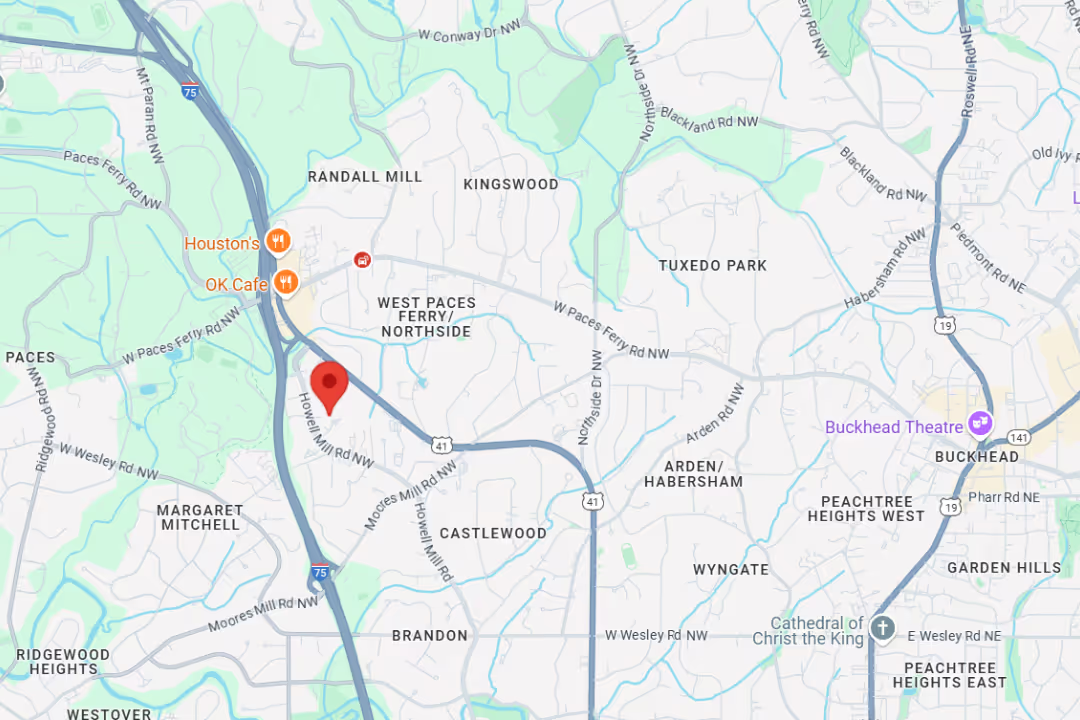
- Buckhead PM&R: 3200 Downwood Circle NW, Suite 520, Atlanta, GA 30327 | (770) 872-7549

.png)