Chronic neck pain has a way of creeping into everything. It’s not just the ache—it’s the stiffness that makes turning your head feel restricted, the headaches that start at the base of the skull, the pain that flares during desk work, driving, or looking down at a phone, and the way discomfort can interrupt sleep and leave you feeling worn down before the day even starts.
The good news is that many cases of ongoing neck pain have treatable pain generators—but success depends on getting the diagnosis right. At Medici Orthopaedics & Spine, we focus on identifying what’s actually driving the pain and building a plan that’s least invasive and least drug-dependent whenever medically appropriate. If you’re in Kennesaw or the surrounding Cobb/Cherokee areas, we also understand the practical side: care needs to fit your life—your work schedule, your family responsibilities, and your goals to stay active.
One treatment you may hear about is radiofrequency ablation (RFA). It can be a great option for the right type of neck pain—but it’s important to set expectations: RFA is not for every neck pain problem. It’s a targeted treatment most often used when pain is coming from specific neck joints (called facet joints) and the small nerves that supply them.
Radiofrequency ablation (RFA) is a minimally invasive procedure that uses radiofrequency energy to disrupt pain signals coming from specific nerves. In the neck, RFA is most often used to calm pain signals from the medial branch nerves—small nerves that supply sensation to the cervical facet joints.
People often hear several terms and wonder how they compare:
Facet joints can become arthritic over time, especially with age, repetitive strain, or prior injury. When they’re irritated, they can generate persistent, movement-related neck pain—often worse with looking up or turning the head.
After a car accident, many patients recover with time and therapy. But in some cases, facet joints remain a chronic pain generator long after the initial injury. For select patients, RFA can be considered once the facet source is confirmed.
Degeneration can involve discs, joints, and surrounding tissues. If the facet joints are playing a major role, RFA may help reduce that joint-driven pain signal.
“Tech neck,” desk work, and sustained head-forward posture can overload cervical joints and muscles. If posture issues are layered on top of facet irritation, RFA may be part of a broader plan that also includes strengthening and posture retraining.
After fusion, nearby segments can take on additional stress. If pain is shown to be facet-mediated at adjacent levels, RFA may be an option to manage symptoms without immediately jumping to another surgery.
A medial branch block is a procedure where a small amount of numbing medication is placed near the medial branch nerves—the nerves that supply sensation to the cervical facet joints. The goal is straightforward: confirm whether those nerves are carrying your pain signal.
If numbing those nerves leads to clear, meaningful relief, that strongly supports facet-mediated pain—and makes RFA a much more targeted, evidence-based next step.
The number of diagnostic blocks can vary based on clinical judgment and practice standards. Some patients may undergo more than one block to improve diagnostic confidence, especially if the pain pattern is complex.
A successful block typically looks like:
Cervical radiofrequency ablation (RFA) tends to work best when your symptoms and testing point to a very specific pain source: facet-mediated neck pain.
You may be a good candidate if you have:
Even when RFA is a strong option, there are times when it’s safer to pause, plan more carefully, or choose a different pathway.
Most patients describe:
Chronic neck pain can make you feel like you’re stuck—stuck avoiding certain movements, stuck waking up sore, stuck planning your day around what your neck will “allow.” But ongoing neck pain doesn’t mean you’re out of options. The key is identifying what’s truly driving your symptoms.
When the cervical facet joints are the source of pain, a stepwise approach—starting with diagnostic medial branch blocks and, if appropriate, moving to radiofrequency ablation (RFA)—can provide meaningful relief and real functional gains. For many patients, that can look like easier head turns while driving, fewer headaches, better sleep, and the ability to work and exercise with less fear of flare-ups.
If neck pain has been lingering for weeks or months, consider scheduling an evaluation to determine whether facet joint pain is present and whether cervical RFA may be appropriate for you.
Main Contact: +1-844-328-4624
Website: https://www.mediciortho.com/
Medici Orthopaedics & Spine – Kennesaw
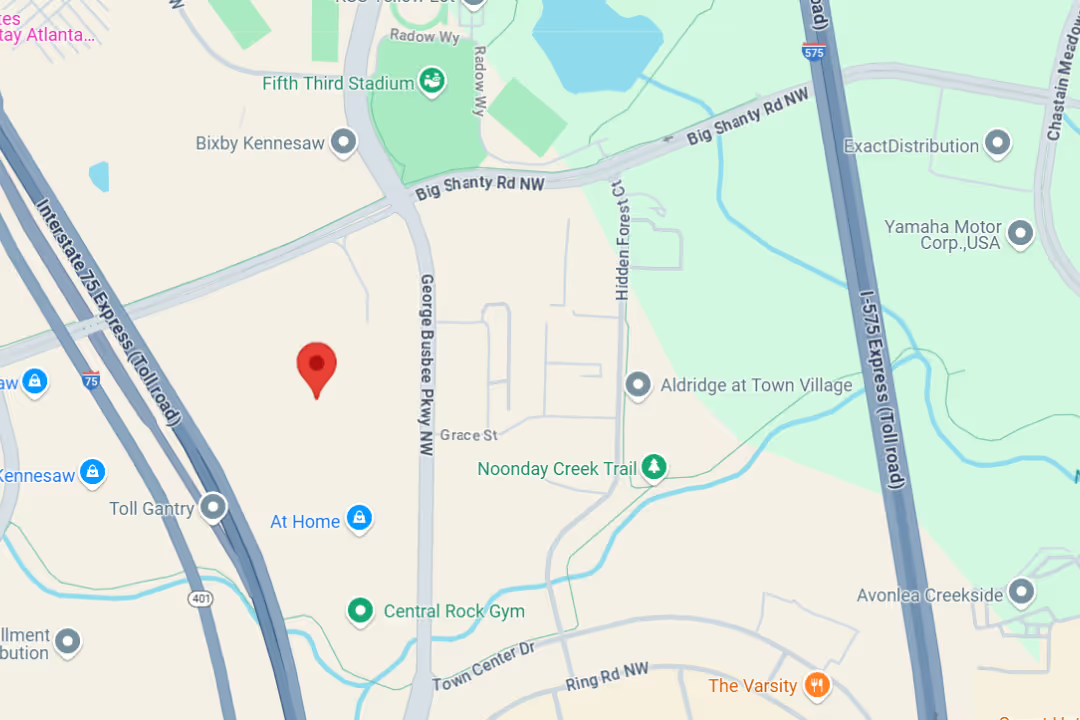
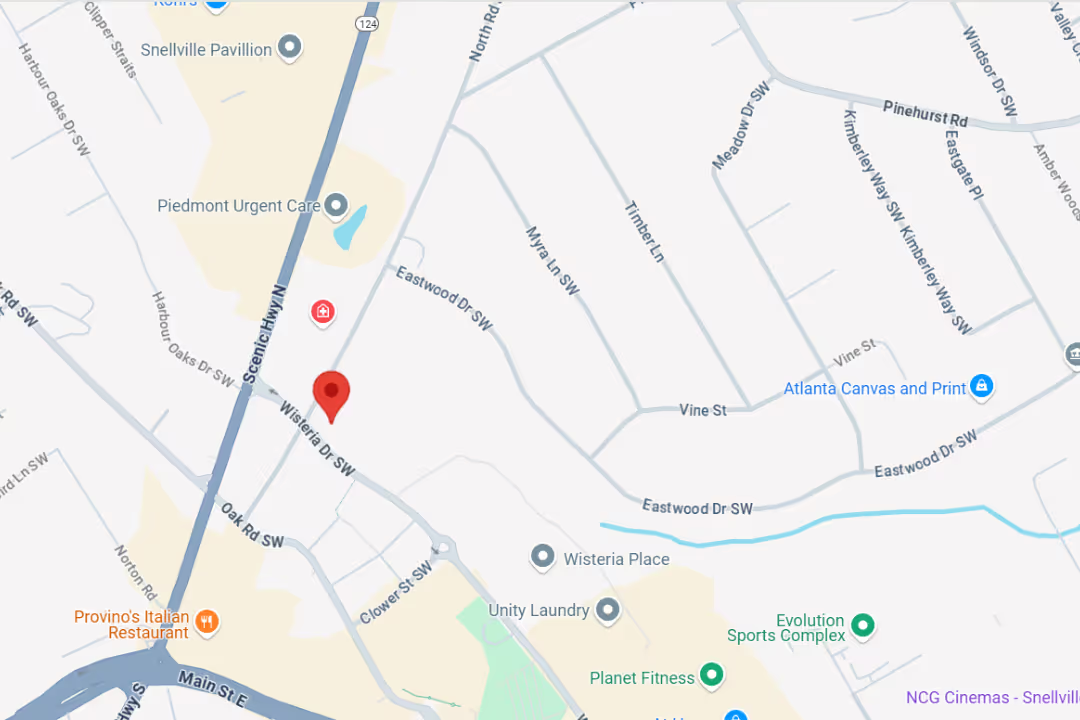
2911 George Busbee Parkway, Suite 50, Kennesaw, GA 30144
(770) 545-6404
Explore our library of patient support guides covering the conditions we treat, the treatments we offer, and the questions we hear most. Each one is written to help you understand your options and feel confident about your next step. Browse the topics below to learn more, or reach out to our team anytime.

At Medici, you’re more than your MRI.
We take time to hear your story, understand your pain, and create a plan that actually works for you.

Our team delivers specialist care at convenient locations across Metro Atlanta:
Get expert tips on injury recovery, pain relief, joint health, and movement strategies—straight from our Fellowship-Trained team.