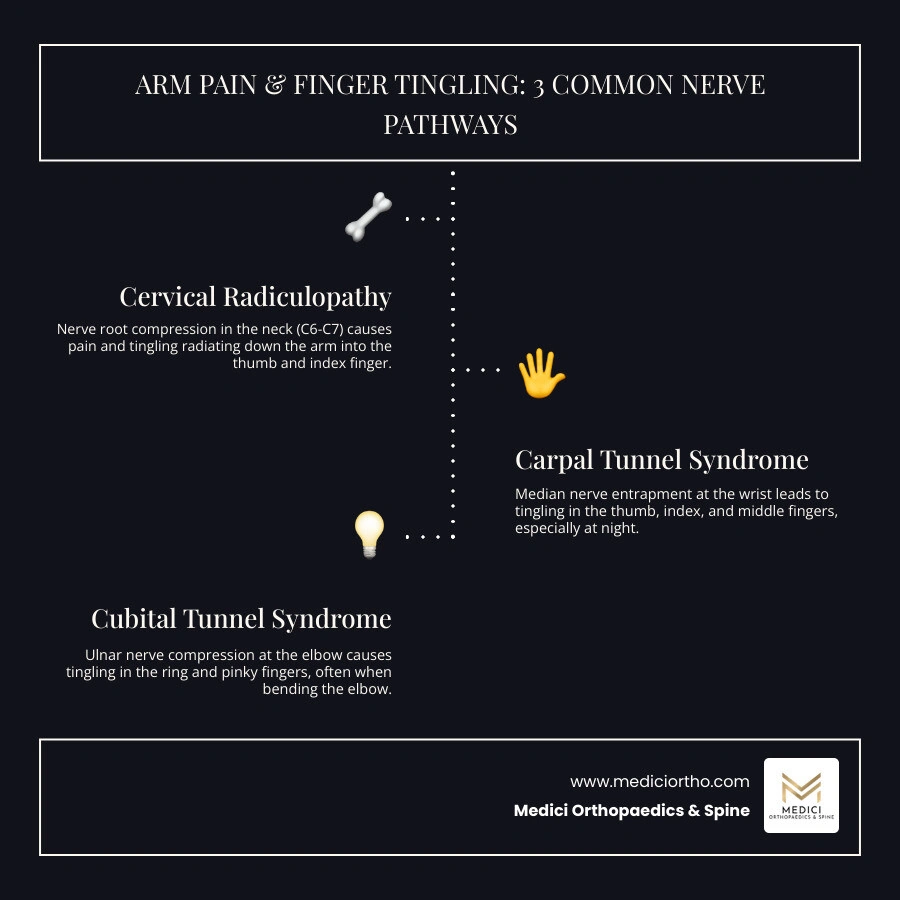
If your arm hurts and fingers tingle, a nerve may be irritated or compressed in your neck, shoulder, elbow, or wrist. Repeated motion or an awkward sleeping position can also trigger symptoms. Which fingers tingle, where the pain starts, and what makes it worse can help a clinician find the cause.
Call emergency services now if symptoms start suddenly with chest pain, shortness of breath, facial drooping, or trouble speaking. If tingling keeps coming back, gets worse, or comes with hand weakness, arrange a medical evaluation.
I'm Sonny Dosanjh, M.D., a physician trained in physical medicine and rehabilitation and pain management. I help patients find out why an arm hurts and fingers tingle, then build a treatment plan around the cause.
Terms related to arm hurts and fingers tingle:
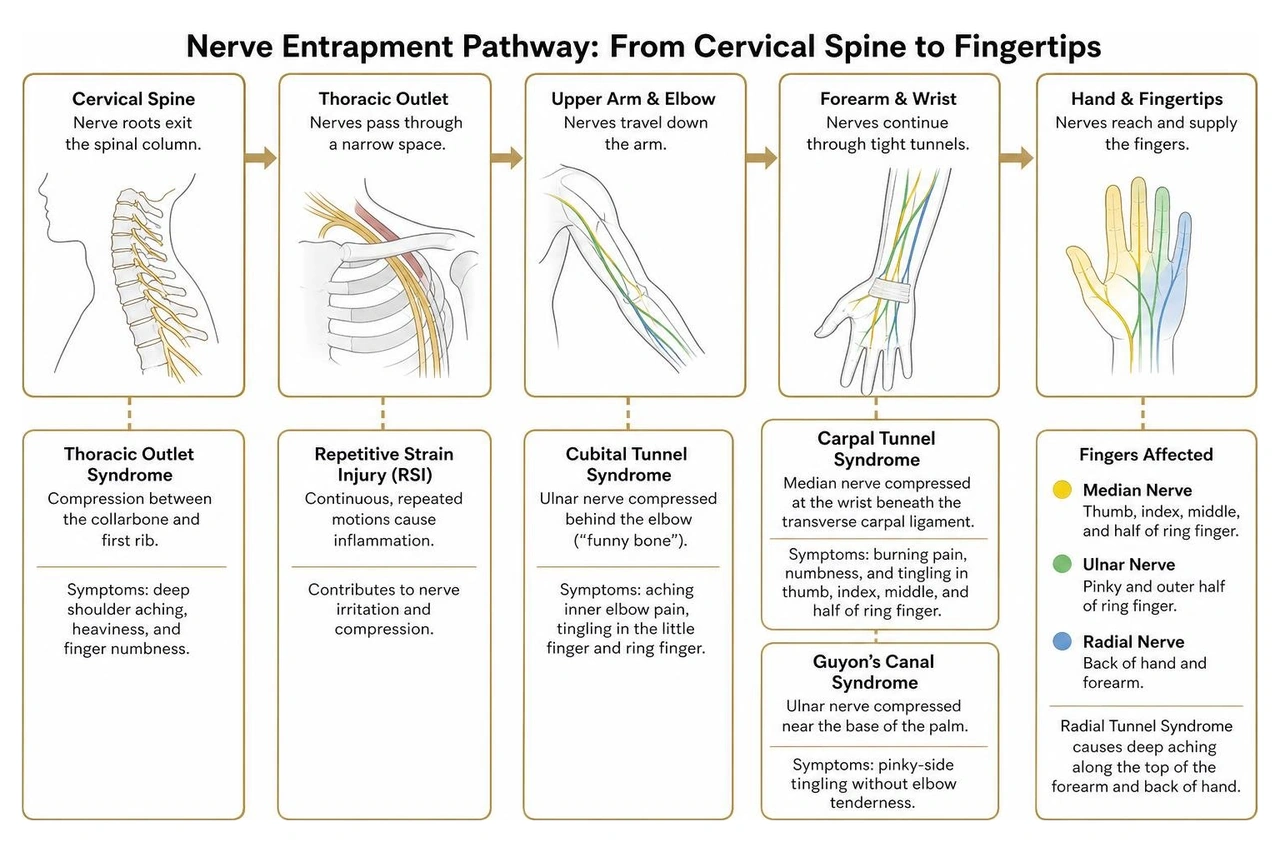
Nerves act like biological electrical cables, sending sensation and movement signals from your brain down through your cervical spine, past your shoulders, and out to your fingertips. When one of these neural pathways becomes inflamed, stretched, or compressed by surrounding bone, muscle, or tendon, you experience a hand tingling sensation alongside radiating arm pain.
Your cervical spine consists of seven small vertebrae cushioned by intervertebral discs. When a disc herniates or age-related wear causes bone spurs, surrounding nerve roots can become pinched. This condition, known as cervical radiculopathy, often develops alongside cervical spondylosis.
Because each cervical nerve root corresponds to a specific dermatome (a distinct patch of skin and muscle), the location of your tingling points directly to the irritated spinal level:
Turning your head, tilting your neck backward, or sitting without supportive posture can heighten the pressure on these delicate nerves.
Peripheral nerves travel through tight anatomical tunnels on their way to your hand. When these spaces narrow, entrapment occurs.
Carpal tunnel syndrome happens when the median nerve becomes compressed at the wrist beneath the transverse carpal ligament. This causes burning pain, numbness, and tingling across the thumb, index, middle finger, and radial half of the ring finger.
By contrast, cubital tunnel syndrome involves compression of the ulnar nerve behind the elbow—the area colloquially known as the "funny bone" (which is actually a nerve!). It is the second-most common peripheral mononeuropathy affecting the upper limbs, following carpal tunnel syndrome. Ulnar nerve compression leads to aching inner elbow pain and tingling in the little finger and ring finger.
| Feature | Carpal Tunnel Syndrome | Cubital Tunnel Syndrome |
|---|---|---|
| Nerve Involved | Median nerve | Ulnar nerve |
| Compression Site | Palmar side of the wrist | Medial groove of the elbow |
| Fingers Affected | Thumb, index, middle, half of ring finger | Pinky and outer half of ring finger |
| Classic Aggravator | Repetitive wrist flexion/typing | Prolonged elbow bending (sleep, phone use) |
| Motor Impact | Weakened grip, dropping objects | Loss of finger dexterity, "claw hand" posture |
In some wrist injuries or localized tissue changes, the ulnar nerve can also be compressed at Guyon's canal near the base of the palm. Ganglion cysts cause up to 2 in 5 cases of Guyon’s canal syndrome, producing pinky-side symptoms without elbow tenderness.
Between your lower neck and upper chest lies a narrow passage called the thoracic outlet. Thoracic outlet syndrome occurs when blood vessels or nerves in the brachial plexus become compressed between your collarbone and first rib.
According to medical research on Thoracic Outlet Syndrome at Johns Hopkins Medicine, more than 90 percent of thoracic outlet syndrome cases are neurogenic, meaning they stem from nerve irritation. Congenital factors, such as having an extra cervical rib (present in 1 to 3 percent of the population), significantly increase your risk.
Symptoms often trigger during repetitive overhead motions, causing deep shoulder aching, heaviness, and finger numbness.
Occupational overuse is another major contributor to upper extremity nerve irritation. As outlined by clinical resources on Repetitive strain injury (RSI) - NHS, continuous, repeated motions—such as typing, scanning items, using vibrating tools, or handling sports equipment—provoke chronic inflammation in muscles and tendons.
When forearm extensor muscles swell from overuse, they can compress the radial nerve, leading to radial tunnel syndrome. This presents as deep, aching fatigue along the top of the forearm and back of the hand.

While most causes of upper extremity discomfort originate in the musculoskeletal system, sudden arm numbness or pain can signal an acute medical emergency.
A sudden sensation of heaviness, numbness, or pain in your arm—especially the left arm—requires urgent evaluation to rule out cardiovascular or cerebrovascular events.
If your symptoms are accompanied by confusion, dizziness, or a sudden, severe headache, call emergency services immediately.
When numbness develops symmetrically across both hands or involves both the upper and lower extremities, systemic health factors may be at play rather than a single pinched nerve.
Systemic conditions like peripheral neuralgia or diabetic neuropathy often begin in the distal nerve endings, leaving hands and feet feeling numb. Chronic high blood sugar, vitamin B12 deficiencies, thyroid disorders, and autoimmune conditions can all irritate peripheral nerves, creating a stocking-glove pattern of tingling.
At Medici Orthopaedics & Spine, we believe in restoring comfort and mobility with the most effective, least invasive options available. Learning how to manage chronic pain without surgery allows our patients to avoid unnecessary downtime and return to active living.
For inflamed or compressed nerves that do not respond to baseline rest, interventional modalities offer precise, targeted relief:
Nonsurgical care is successful for the vast majority of upper extremity nerve conditions. Research shows that about half of all people with ulnar nerve entrapment get symptom relief through nonsurgical means alone.
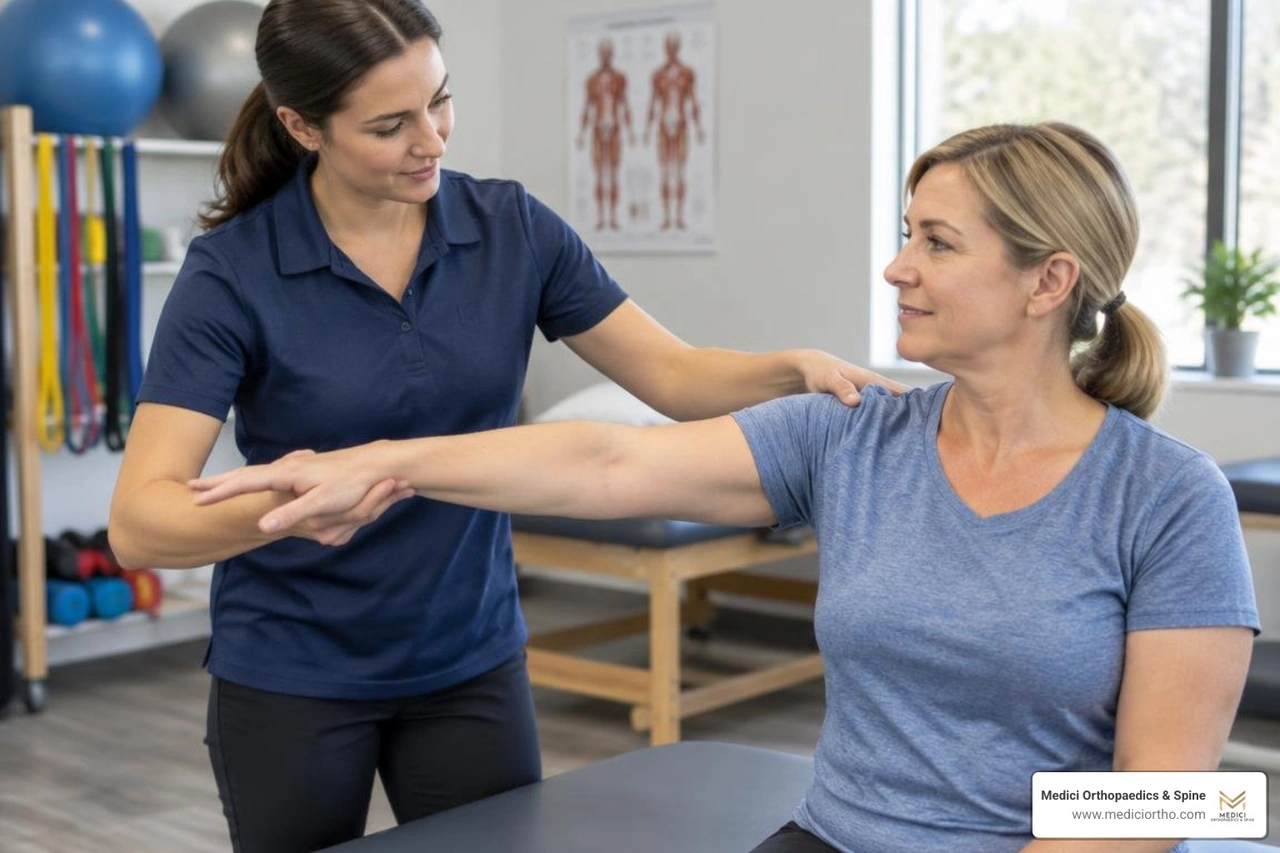
Our comprehensive non-surgical orthopedic care pairs structured hand therapy with non-opioid pain relief for nerve pain. Physical therapists guide you through nerve-gliding exercises that help peripheral nerves slide smoothly through anatomical tunnels, preventing adhesions and relieving tension.
Small daily adjustments can take mechanical stress off sensitive nerve pathways and prevent recurring flare-ups.
Many people wake up with numb, tingling fingers because natural sleeping postures place strain on peripheral nerves. Curling your wrists flexes the carpal tunnel, while sleeping with elbows bent past 90 degrees stretches the ulnar nerve.
Explore practical questions like how can I relieve tingling in my hands naturally to establish safe nighttime routines.
For desk workers and manual laborers, workplace ergonomics play a decisive role in nerve health:
Discovering what are the best at-home remedies for nerve pain gives you practical ways to soothe symptoms during busy workdays.
While a primary care physician can evaluate general wellness and rule out basic metabolic issues, nerve compression conditions benefit from specialized orthopedic and interventional care.
You should consult a specialist if:
Specialists utilize advanced diagnostic electromyography (EMG), nerve conduction velocity (NCV) studies, and high-resolution MRI to pinpoint the exact site of nerve irritation.
If you are in Metro Atlanta, scheduling an evaluation with a nerve pain doctor in Atlanta ensures you receive an accurate diagnosis. While our focus is always on non-surgical restoration, we also provide evaluations with an orthopedic surgeon near me when severe structural impingement requires surgical release.
Yes. When a cervical nerve root is compressed by a herniated disc, bone spur, or arthritis, pain and tingling shoot down the corresponding nerve pathway into the arm and fingers. Most patients see substantial improvement with conservative care, and you can learn more about healing timelines in our guide on cervical radiculopathy recovery time.
A heart attack typically causes sudden symptoms, including heavy left arm pain or numbness combined with chest tightness, shortness of breath, cold sweats, lightheadedness, or jaw discomfort. If you suspect a heart attack, dial 911 immediately. Orthopedic nerve compression develops more gradually and fluctuates with posture or arm movements.
The main difference is the nerve involved and which fingers are affected. Carpal tunnel syndrome compresses the median nerve at the wrist, causing tingling in the thumb, index, middle, and half of the ring finger. Cubital tunnel syndrome compresses the ulnar nerve at the elbow, causing tingling strictly in the pinky and outer half of the ring finger.
Arm pain paired with tingling fingers is your nervous system's way of signaling that something is irritating a nerve pathway. Whether the root cause is a herniated disc in your neck, repetitive strain at your desk, or nerve entrapment at your elbow or wrist, early medical diagnosis prevents permanent nerve damage and helps you regain function faster.
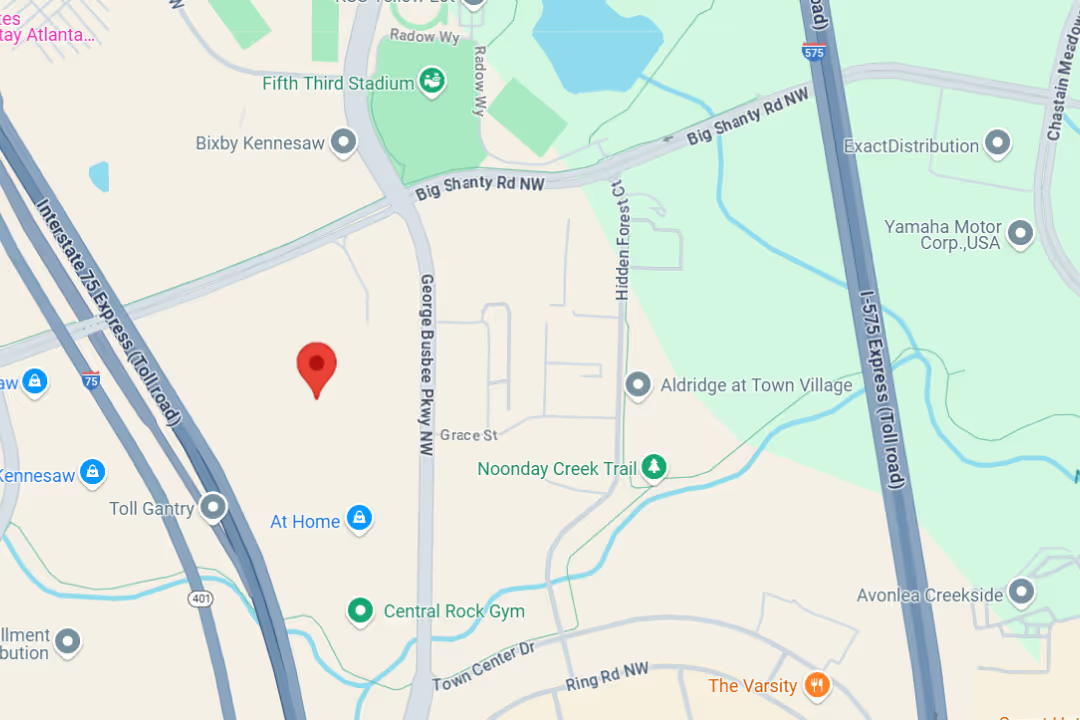
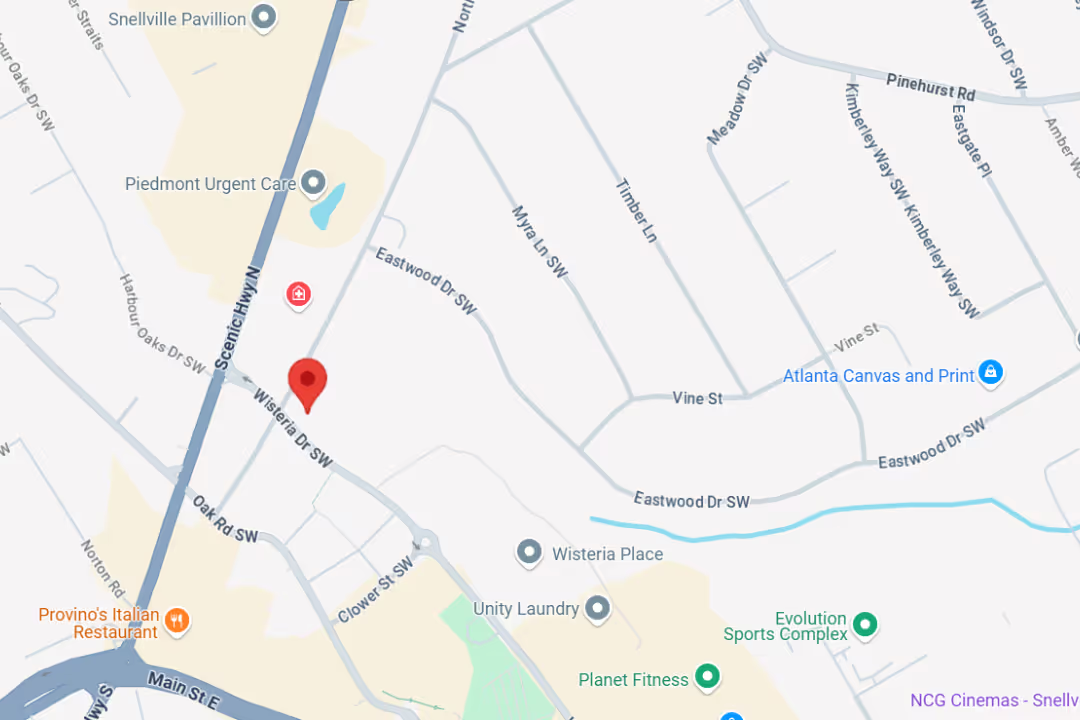
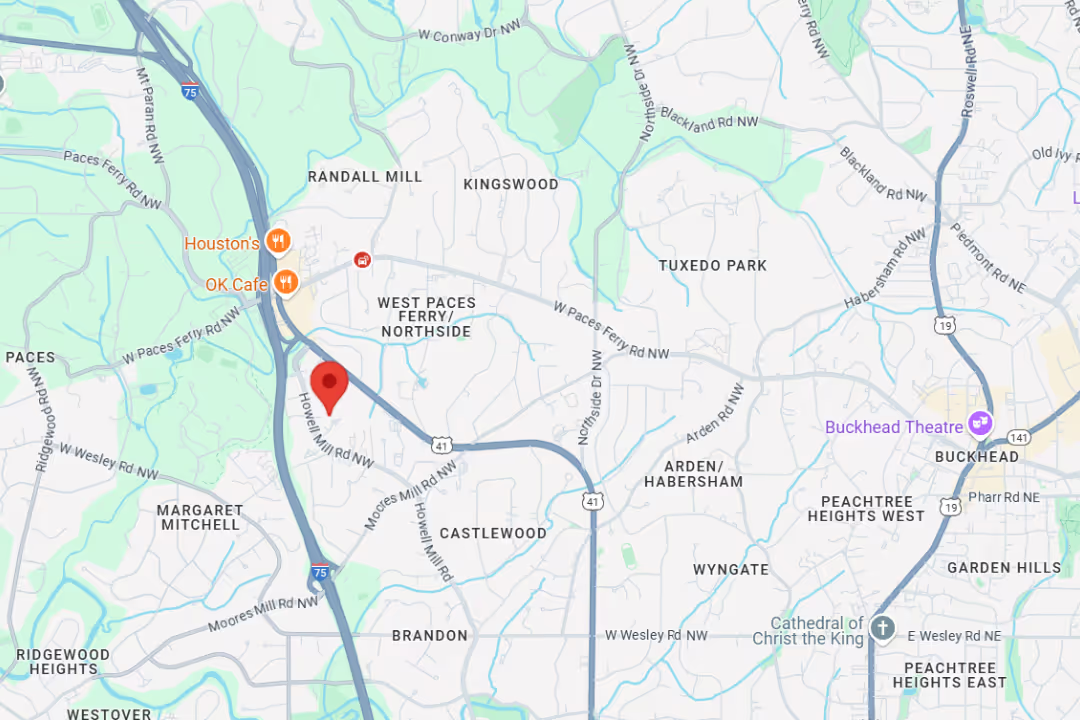
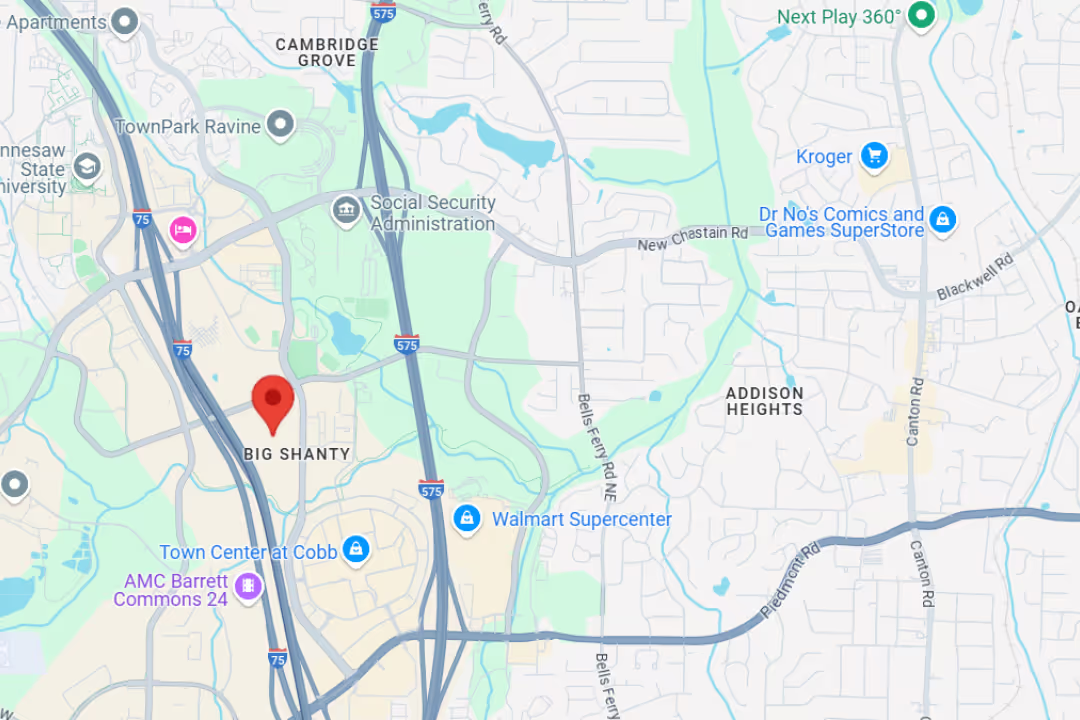
At Medici Orthopaedics & Spine, our team specializes in delivering personalized, minimally invasive care tailored to your daily needs. Explore our comprehensive neuropathy and neuralgia care across our clinics in Buckhead, Kennesaw, Snellville, and Marietta, and let us help you get back to pain-free living.
At Medici, you’re more than your MRI.
We take time to hear your story, understand your pain, and create a plan that actually works for you.

Our team delivers specialist care at convenient locations across Metro Atlanta:
Get expert tips on injury recovery, pain relief, joint health, and movement strategies—straight from our Fellowship-Trained team.