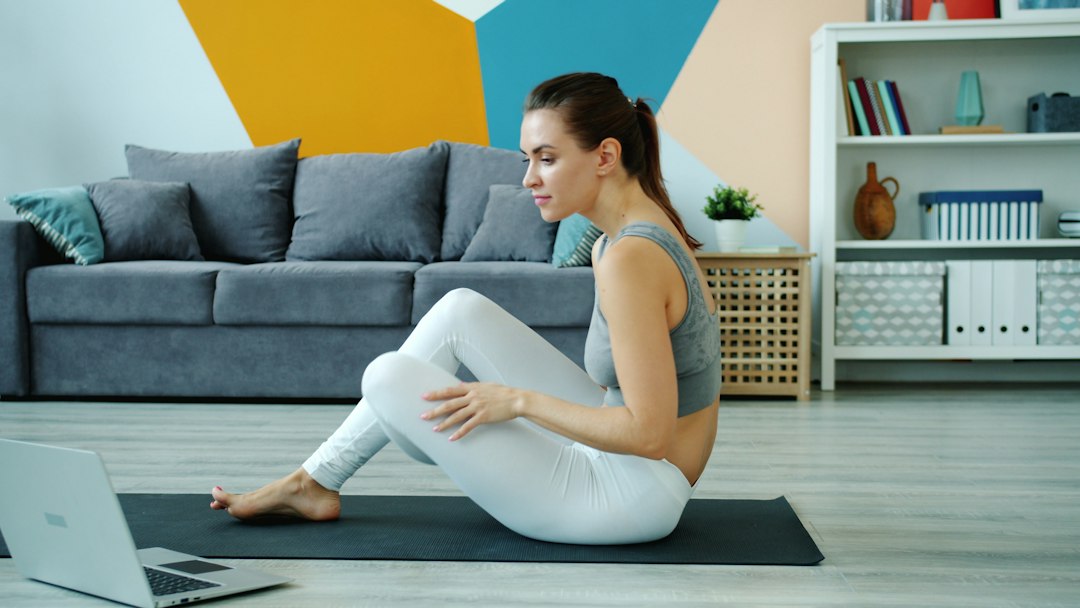
Back pain physiotherapy treatment at home is one of the most practical and evidence-backed ways to reduce pain, restore movement, and avoid unnecessary surgery — without a single clinic visit.
Here is what the research shows works, at a glance:
About 8 in 10 Americans will experience back pain at some point in their lives. And here is the part most people do not expect: roughly 90% of those cases are "non-specific," meaning no single structural cause — like a fracture or severe disc herniation — is driving the pain. That is actually good news. It means that for most people, a structured, active home program can make a real difference.
The key word is active. Stopping movement, even with the best intentions, causes muscles and joints to tighten, which typically makes things worse. The goal of home physiotherapy is not to push through sharp pain, but to gradually restore safe, confident movement.
I'm Sonny Dosanjh, M.D., board-certified in Physical Medicine & Rehabilitation and fellowship-trained in Multidisciplinary Pain Management through Emory University, and I've built my clinical practice around helping patients find effective, non-surgical paths to recovery — including back pain physiotherapy treatment at home as a core part of that plan. In this guide, I'll walk you through exactly how to do it safely, based on your specific diagnosis and pain pattern.

When we talk to patients in Kennesaw, Snellville, or Marietta, a common question arises: "Can I actually get better doing this in my living room, or do I need to drive to a clinic three times a week?"
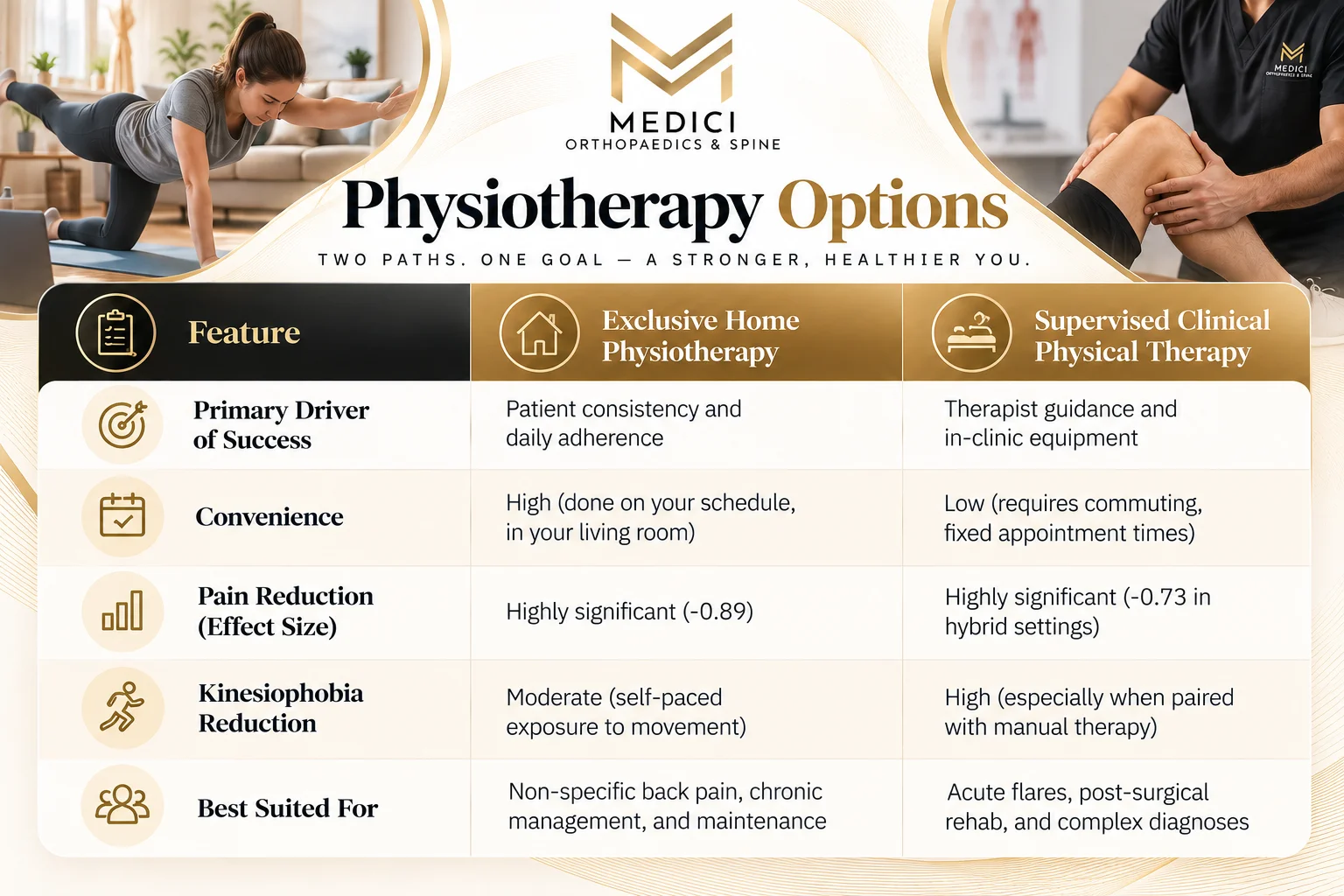
The scientific consensus is clear. A landmark systematic review and meta-analysis of 33 randomized controlled trials consisting of 9,588 patients proved that home-based exercise training significantly decreases both pain intensity and functional limitations. According to the study, published in MDPI Efficacy, pain intensity decreased dramatically in the exclusive home exercise group (Effect size = -0.89), and functional limitations also saw a massive reduction (-0.75).
What is even more fascinating is that exclusive home exercise performed just as well—and in some metrics, slightly better—than a hybrid program. This highlights a fundamental truth in rehabilitation: consistency and adherence matter more than the physical location of your therapy. When you learn how to perform these movements at home, you remove the barriers of travel, scheduling, and clinic anxiety, making it much easier to stick to your routine.
To help you understand how home-based recovery compares to traditional clinical physical therapy, we have broken down the key differences below:
While home exercises are incredibly powerful, we often find that a hybrid model works best for complex cases. For example, getting an initial evaluation to learn correct form and then transitioning to a dedicated home routine is a highly successful pathway. If you want to explore professional guidance to kickstart your journey, you can learn more about our approach to Physical Therapy for Back Pain in Kennesaw.
Before you lie down on your living room floor or yoga mat, we must establish a safety framework. The most common mistake we see patients make is adopting a "no pain, no gain" mentality. In spine rehabilitation, that mindset is a fast track to a severe flare-up.
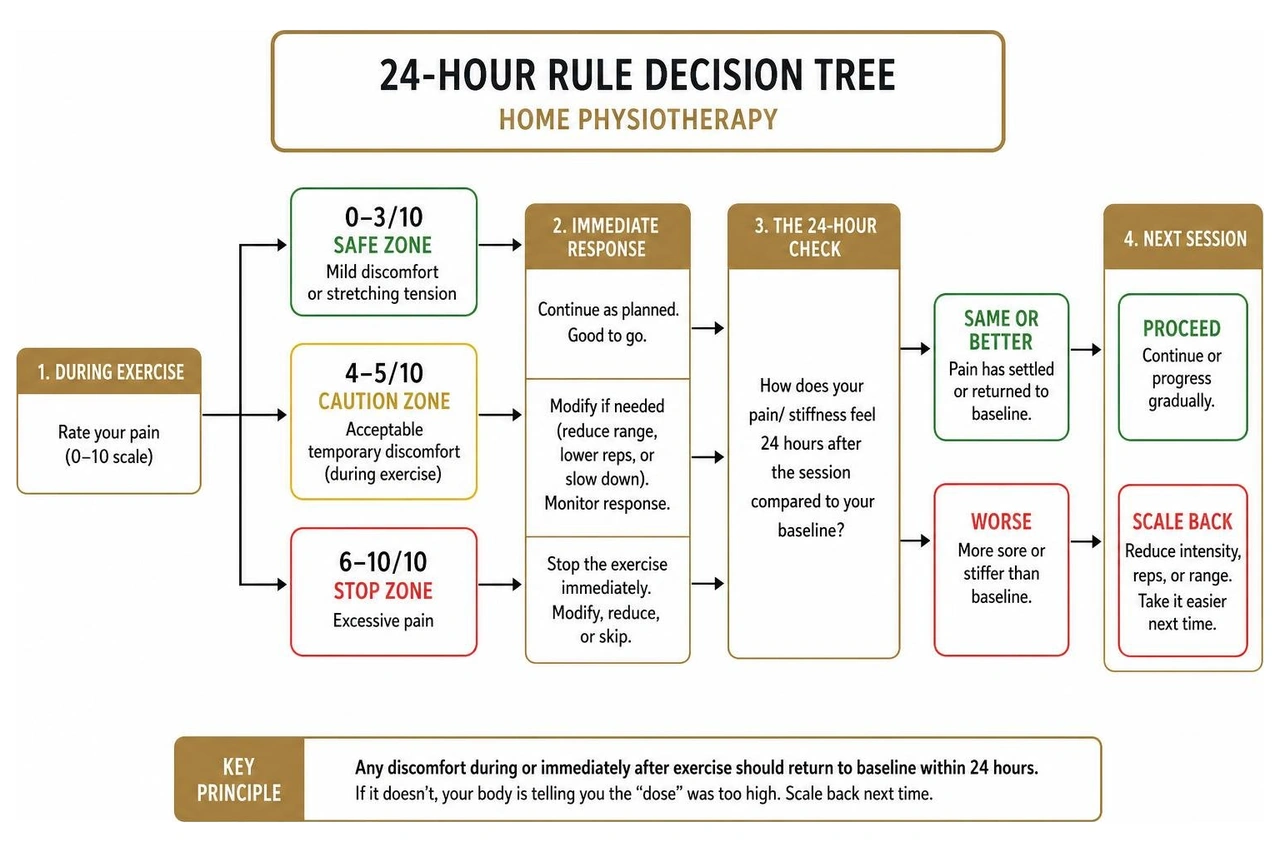
To keep your recovery safe and measurable, we use a simple 0-to-10 Pain Scale and the 24-Hour Rule:
The 24-Hour Rule: Any discomfort you feel during or immediately after your home session should settle back to your baseline within 24 hours. If you are sorer the next day, your body is telling you that the "dose" of exercise was too high. Simply scale back the intensity or repetitions during your next session.
While home physiotherapy is highly effective for mechanical back pain, certain symptoms indicate a structural or neurological issue that home exercises cannot fix. Seek urgent medical attention if you experience any of the following "red flags":
If you are experiencing severe or worsening symptoms without these red flags, a professional clinical evaluation is the safest next step. You can read more about our comprehensive, non-surgical options by visiting our guide on Non-Surgical Spine Treatment in Georgia.
Not all back pain is created equal. An exercise that brings instant relief to someone with a herniated disc could cause agonizing pain for someone with spinal stenosis. To make your back pain physiotherapy treatment at home successful, you must determine your "better direction" of movement.
Clinically, we categorize patients into two primary movement profiles:
For a deeper dive into choosing the right movements for your specific pain pattern, explore our detailed resource on Exercises for Lower Back Pain Relief.
Now that you understand your safety parameters and movement profile, let us dive into the physical therapy exercises. We recommend performing these movements on a firm surface, such as a carpeted floor or a yoga mat. Avoid doing them on a soft mattress, as it does not provide enough spinal support.

When you experience acute back pain, your nervous system triggers muscle guarding—an automatic protective response where your muscles contract tightly to prevent movement around the sensitive spinal joints. To calm this guarding, we start with gentle mobility before progressing to core stabilization.
For a highly detailed, step-by-step breakdown of clinical home programs, you can also consult Dr. Vivek Arora's Home Program Guide, which provides excellent clinical context for these foundational movements.
If your back pain is accompanied by a shooting, burning sensation, or tingling down your leg, you are likely dealing with sciatica or nerve root compression. In these cases, aggressive stretching can irritate the nerve further. Instead, we use a technique called nerve flossing (or nerve gliding) alongside targeted hip stretches.
The primary goal when treating nerve symptoms is centralization. If your leg pain begins to move upward toward your lower back, this is a highly positive prognostic sign—it means the pressure on the nerve is decreasing. Conversely, if your back pain decreases but your leg pain moves further down toward your foot, stop the exercise immediately.
If your nerve pain persists or makes it difficult to walk, specialized clinical support may be necessary. You can find expert physical therapists near you by checking out our page on Physical Therapy for Lumbar Spine Pain Near Me.
Consistency is the absolute key to a successful back pain physiotherapy treatment at home program. A single 45-minute workout once a week will not retrain your nervous system or build durable spinal stability. Instead, aim for 15 minutes of focused movement daily.
As your back begins to feel stronger and less reactive, you can progress your exercises by changing one variable at a time:
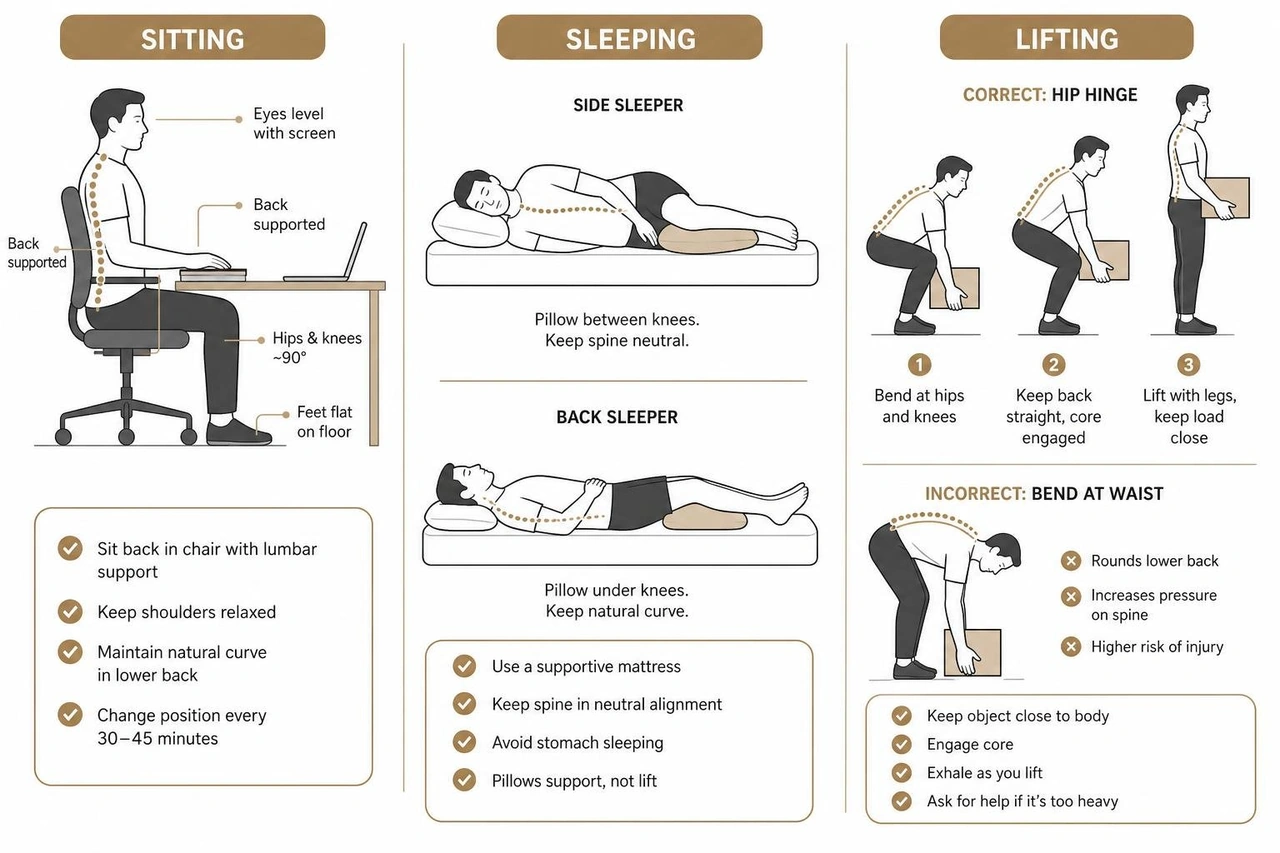
Exercises alone cannot overcome 8 to 10 hours of poor daily mechanics. To give your spine the environment it needs to heal, implement these simple lifestyle modifications:
A fascinating 2024 study published in MDPI Synergy revealed that while home exercises are incredibly effective, combining them with professional manual therapy or clinical physical therapy sessions twice a week yielded a 70% to 78% reduction in pain and disability in just 6 weeks. Furthermore, this combined approach cut kinesiophobia (the fear of movement) in half.
If you are struggling with chronic pain and want to explore how to combine home care with advanced clinical treatments, read our guide on How to Manage Chronic Pain Without Surgery.
Your body requires the right building blocks to repair damaged spinal tissues and calm systemic inflammation. To support your physical therapy, consider these dietary adjustments:
For a comprehensive evidence-based overview of how nutrition, emerging therapies, and home exercises work together, you can read the V Cure Ultimate Guide to Home Physiotherapy.
By focusing on active movement and healthy lifestyle habits, many patients can successfully manage their pain without relying on heavy medications. Learn more about finding Back Pain Relief Without Opioids in GA.
Most patients notice a reduction in acute muscle guarding and stiffness within 1 to 2 weeks of consistent daily practice. True muscle strengthening and tissue healing take longer—typically 4 to 6 weeks to see noticeable functional improvements.
If you do not see any improvement after 6 weeks of consistent home exercise, it is time to consult a specialist to refine your program. To learn more about avoiding invasive procedures through early physical therapy, read our FAQ on Can I Avoid Back Surgery with Physical Therapy in Kennesaw.
If a structured home program does not provide the relief you need, you do not have to jump straight to surgery. At Medici Orthopaedics & Spine, we offer several advanced, minimally invasive treatments that work synergistically with physical therapy. These include:
To explore these options in detail, read our guide on What Are the Most Effective Non-Surgical Options for Back Pain.
Yes, but you must modify your movements. Patients with spinal stenosis have a narrowed spinal canal, which pinches nerves when the spine is extended (arched backward). You should strictly focus on flexion-friendly exercises—such as double knee-to-chest hugs, pelvic tilts, and seated forward bends. Avoid standing back extensions, cobra stretches, or prolonged standing.
For a comprehensive list of non-surgical treatments tailored for stenosis, see our resource on the Best Non-Surgical Treatments for Back Pain.
Taking control of your spinal health starting today is entirely possible. By dedicating just 15 minutes a day to a structured, diagnosis-informed home program, you can calm muscle guarding, rebuild core stability, and reclaim your quality of life.
At Medici Orthopaedics & Spine, under the leadership of Dr. Sonny Dosanjh, M.D., we are deeply committed to Optimally Restoring your Quality of Life with the most effective, least invasive, and least drug-dependent programs medically available today. We believe that physical therapy, home exercises, and advanced non-surgical treatments work best when they are integrated into a personalized, patient-centered plan.
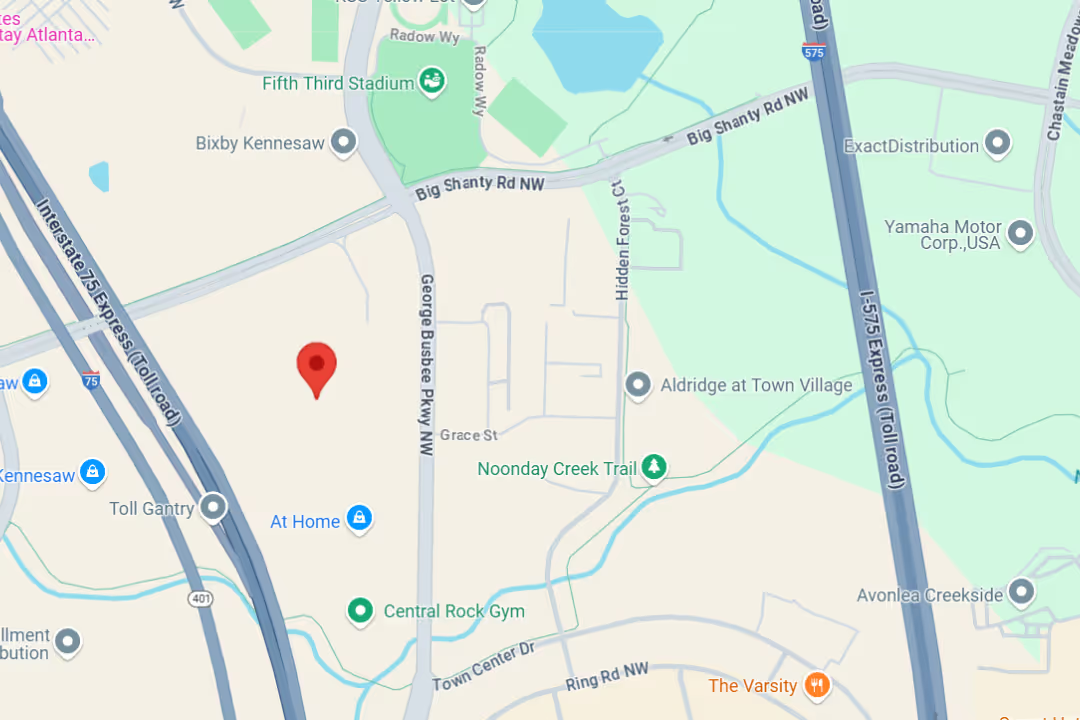
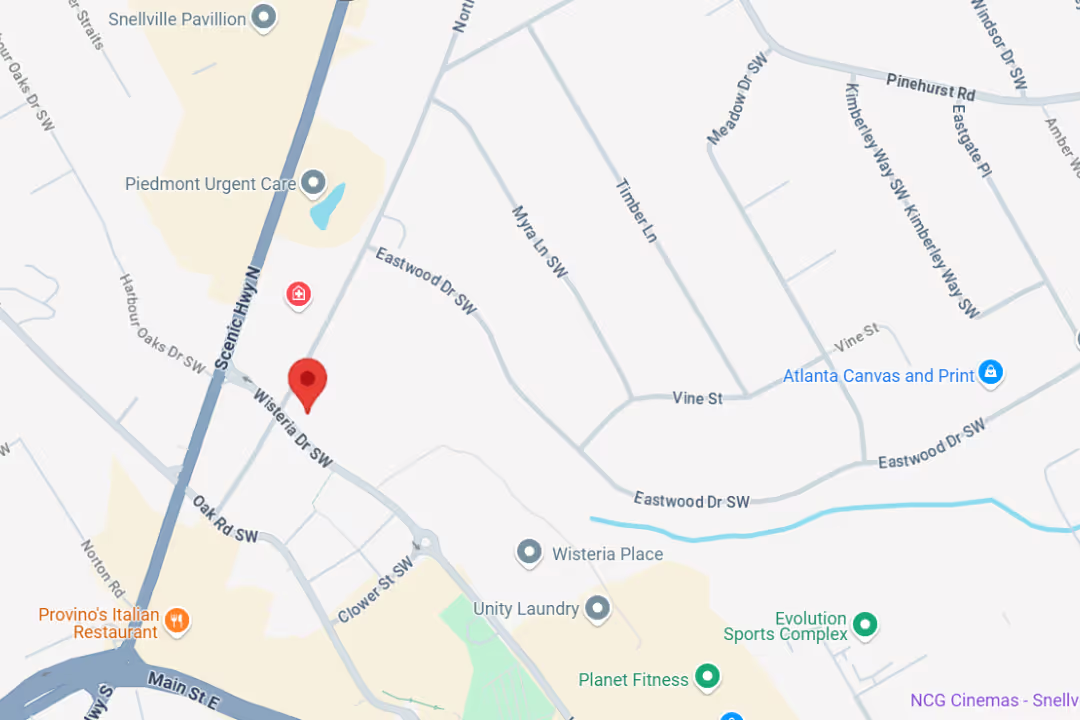
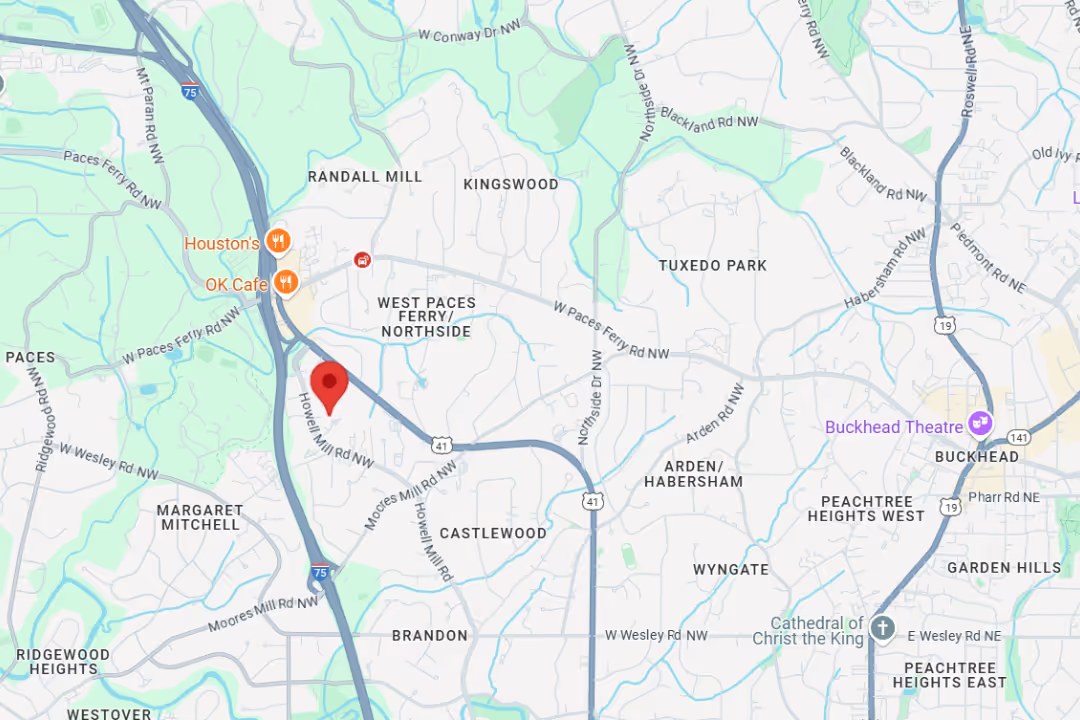
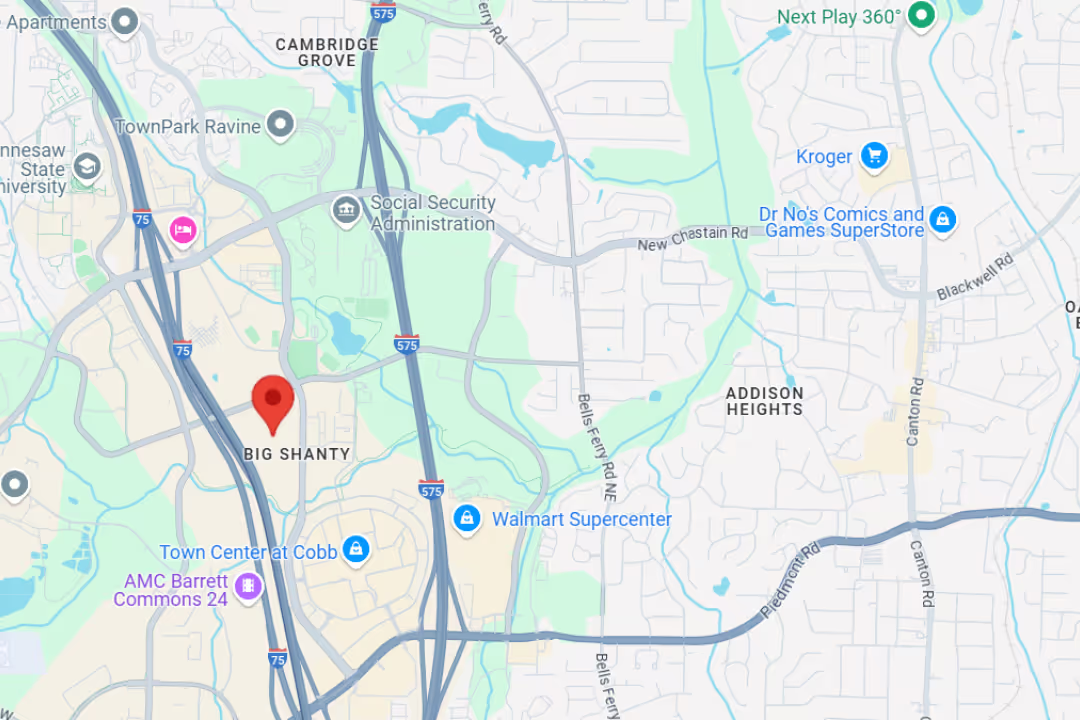
If your back pain is holding you back from the activities you love, let us help you find the right path forward. We have convenient clinic and surgery center locations across Metro Atlanta, including Snellville, Kennesaw, Marietta, and Buckhead.
Ready to take the next step toward lasting relief? Schedule a physical therapy consultation with our expert team today.
At Medici, you’re more than your MRI.
We take time to hear your story, understand your pain, and create a plan that actually works for you.

Our team delivers specialist care at convenient locations across Metro Atlanta:
Get expert tips on injury recovery, pain relief, joint health, and movement strategies—straight from our Fellowship-Trained team.