Chronic nerve pain management is one of the most challenging areas of modern medicine — and one of the most important.
Here's a quick overview of the most effective approaches:
| Approach | Examples |
|---|---|
| First-line medications | Gabapentin, pregabalin, duloxetine, amitriptyline |
| Topical treatments | Lidocaine patches, capsaicin cream |
| Interventional procedures | Spinal cord stimulation, nerve blocks |
| Physical & complementary therapy | Physical therapy, acupuncture, TENS |
| Lifestyle changes | Anti-inflammatory diet, exercise, limiting alcohol |
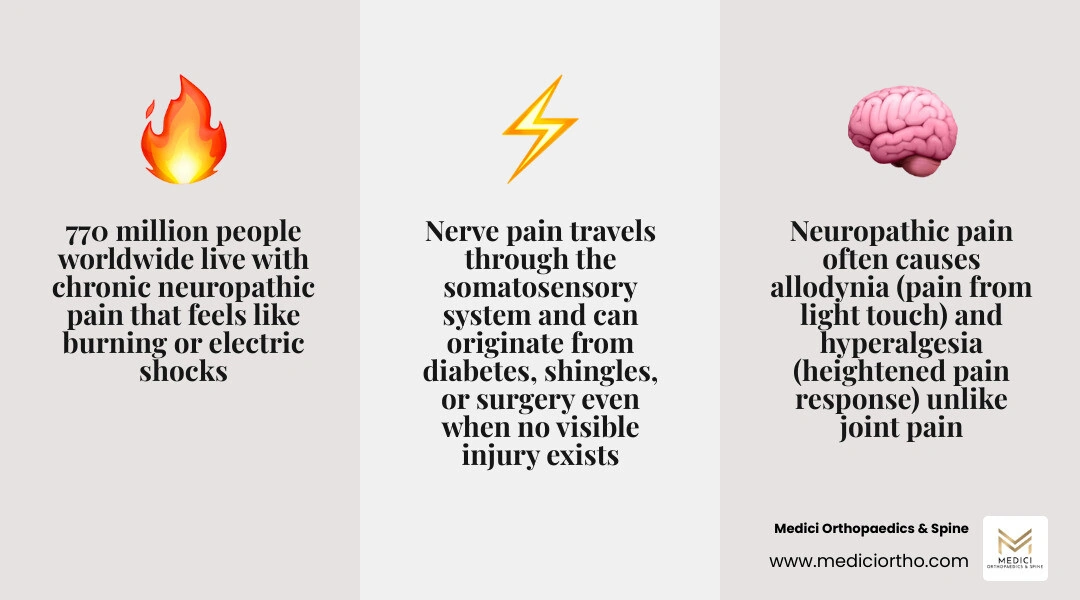
If you've ever felt a burning, stabbing, or electric-shock sensation that just won't go away, you're not alone. Approximately 770 million people worldwide live with chronic nerve pain. And unlike a sprained ankle or sore knee, nerve pain doesn't always have an obvious cause — which makes it frustrating to diagnose and even harder to treat.
The pain can feel relentless. It may wake you up at night. It may make simple tasks — walking, typing, even wearing socks — feel unbearable.
What makes it more confusing is that nerve pain is often mistaken for joint pain, and vice versa. Treating the wrong type of pain leads to wasted time, ineffective treatment, and unnecessary suffering.
That's exactly what this guide is here to fix.
I'm Sonny Dosanjh, M.D., CEO and founder of Medici Orthopaedics & Spine, board certified in Physical Medicine & Rehabilitation, and fellowship trained in Multidisciplinary Pain Management at Emory University — where chronic nerve pain management has been at the core of my clinical work for years. In this guide, I'll walk you through how to tell nerve pain apart from joint pain, what treatment options actually work, and how to build a plan that fits your life.
To find lasting relief, we must first identify what is actually causing your discomfort. Broadly speaking, chronic pain falls into two primary categories: nociceptive pain and neuropathic pain.
Nociceptive pain is the body's natural response to tissue damage. Think of osteoarthritis in your knee, a sprained wrist, or a bruised muscle. Specialized pain receptors called nociceptors detect damage to bones, joints, and muscles, sending signals to your brain that feel like a dull ache, throbbing, or stiffness. This pain is usually localized and worsens with physical movement.
Neuropathic pain, on the other hand, is caused by a lesion or disease affecting the somatosensory nervous system itself. Instead of transmitting a warning signal about damaged tissue, the nerve itself is damaged, compressed, or malfunctioning. It fires erratic, inappropriate electrical impulses directly to the brain. This is why we often say neuropathic pain is a disease of the nervous system, whereas nociceptive pain is a symptom of tissue injury.
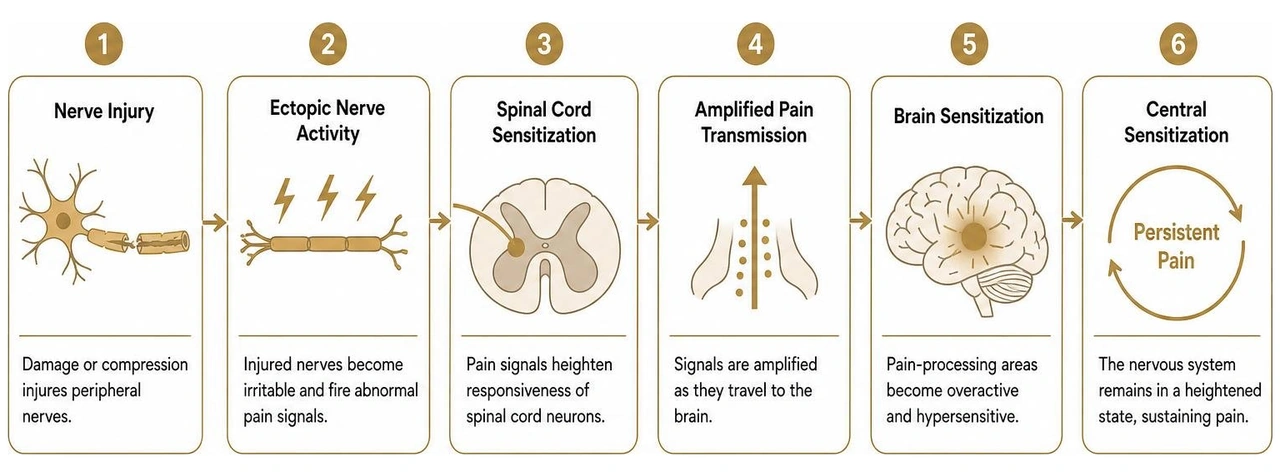
Living with neuropathic pain introduces unique, often distressing sensory symptoms:
These symptoms can stem from several common clinical presentations:
Understanding these differences is crucial because conventional pain relievers like ibuprofen or traditional opioids often do very little to soothe damaged nerves.
| Feature | Nociceptive (Joint/Tissue) Pain | Neuropathic (Nerve) Pain |
|---|---|---|
| Primary Cause | Injury or inflammation of joints, muscles, or bones | Damage, disease, or compression of the somatosensory nerves |
| Sensation | Dull, aching, throbbing, heavy | Burning, stabbing, shooting, electric-shock, coldness |
| Triggers | Physical movement, weight-bearing, direct pressure | Spontaneous; light touch (allodynia); temperature changes |
| Common Examples | Knee osteoarthritis, hip bursitis, ankle sprains | Diabetic neuropathy, sciatica, shingles, carpal tunnel |
| Response to NSAIDs | Often highly responsive | Poorly responsive; requires specialized neuro-active therapies |
When we design a plan for chronic nerve pain management, pharmacotherapy is often an important baseline. However, we do not prescribe medications blindly. The goal of medical management is to find the lowest effective dose that dampens hyperactive nerve signaling while minimizing side effects.
This requires careful dosage titration—gradually increasing the medication over three to four weeks—to allow your body to adapt. If a patient experiences poor tolerability or drug-related adverse effects, we employ treatment rotation, carefully tapering off one medication while introducing another to avoid withdrawal symptoms.
Clinical guidelines, including the NICE pharmacological guidelines, recommend four primary first-line medications for neuropathic pain (excluding trigeminal neuralgia, which is uniquely treated first-line with carbamazepine). These medications do not simply mask pain; they actively quiet down overactive nerves.
For patients seeking to avoid systemic drugs or traditional narcotics, exploring Non-Opioid Pain Relief for Nerve Pain is a highly effective, safer path forward.
When first-line therapies fail to provide adequate relief or cause intolerable side effects, we look to second- and third-line options. As detailed in the Evolving Treatment Strategies Narrative Review, these therapies are reserved for specific clinical scenarios or refractory cases.
Relying solely on medications is rarely enough. In fact, fewer than 50% of patients achieve satisfactory relief through pharmacotherapy alone. True recovery requires multimodal care—a strategy where we combine interventional procedures, physical therapy, and lifestyle modifications to attack pain from multiple angles.
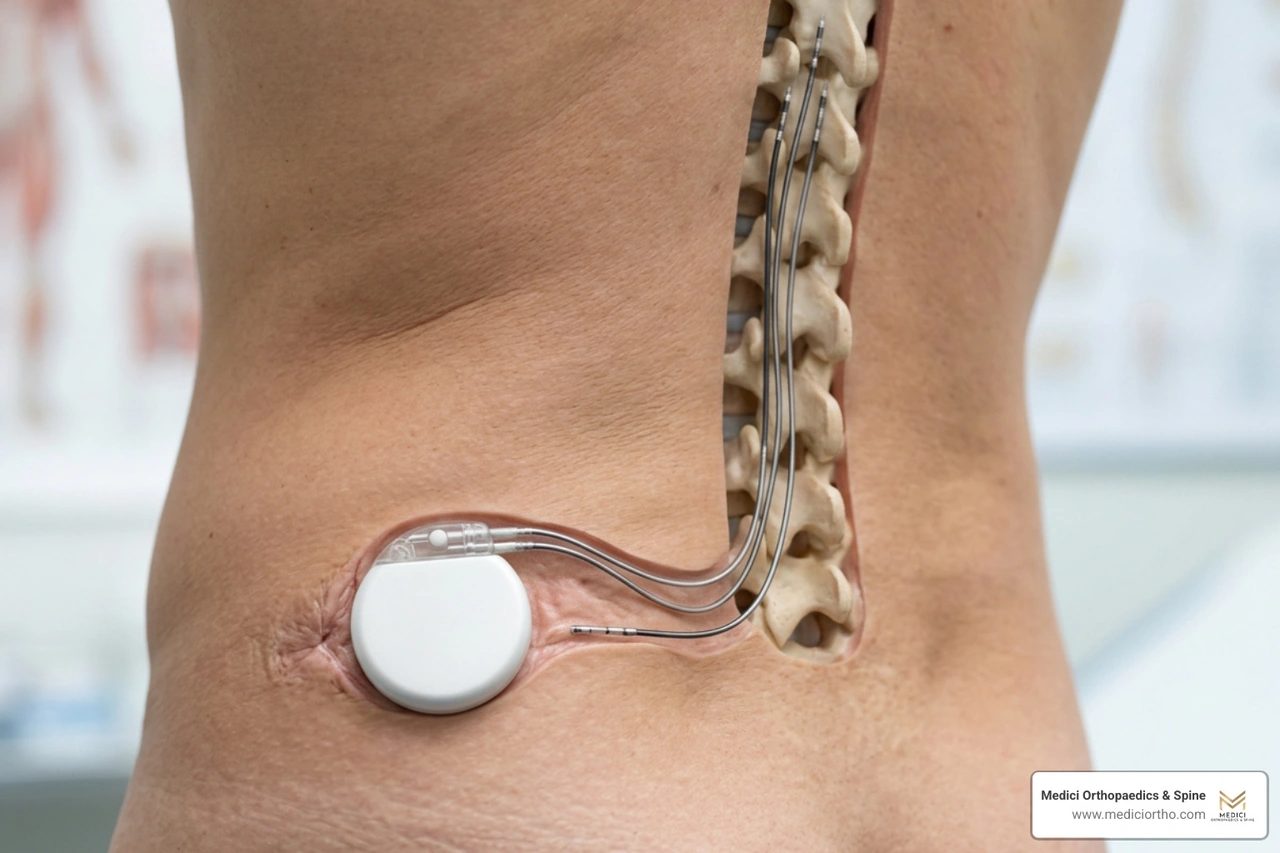
When conservative measures fall short, advanced interventional procedures can target the pain source directly.
At Medici Orthopaedics & Spine, we believe that movement is medicine. We design physical therapy protocols to preserve mobility, strengthen supporting muscle groups, and desensitize irritated nerve endings.
No two patients experience nerve pain the exact same way. To build a successful treatment plan, we begin with a comprehensive diagnostic screening. We use validated clinical screening tools like the DN4 (Douleur Neuropathique 4), LANSS, or painDETECT to confirm a neuropathic diagnosis.
We also perform objective electrodiagnostic testing, including Electromyography (EMG) and Nerve Conduction Studies (NCS), to pinpoint exactly where and how severely a nerve is damaged.
If you are looking for specialized, local care in the Metro Atlanta area, we encourage you to consult with a Nerve Pain Specialist Near Atlanta to start your personalized path to recovery.
Neuropathic pain is typically described as a sharp, shooting, stabbing, or burning sensation, often feeling like an electric shock. It can also cause skin sensitivity where even a light touch hurts. Joint pain, by contrast, is usually a deep, dull, localized ache or throbbing discomfort that worsens with movement and feels stiff in the morning.
Absolutely. Eating a balanced, anti-inflammatory diet, limiting alcohol (which is toxic to nerve tissue), and staying active are vital steps. Supplements like 600 mg of alpha-lipoic acid daily and vitamin B12 can support nerve health and reduce symptoms, especially in diabetic neuropathy.
You should see a specialist if your pain is severe, limits your daily activities, disrupts your sleep, or does not improve with over-the-counter anti-inflammatories. Seek immediate medical attention if you experience progressive numbness, muscle weakness, or a sudden loss of bowel or bladder control.
Living with chronic nerve pain can feel like an uphill battle, but you do not have to fight it alone. At Medici Orthopaedics & Spine, Dr. Sonny Dosanjh and our highly trained team are dedicated to delivering minimally invasive, non-surgical treatments for joint, spine, and nerve pain.
We believe in integrated, patient-centered care. Our ultimate goal is to optimally restore your quality of life using the most effective, least invasive, and least drug-dependent programs medically available today. Many of our therapies work synergistically—meaning physical therapy, lifestyle changes, and advanced interventional procedures work better together than any single treatment could alone.
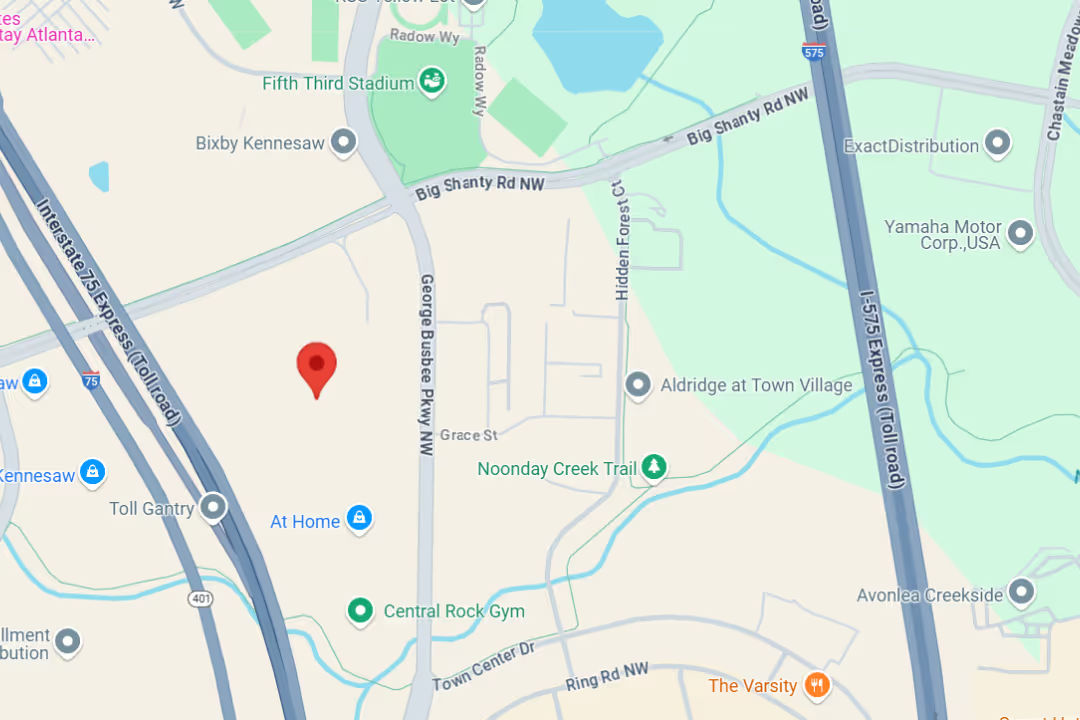
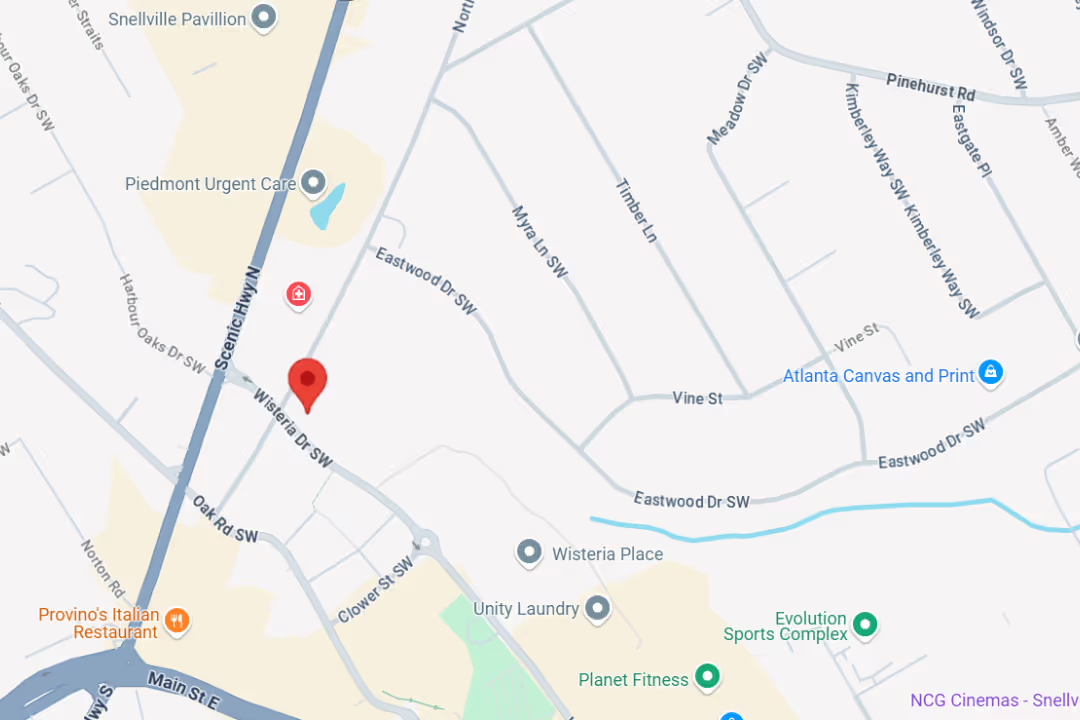
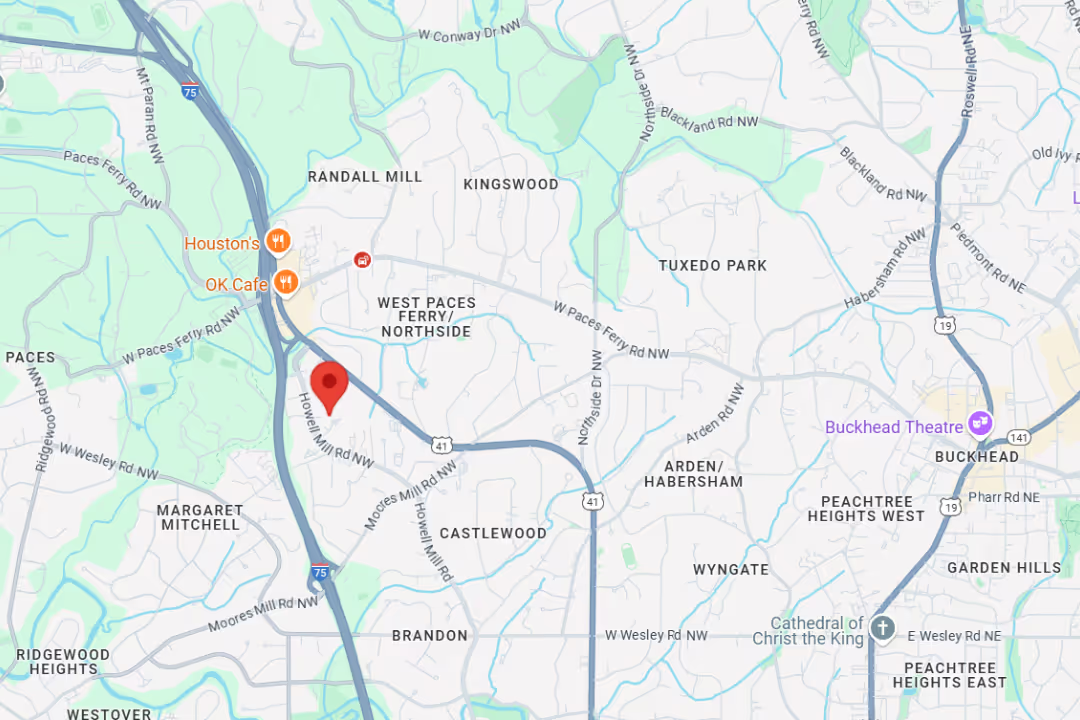
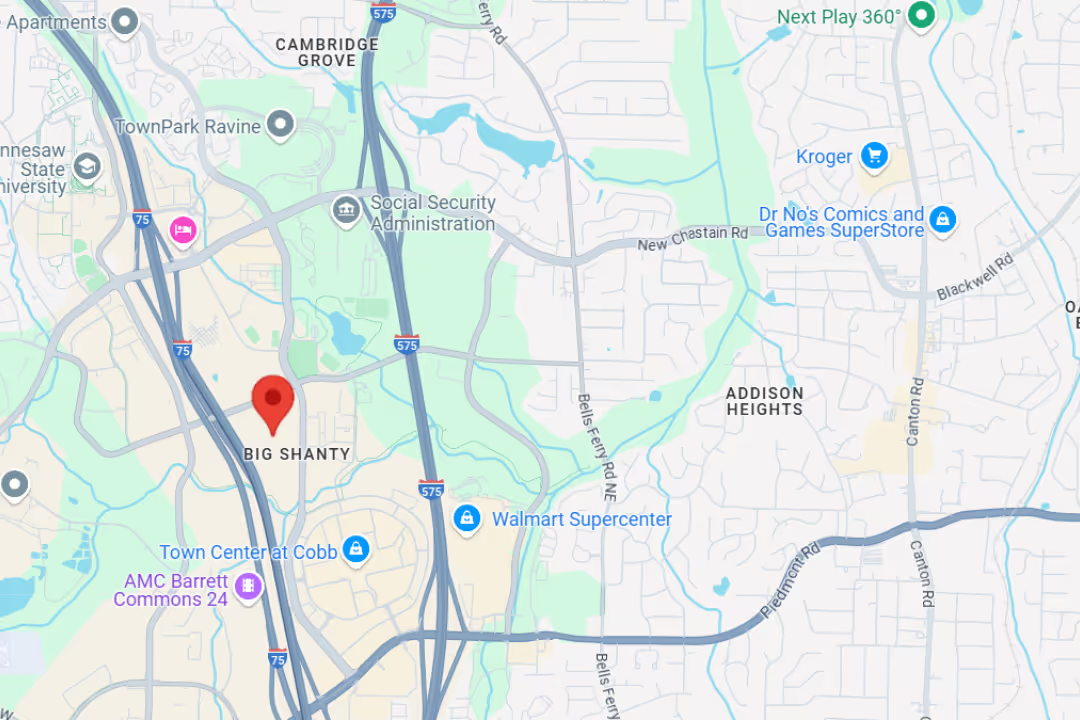
If you are ready to take control of your discomfort and explore cutting-edge solutions, visit our Diabetic Neuropathy Treatment Near Me page to schedule a consultation at one of our convenient Metro Atlanta locations in Snellville, Kennesaw, Marietta, or Buckhead. Let's work together to restore your ability to enjoy life to the fullest.
At Medici, you’re more than your MRI.
We take time to hear your story, understand your pain, and create a plan that actually works for you.

Our team delivers specialist care at convenient locations across Metro Atlanta:
Get expert tips on injury recovery, pain relief, joint health, and movement strategies—straight from our Fellowship-Trained team.