Choosing the right compression sleeve for radial tunnel syndrome can make a real difference in your daily comfort — here is a quick overview of what works:
| Support Type | Best For | Key Benefit |
|---|---|---|
| Elastic compression sleeve | Daytime activity | Limits aggravating movement without restricting all motion |
| Prefabricated wrist splint | Nighttime relief | Holds wrist at ~15° extension to reduce nerve irritation |
| Elbow splint (90° flexion) | Severe flare-ups | Places radial nerve in position of least compression |
| Counterforce brace | ❌ Avoid for RTS | Can worsen nerve compression — designed for tennis elbow |
Radial tunnel syndrome (RTS) is a nerve compression condition where the radial nerve gets pinched as it passes through a narrow tunnel near the elbow. The result? A deep, nagging ache in the outer forearm that often gets mistaken for tennis elbow — and frequently gets mistreated with the wrong kind of brace.
The frustrating part: standard nerve tests like EMG often come back completely normal, leaving patients without a clear diagnosis or a clear path forward. Many people spend months wearing the wrong support device, which can actually make things worse.
The good news is that conservative care — including the right supportive sleeve, activity modification, and targeted exercises — relieves symptoms for most people without surgery.
I'm Dr. Sonny Dosanjh, M.D., board-certified in Physical Medicine & Rehabilitation and fellowship-trained in Multidisciplinary Pain Management through Emory University, and I've helped many patients find lasting relief from nerve compression conditions like RTS through non-surgical approaches — including guidance on how to properly use a compression sleeve for radial tunnel syndrome as part of a broader recovery plan. In the sections below, I'll walk you through what to look for, what to avoid, and how to choose the right support for your specific needs.
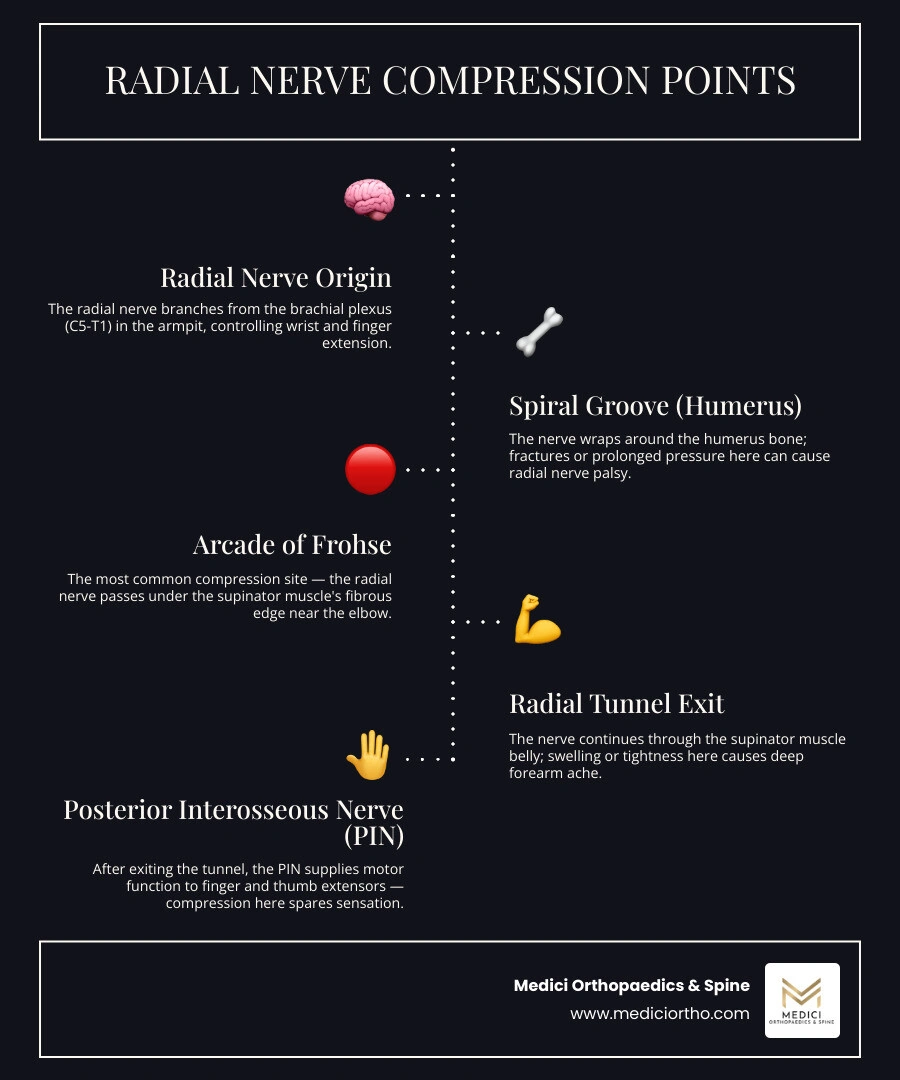
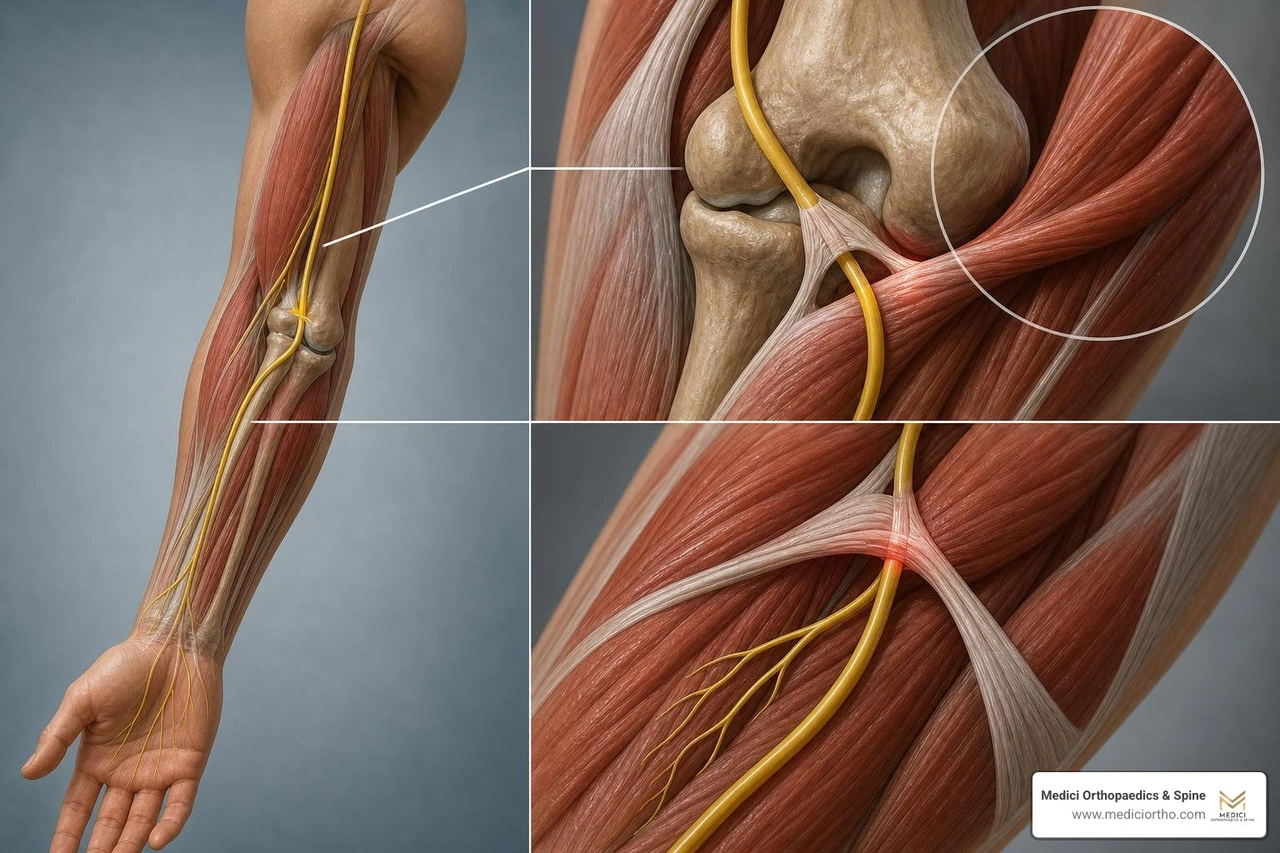
To understand how a compression sleeve for radial tunnel syndrome helps, we must first look at the unique anatomy of the radial nerve. The radial nerve travels down the arm, controlling the muscles that allow you to extend your wrist and fingers. Near the elbow, it splits into branches, including the posterior interosseous nerve (PIN).
As the PIN enters the forearm, it passes through a 5-centimeter pathway of muscles, tendons, and bones known as the radial tunnel. The most common anatomical "pinch-point" within this tunnel is the Arcade of Frohse, which is a thickened, fibrous proximal edge of the supinator muscle. Repetitive twisting, pulling, or gripping can cause the surrounding muscles to inflame, compressing the nerve. According to clinical literature on Radial Tunnel Syndrome - StatPearls - NCBI Bookshelf, this is primarily a "pain-only" neuropathy, meaning it causes intense, deep aching but rarely results in structural sensory loss or true muscle paralysis.
It is highly common for RTS to be misdiagnosed because its symptoms overlap with other conditions. Here is how RTS differs from similar upper extremity issues:
If you are struggling with persistent discomfort in this area, we recommend exploring our guides on Arm Pain and Elbow Injuries to better understand your symptoms, or visiting our dedicated page on Radial Tunnel Syndrome.
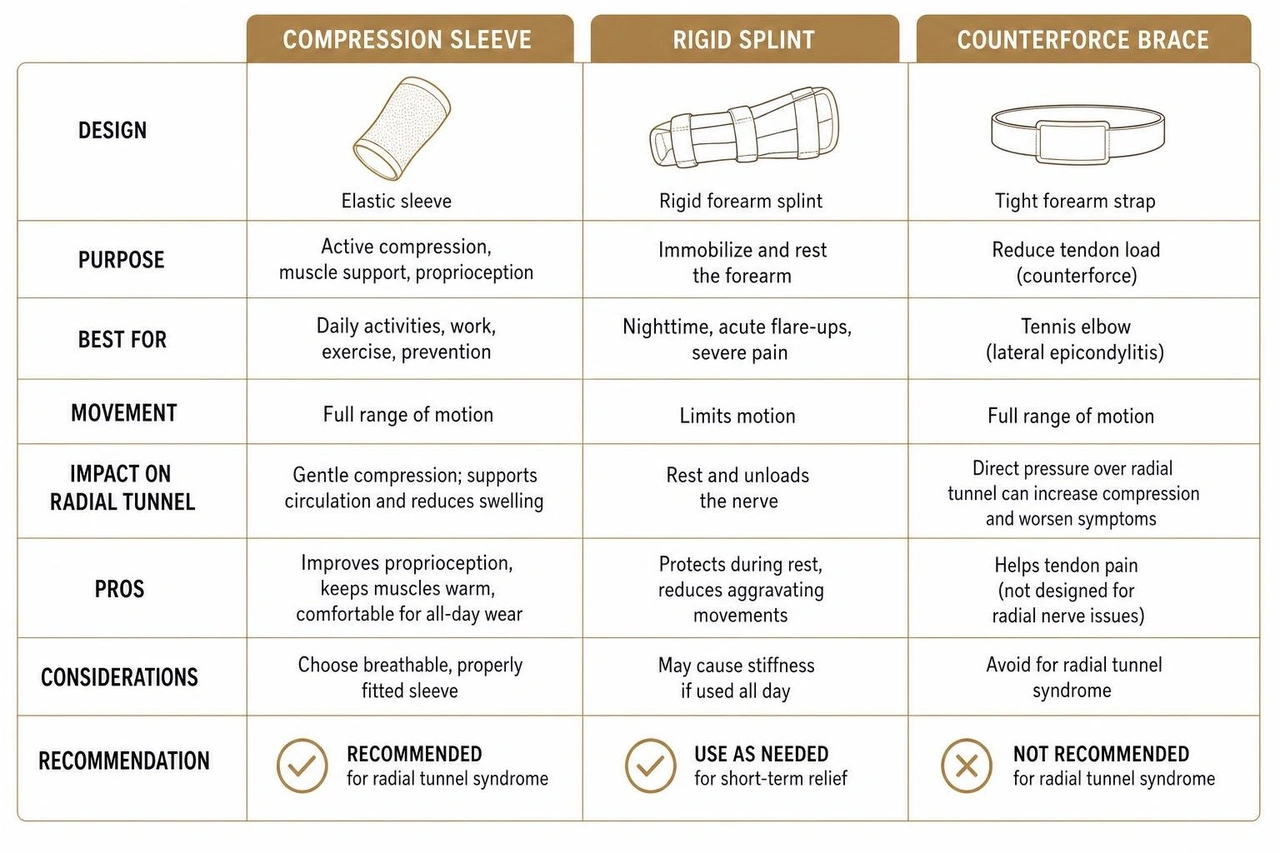
When managing radial nerve irritation, choosing between a flexible compression sleeve and a rigid splint depends entirely on your daily activities and the severity of your symptoms.
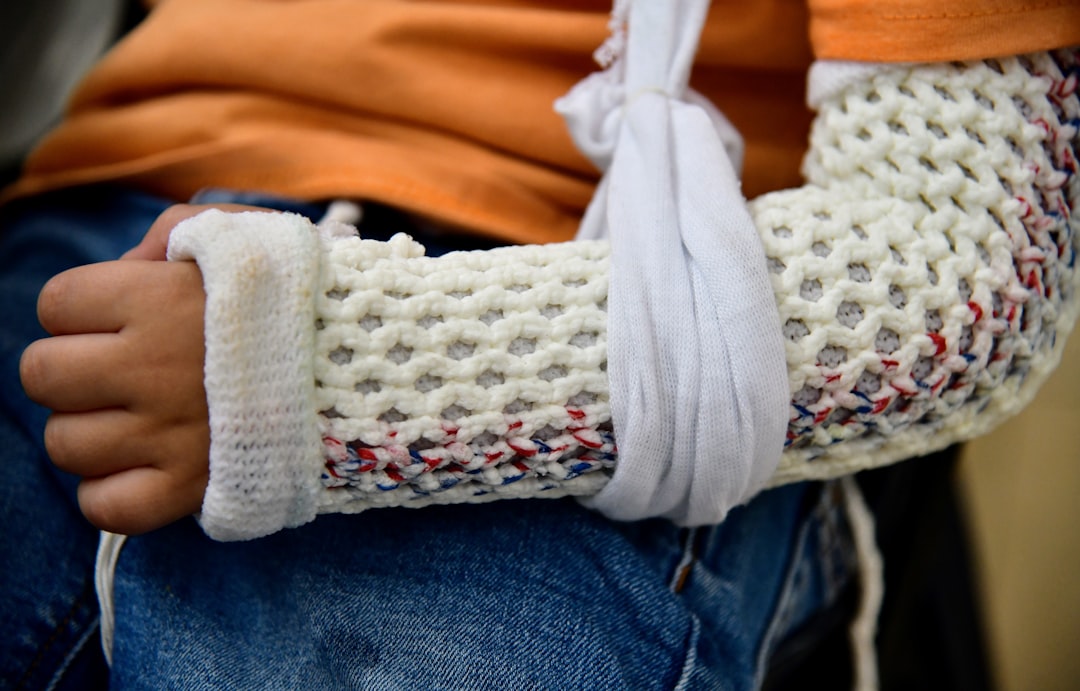
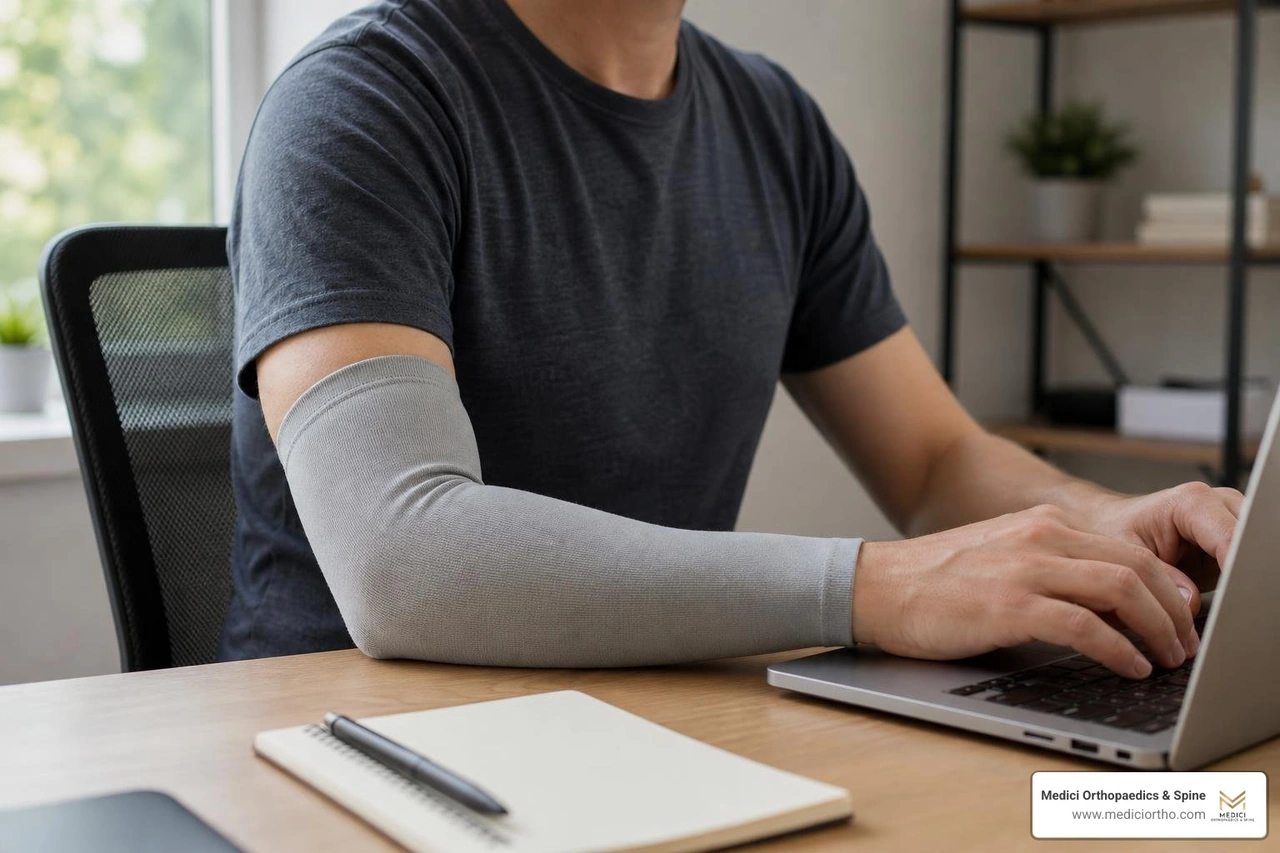
An elastic compression sleeve for radial tunnel syndrome provides "active compression." It does not lock your joints in place; instead, it offers a gentle squeeze that improves blood circulation, keeps the muscles warm, and enhances proprioception (your brain's awareness of your arm's position). This extra sensory feedback helps you avoid awkward, repetitive twisting motions that trigger pain.
By contrast, rigid splinting is designed to eliminate movement. While a rigid splint is excellent for overnight recovery or during severe flare-ups, wearing one all day can lead to muscle stiffness and weakness.
It is crucial to understand that standard tennis elbow counterforce bands should be avoided. These tight bands are designed to squeeze the forearm muscles to relieve tendon tension. However, placing a tight band directly over an already compressed radial nerve will spike the pressure inside the radial tunnel. Research shows that while normal radial tunnel pressure is around 50 mmHg, forced muscle contraction or external squeezing can spike this pressure to a severe 250 mmHg, worsening your symptoms.
A fascinating parallel can be drawn from A preliminary study of radioulnar wrist compression in improving patient-reported outcomes of carpal tunnel syndrome, which demonstrated that targeted, low-level compression can improve nerve symptoms by subtly altering joint mechanics and reducing localized swelling. However, this compression must be perfectly calibrated.
If you are shopping for a compression sleeve, look for these design features to ensure you protect your nerve rather than pinch it further:
To get the most out of your sleeve without risking complications, we recommend following these practical guidelines:
Yes. A high-quality, breathable compression sleeve is highly versatile. By increasing blood flow and stabilizing the surrounding tissues, it can help soothe localized tendonitis (such as lateral epicondylitis or de Quervain's tenosynovitis) and provide comforting warmth for elbow or wrist arthritis. However, if you are dealing with multiple conditions, it is vital to ensure the sleeve does not apply direct, hard pressure over the radial nerve pathway.
This is one of the most frustrating aspects of RTS. Electromyography (EMG) and nerve conduction velocity (NCV) studies measure the electrical signals traveling through large, myelinated motor nerve fibers. However, RTS primarily compresses the unmyelinated Group IV and small myelinated Group IIA fibers. These tiny fibers transmit deep pain and temperature sensations but are too small to be measured by standard electrodiagnostic equipment.
Because of this, we rely heavily on a comprehensive clinical exam, including the "Rule-of-Nine" test—where we systematically palpate nine specific spots on your forearm to isolate the exact source of your pain, as outlined in Radial Tunnel Syndrome: Symptoms, Causes & Treatment.
Nerves heal slowly. Most patients who commit to a conservative treatment plan—combining a supportive sleeve, activity modification, and physical therapy—experience significant pain relief within 6 to 12 weeks. If your pain does not improve after 12 weeks, or if you begin to notice progressive muscle weakness in your fingers, it is time to consult an orthopedic specialist to discuss advanced, non-surgical options.
Finding relief from radial tunnel syndrome requires a patient, conservative approach. A high-quality compression sleeve for radial tunnel syndrome is an excellent tool to manage daytime discomfort, improve blood circulation, and protect your forearm muscles during daily tasks. However, it should always be used as part of a comprehensive recovery plan that includes targeted stretching, ergonomic modifications, and proper nighttime splinting.
At Medici Orthopedics & Spine, our team is committed to Optimally Restoring your Quality of Life with the most effective, least invasive, least drug-dependent programs medically available today. Under the leadership of Dr. Sonny Dosanjh, M.D., we specialize in delivering customized, non-surgical treatments—ranging from specialized Physical Therapy and myofascial release to advanced regenerative medicine and targeted injections.
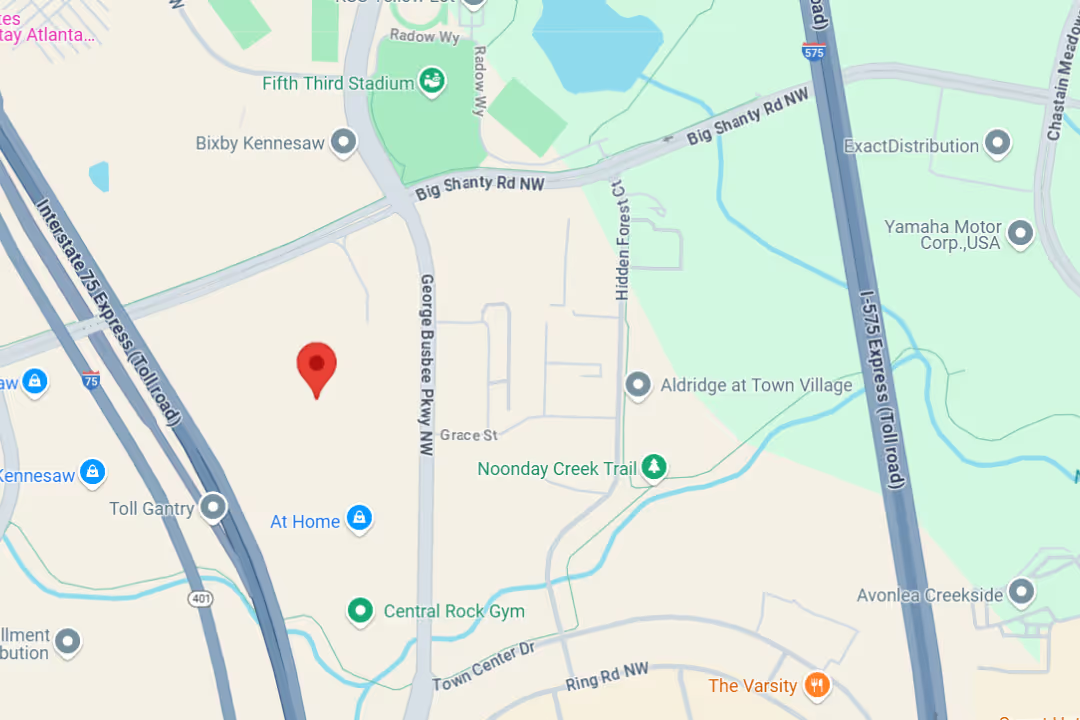
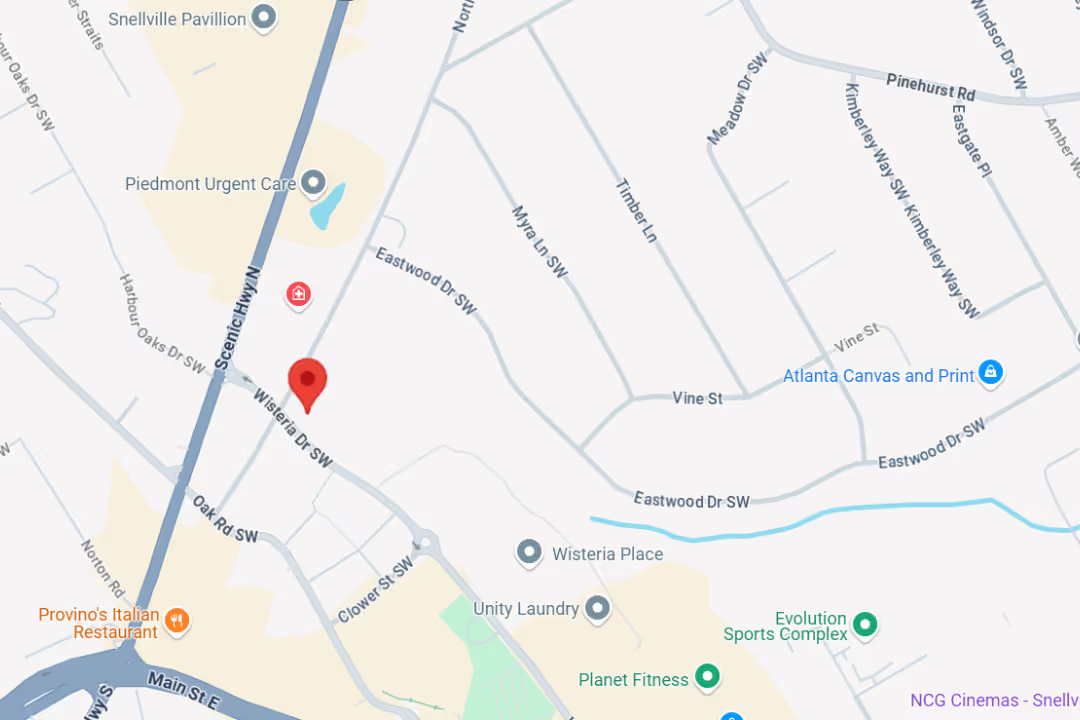
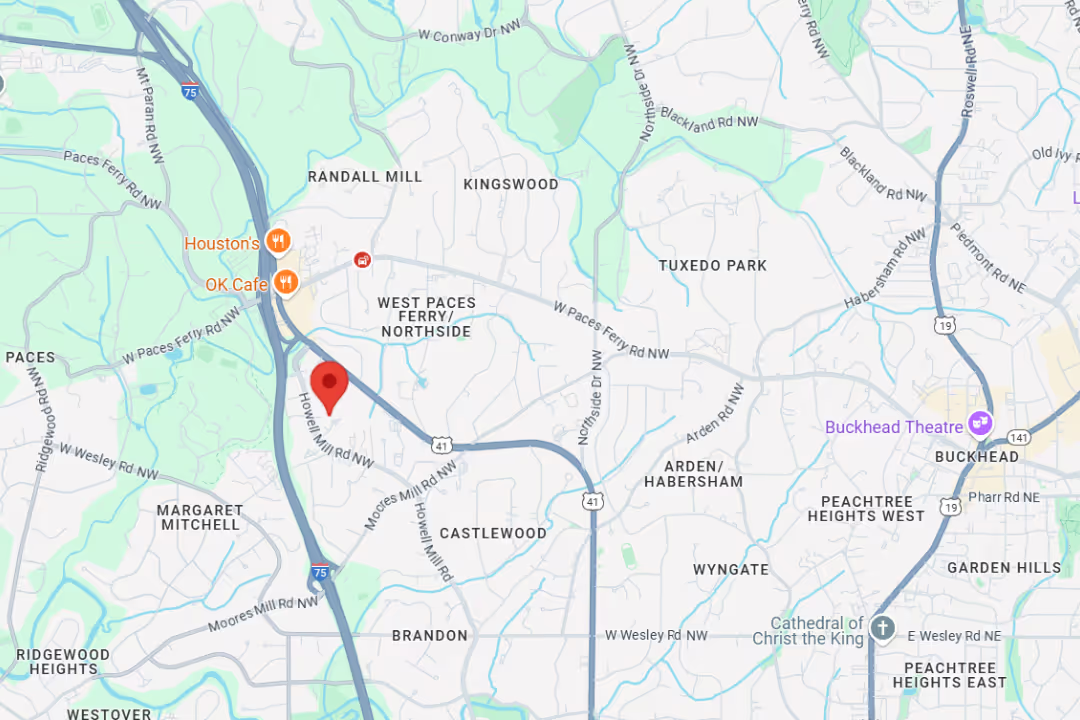
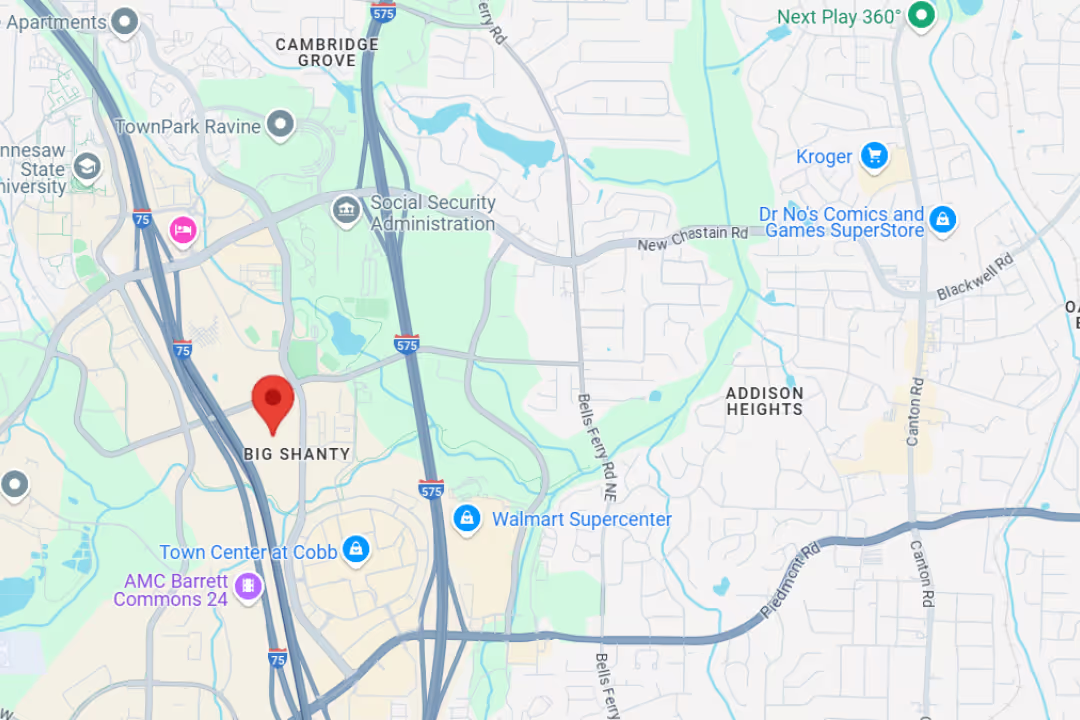
If you are struggling with chronic forearm pain, don't let it limit your life. We invite you to visit our main page on Radial Tunnel Syndrome to learn more about how we can help and schedule a consultation at one of our convenient Metro Atlanta locations—including Snellville, Kennesaw, Marietta, and Buckhead. Let's work together to get you back to doing what you love, pain-free.
At Medici, you’re more than your MRI.
We take time to hear your story, understand your pain, and create a plan that actually works for you.

Our team delivers specialist care at convenient locations across Metro Atlanta:
Get expert tips on injury recovery, pain relief, joint health, and movement strategies—straight from our Fellowship-Trained team.