
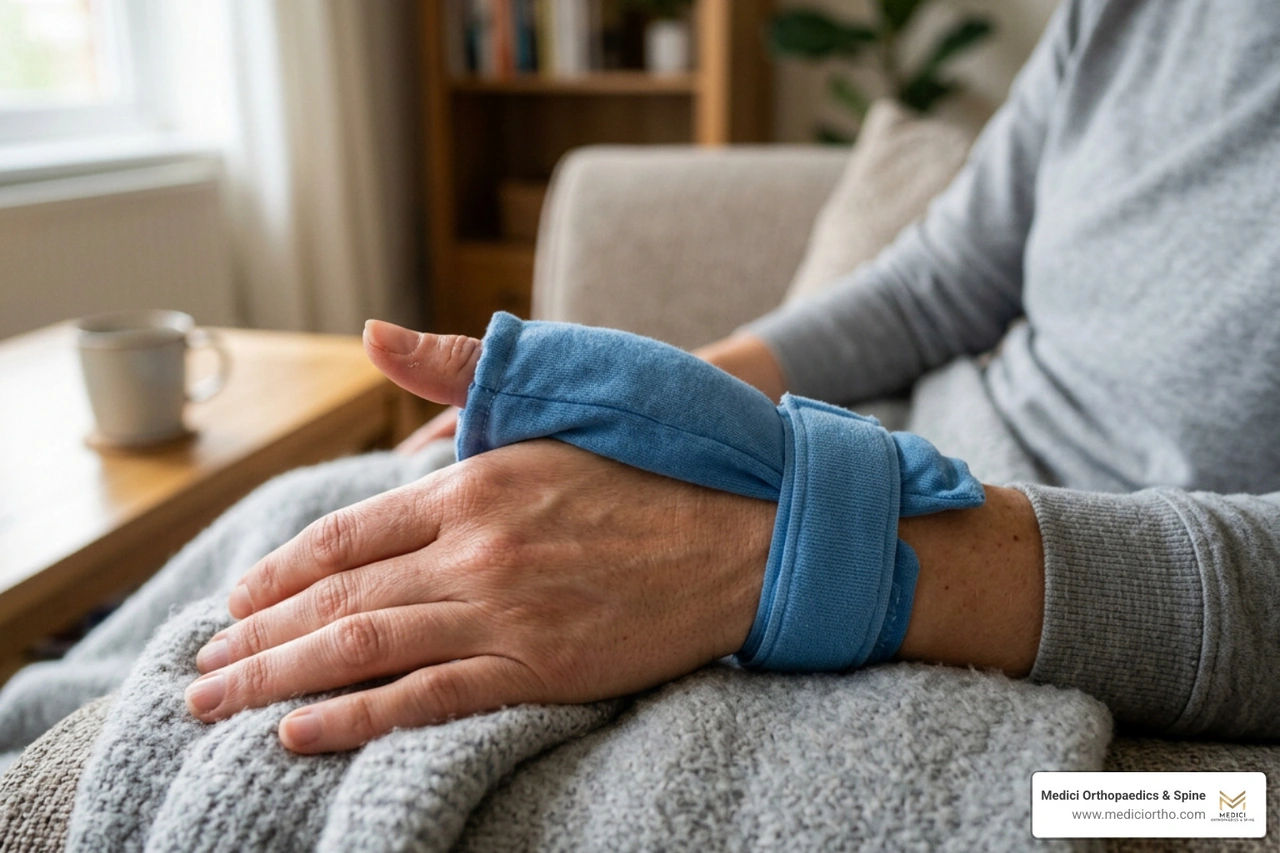
De Quervain ice therapy is one of the simplest and most effective first steps you can take to reduce thumb-side wrist pain at home.
Here's a quick answer if you need it now:
How to use ice therapy for de Quervain's tenosynovitis:
De Quervain's tenosynovitis causes pain and swelling along the thumb side of your wrist. It happens when the tendons that control your thumb become inflamed inside a narrow sheath — making even simple tasks like gripping a mug or lifting a bag feel sharp and difficult.
Ice works by doing two things at once: it slows blood flow to the area to limit swelling, and it numbs the local pain signals so you get faster relief. It won't cure the condition on its own, but it's a powerful tool — especially in the early stages or during painful flare-ups.
I'm Dr. Sonny Dosanjh, M.D., board-certified in Physical Medicine & Rehabilitation and fellowship-trained in Multidisciplinary Pain Management at Emory University, and I've guided many patients through de Quervain ice therapy as part of a comprehensive, non-surgical recovery plan. In this guide, I'll walk you through exactly how to use ice safely and how to combine it with other proven treatments for the best results.

To understand why de Quervain ice therapy is so effective, we must look at the unique anatomy of your wrist and thumb.
Your thumb is powered by two primary tendons: the abductor pollicis longus (APL) and the extensor pollicis brevis (EPB). These tendons run side-by-side from your forearm, down the thumb side of your wrist, and into your thumb. To keep them securely in place, they pass through a tight, tunnel-like structure called the first dorsal compartment.
Under normal circumstances, these tendons glide smoothly through this tunnel, lubricated by a protective lining called the synovium sheath. However, repetitive hand movements—such as typing, gaming, gardening, or lifting a newborn baby—can create continuous friction. This friction irritates the sheath, causing it to swell and thicken.
As the tunnel narrows, the tendons become trapped. Every time you move your thumb, the tendons rub painfully against the walls of the sheath. This mechanical friction is why you might feel a sharp, shooting pain or even hear a "creaking" sound (known as crepitus) when moving your wrist. For a deeper look into these mechanisms, explore our guide on scientific research on nonsurgical treatments or read more about more info on hand and wrist pain.

When you apply cold therapy to your wrist, you trigger a series of physiological responses that directly target this painful friction:
How we use ice depends heavily on whether you are dealing with an acute flare-up or a chronic condition.
In the acute stage, which occurs during the first few days of pain or immediately after an aggravating activity, the primary goal is to control active inflammation. Applying ice during this phase prevents severe swelling from taking hold.
In the chronic stage, the pathology of the condition changes. Modern medical research reveals that chronic De Quervain's is often characterized by myxoid degeneration (a degenerative process where the tendon tissue loses its elasticity and thickens) rather than active, ongoing inflammation.
In these chronic cases, ice remains highly effective for immediate pain relief and managing post-activity soreness, but it must be paired with structured physical therapy and tissue-healing modalities to promote long-term recovery.
While icing is highly effective, doing it incorrectly can lead to skin damage or tissue irritation. Following a safe, structured protocol ensures you get the maximum therapeutic benefit without any unwanted side effects. You can review standard medical protocols in the Diagnosis and treatment guidelines.
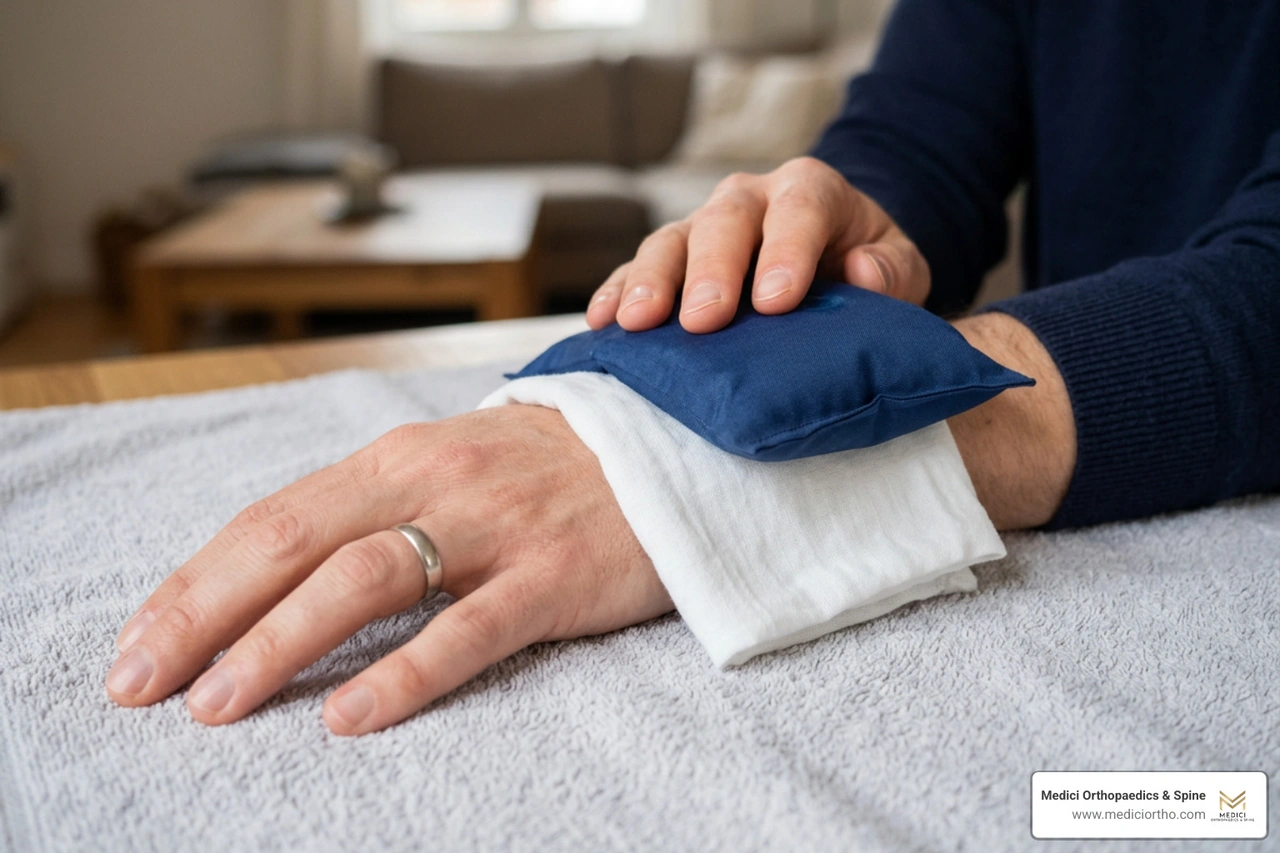
For optimal recovery, consistency is key. We recommend the following schedule:
Because the tendons in the wrist lie directly beneath the skin, the area is highly sensitive to extreme cold. Protect yourself with these safety rules:
A common question we hear at our Metro Atlanta clinics is: "Should I use ice or heat?"
As a general rule, ice is preferred for De Quervain's tenosynovitis, especially during the initial stages of pain or during sudden flare-ups. Because the condition involves a tight, restricted tunnel, adding heat during an active flare-up can expand the blood vessels, increase swelling, and make the tendon entrapment worse.
However, heat has its place. Once the sharp, acute pain has subsided, you can use heat (such as a warm towel or heating pad) for 20 to 30 minutes to relieve chronic muscle stiffness in the forearm and encourage blood flow to promote tissue healing. Many of our patients find success using a contrast method: icing the wrist after activities to prevent swelling, and using heat in the mornings to loosen up stiff muscles.
While ice therapy is an exceptional tool for managing daily pain, we find that our patients achieve the fastest, most complete recoveries when they use a multi-modal approach. Combining ice with immobilization, targeted medications, and physical therapy creates a powerful synergistic effect.
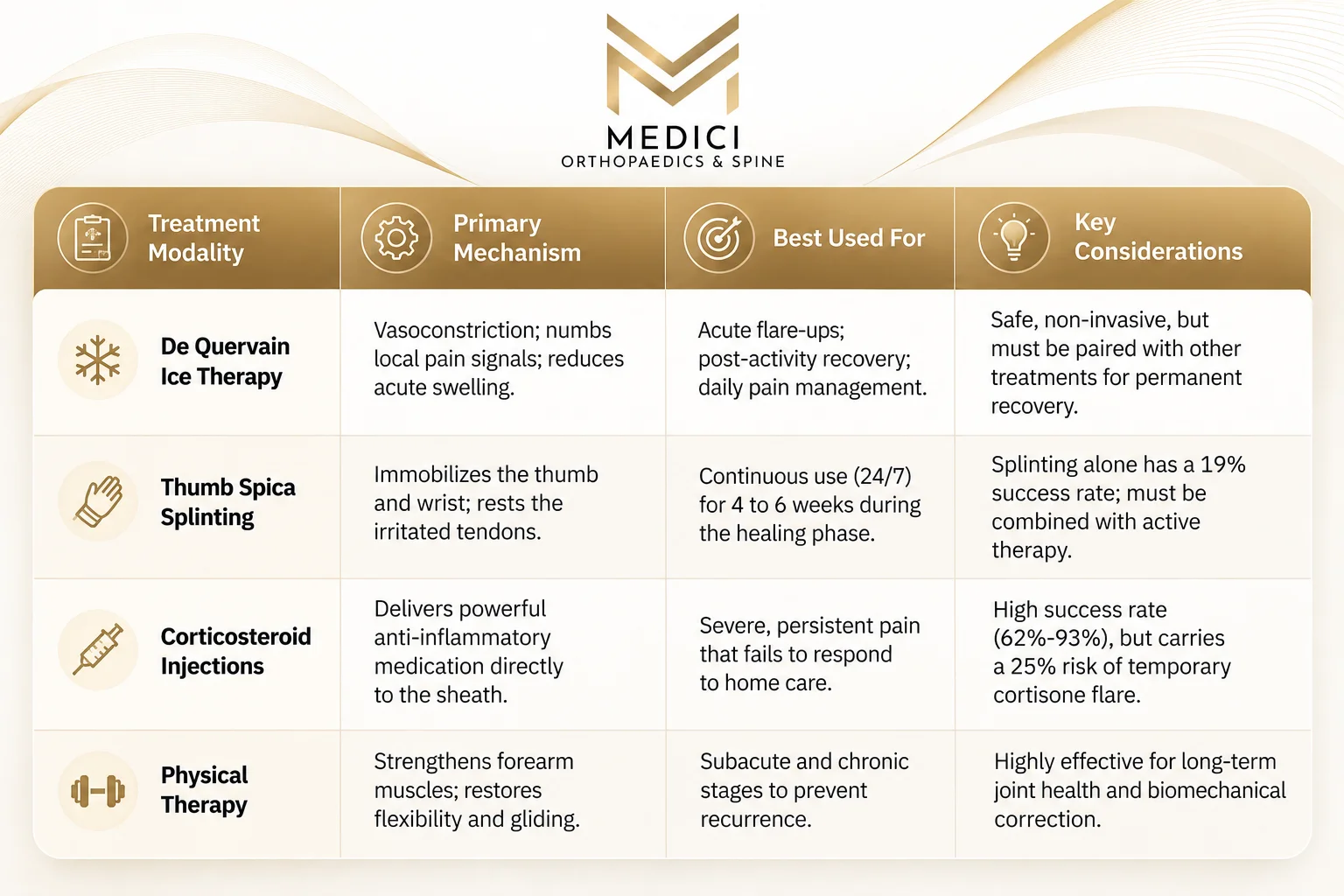
To help you understand your options, we have compiled a comparison of the most common conservative treatments:
To learn more about how we structure these programs, check out our page on more info on physical therapy or read the Physical therapy management of de Quervain's clinical resource.
One of the most striking findings in orthopedic literature is the difference in success rates when treatments are combined. Clinical studies show that wearing a thumb spica splint alone has only a 19% success rate. However, when you combine splinting with non-steroidal anti-inflammatory drugs (NSAIDs), the success rate jumps to 88%.
A thumb spica splint is designed specifically for this condition. It immobilizes your wrist and the lower joints of your thumb, preventing the repetitive side-to-side movements (radial and ulnar deviation) that rub the tendons against the inflamed sheath. For the best results, we recommend wearing the splint full-time for four to six weeks, removing it only for bathing and gentle exercises.
To manage the internal swelling, you can pair this splinting with over-the-counter NSAIDs like ibuprofen or naproxen. If you want to avoid the stomach irritation sometimes caused by oral medications, topical anti-inflammatory gels (such as diclofenac) are highly effective. Because the first dorsal compartment sits directly beneath the skin, these topical medications can penetrate directly to the inflamed tendon sheath without systemic side effects.

Once your acute pain has started to decrease, it is vital to begin gentle movements to prevent the tendons from becoming stiff and scarred inside the sheath. Always perform these exercises after icing, when the pain is numbed, and only move within a completely pain-free range of motion:
If conservative home care like ice and splinting does not provide sufficient relief, a corticosteroid injection is often the next step.
Steroid injections deliver a highly concentrated dose of anti-inflammatory medication directly into the first dorsal compartment. According to a Systematic review of tenosynovitis management, these injections have an exceptional success rate of 62% to 93%, particularly when administered under ultrasound guidance to ensure the medication reaches both the APL and EPB tendon channels.
However, injections are invasive and carry minor risks, such as local skin depigmentation, thinning of the subcutaneous fat, or a temporary increase in pain known as a cortisone flare (which occurs in about 25% of patients). Ice therapy, on the other hand, is completely non-invasive, has zero side effects, and can be used indefinitely to manage symptoms safely.
For most patients who begin conservative treatment early—combining de Quervain ice therapy with a thumb spica splint and activity modification—noticeable improvement occurs within 4 to 6 weeks.
If you work in an office and spend long hours typing or using a mouse, recovery may take slightly longer due to ongoing repetitive strain. We highly recommend reviewing our ergonomic tips in this guide: more info for office workers.
Ice is highly superior for an acute flare-up. When you experience a sudden surge of pain, the tendon sheath is actively swollen and irritated. Applying ice causes vasoconstriction, which reduces blood flow and controls the swelling. Heat should be reserved for later stages of recovery to soothe chronic muscle tension in the forearm.
Ice therapy provides immediate, temporary pain relief by numbing the local nerves. However, to see a lasting reduction in swelling and daily soreness, you must apply ice consistently (3 to 4 times a day) for 4 to 6 weeks in combination with splinting and activity modification.
To allow the tendons to heal, you must avoid movements that place direct mechanical friction on the first dorsal compartment. Avoid:
At Medici Orthopaedics & Spine, we are committed to Optimally Restoring your Quality of Life with the most effective, least invasive, and least drug-dependent programs medically available today.
We believe in a personalized, patient-centered approach. Whether you are a new mother dealing with "mother's thumb" or an office professional managing repetitive strain, our team—led by Dr. Sonny Dosanjh, M.D.—is here to help you find lasting relief without resorting to invasive surgery.
We serve patients across Metro Atlanta with state-of-the-art clinics and ambulatory surgery centers in Marietta, Snellville, Kennesaw, and Buckhead. If conservative home remedies like ice therapy are not fully resolving your wrist pain, we invite you to Schedule a consultation for De Quervain's Tenosynovitis to explore our advanced, non-surgical pain management options.
At Medici, you’re more than your MRI.
We take time to hear your story, understand your pain, and create a plan that actually works for you.

Our team delivers specialist care at convenient locations across Metro Atlanta:
Get expert tips on injury recovery, pain relief, joint health, and movement strategies—straight from our Fellowship-Trained team.






