De Quervain's tenosynovitis in office workers is more common than most people realize — and it's often missed until the pain becomes impossible to ignore.
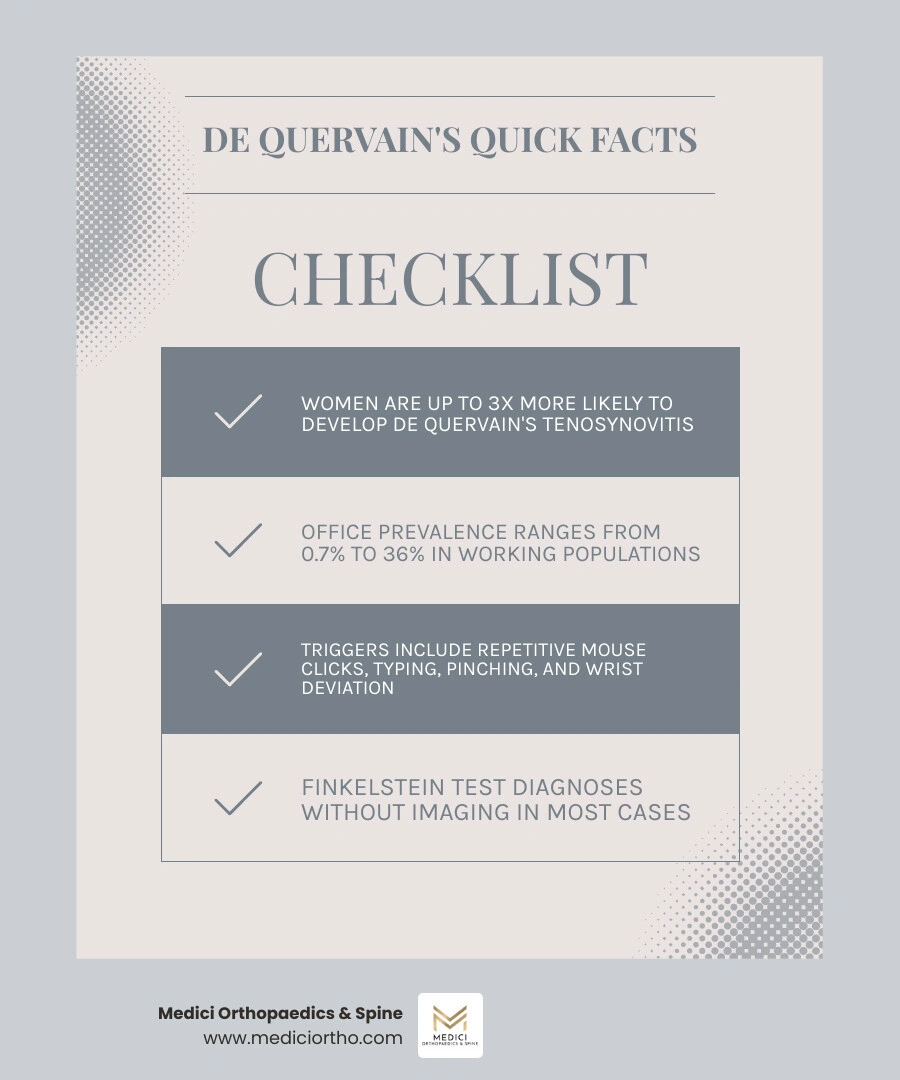
Here's what you need to know right away:
Consider this real-world example: a 48-year-old healthcare worker developed De Quervain's tenosynovitis from repetitive thumb and wrist movements on the job. She went through conservative treatment and then surgery — but her symptoms only improved after her workplace tasks were changed. Her surgeons had never assessed her occupational exposures.
That gap in care happens more often than it should. And desk workers face the same risk every day.
De Quervain's tenosynovitis results in an estimated two million lost working days per year in developed countries. For office workers who depend on their hands for everything from emails to spreadsheets, getting the right diagnosis and the right workplace fix matters enormously.
To understand why a desk job can make your wrist feel like it is on fire, we have to look closely at the anatomy of your hand.
Your thumb is an absolute marvel of evolutionary engineering. It allows you to grip, pinch, and scroll through social media with incredible precision. This movement is controlled by a pair of primary tendons: the abductor pollicis longus (APL) and the extensor pollicis brevis (EPB).
These two tendons run side-by-side from your forearm, down the side of your wrist, and into your thumb. To keep them sliding smoothly and in the correct position, they pass through a narrow, rigid tunnel of bone and ligament known as the first dorsal compartment.
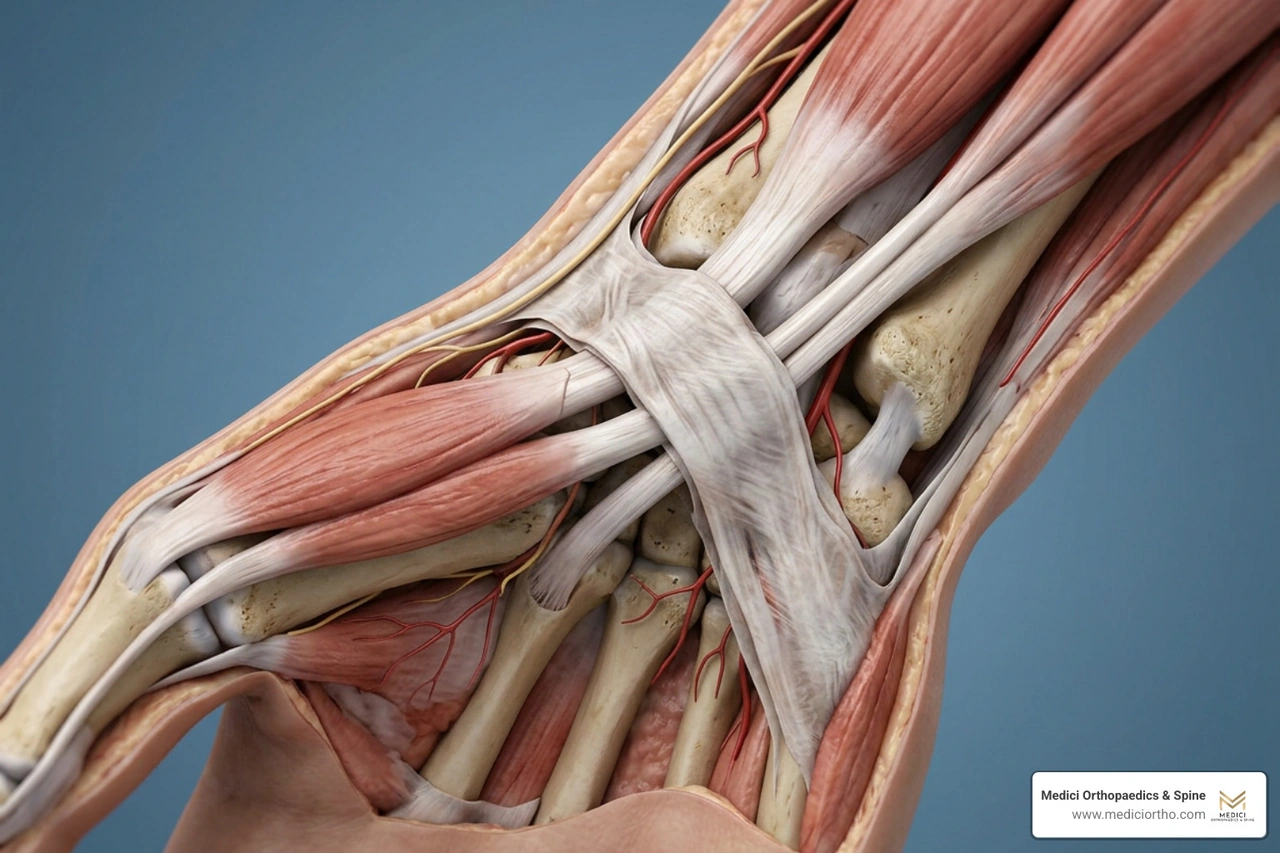
Under normal conditions, these tendons glide back and forth inside this tunnel like a well-lubricated cable inside a sheath. However, when you subject your wrist to hours of repetitive, awkward movements, friction builds up. The delicate lining of the tunnel—the tenosynovium—becomes irritated and begins to swell.
As the sheath thickens, the tunnel becomes increasingly narrow. This creates a painful cycle: the swollen sheath rubs against the tight walls of the compartment, causing further inflammation, more swelling, and excruciating pain whenever you move your thumb or bend your wrist.
While there is an ongoing academic debate on the exact role of occupational overuse versus biological factors, clinical evidence published in Work-Related De Quervain's Tensosynovitis (DQT) - PMC - NIH highlights how repetitive manual tasks can directly exacerbate this friction. If your daily routine involves hours of static, awkward wrist positioning, you are essentially forcing these delicate tendons to work under constant mechanical stress.
Many people assume that repetitive strain injuries at a desk job are limited to carpal tunnel syndrome. While carpal tunnel is indeed incredibly common—and something we treat extensively through programs like our Work Injury Therapy for Carpal Tunnel Snellville—the mechanical stress of a desk job can easily target the thumb tendons instead.
When you sit at a desk, your hands and wrists are rarely in a completely natural, relaxed position. Instead, a typical de quervain office worker frequently subjects their hands to several high-risk movements:
Over months and years, these microscopic stresses accumulate. The body tries to repair the microtrauma, but without adequate rest and ergonomic adjustments, the rate of wear-and-tear outpaces the body's natural healing capacity.
How do you know if that nagging ache in your wrist is actually De Quervain's? The symptoms typically present in a very specific, localized pattern:
For an office worker, these symptoms don't just cause physical discomfort; they directly impact your productivity, your focus, and your ability to do your job.
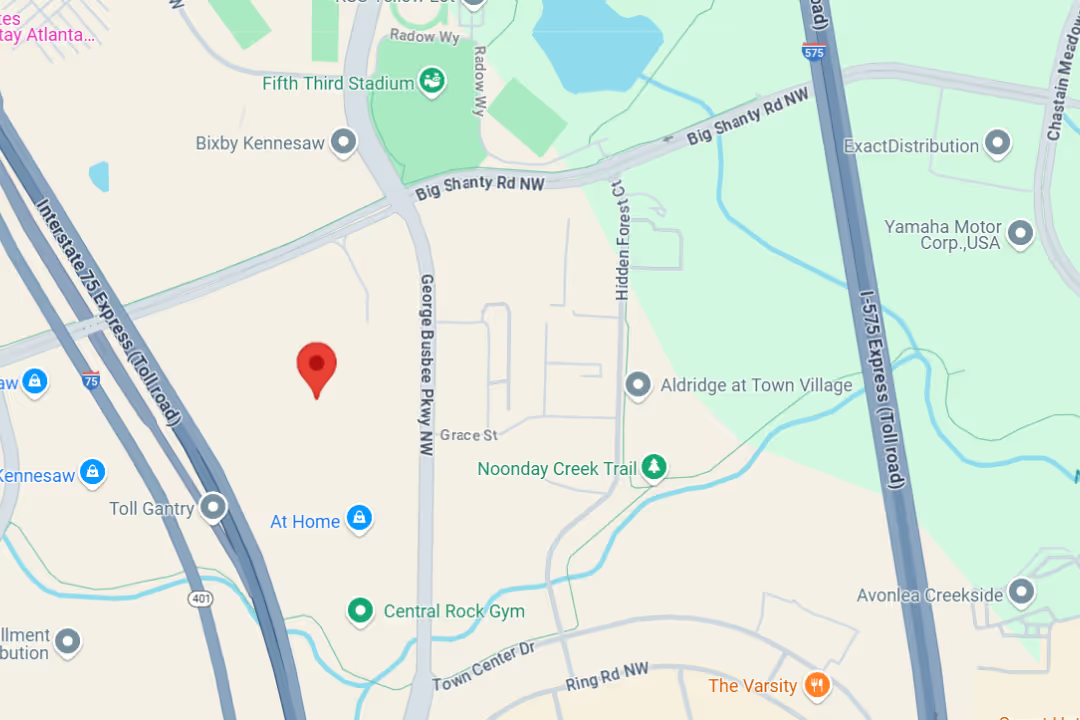
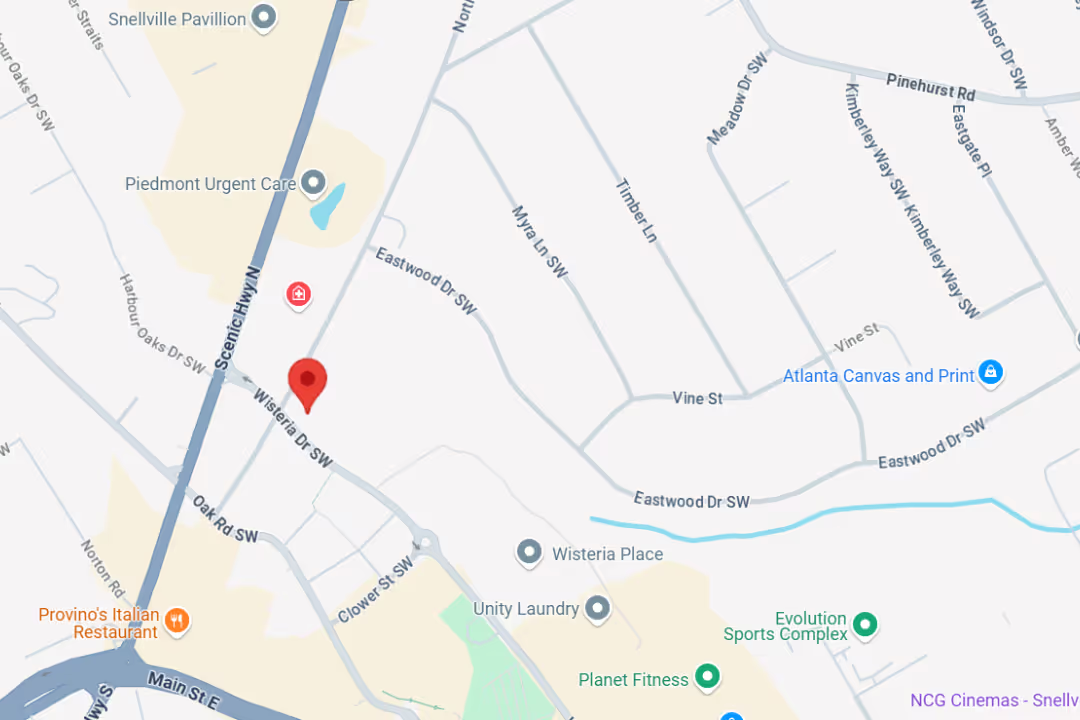
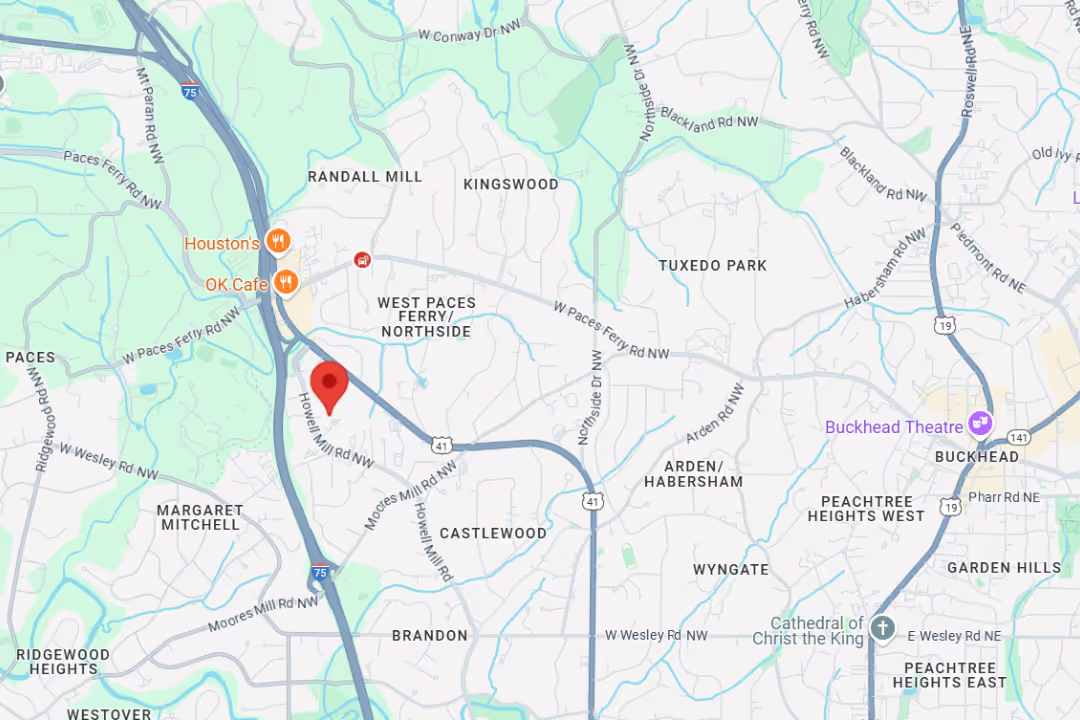
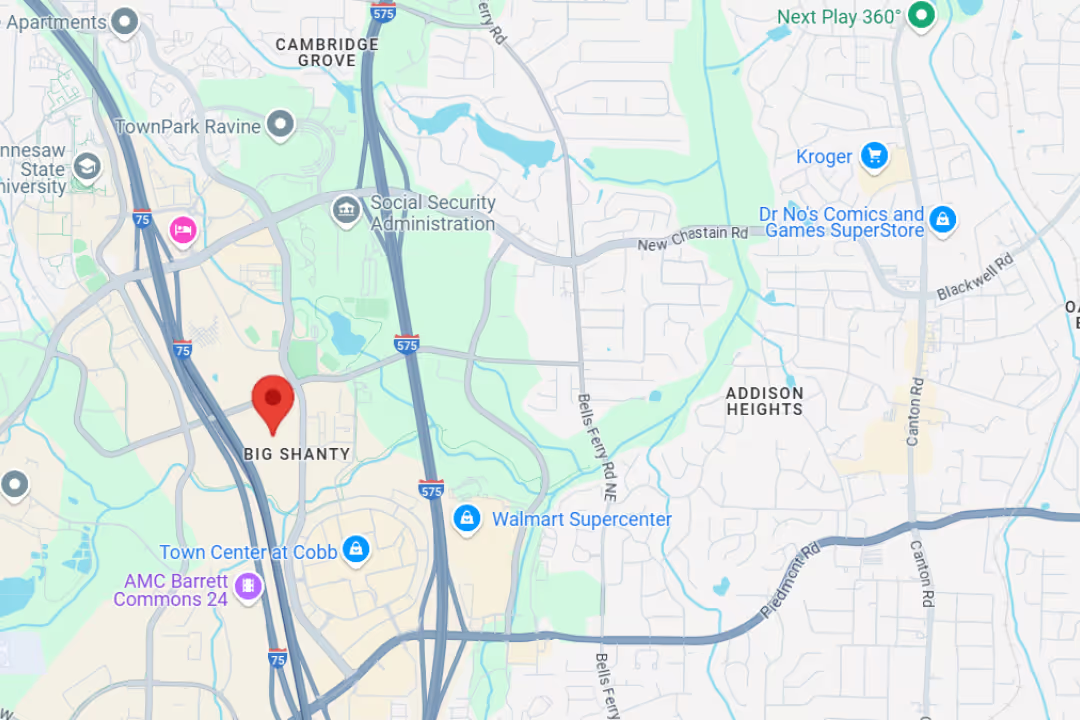
At Medici Orthopaedics & Spine, we believe that an accurate, comprehensive diagnosis is the foundation of any successful recovery plan. When a patient visits one of our Metro Atlanta clinics—whether in Snellville, Kennesaw, Marietta, or Buckhead—our clinical team performs a detailed physical evaluation.
Fortunately, diagnosing De Quervain’s tenosynovitis does not typically require expensive or invasive imaging like X-rays or MRI scans. Instead, we rely on a classic, highly reliable physical maneuver known as the Finkelstein test.
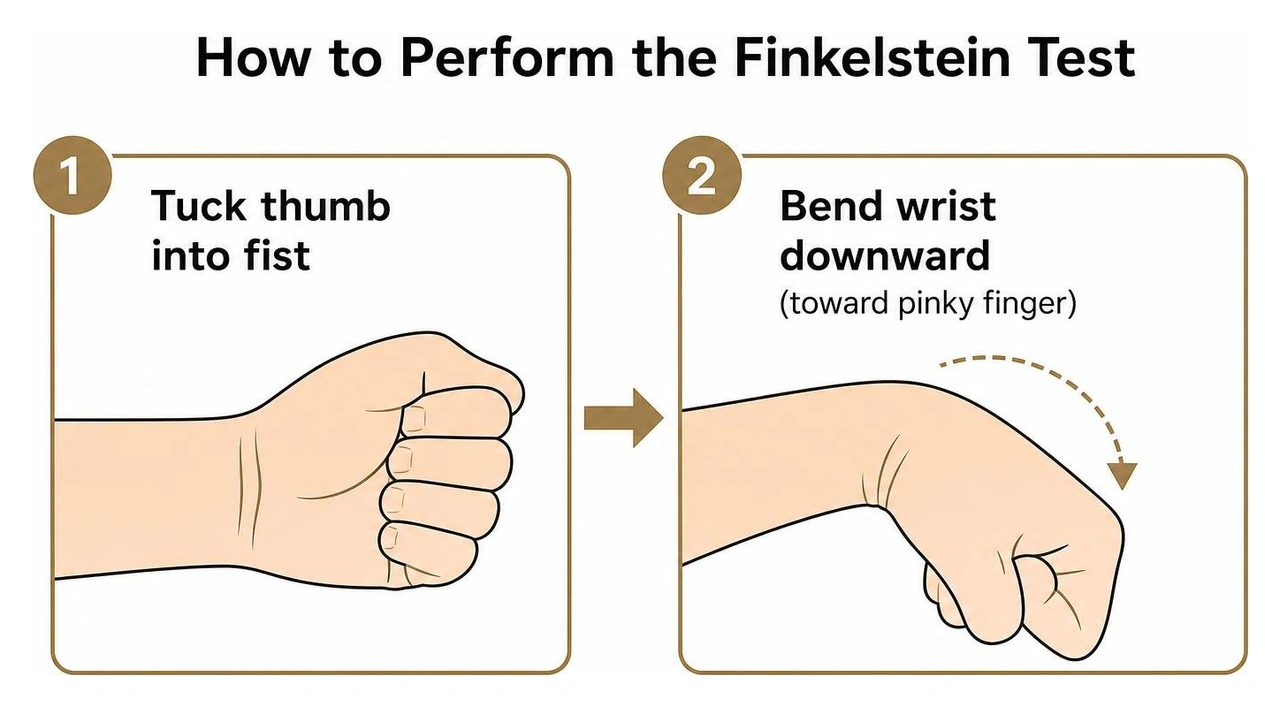
To perform this test:
If this movement produces a sharp, localized pain on the thumb side of your wrist, the test is positive, strongly indicating De Quervain's tenosynovitis. We will also palpate the radial styloid to check for localized tenderness and swelling, while ruling out other potential culprits like carpometacarpal (CMC) arthritis or wrist sprains.
For a deeper dive into the clinical nuances of diagnosing this condition, medical professionals often refer to the comprehensive literature review, Time to Reconsider Occupation Induced De Quervain’s Tenosynovitis: An Updated Review of Risk Factors, which explores both anatomical variations and patient-specific risk factors.
In occupational medicine, we don't just want to know what hurts; we want to know why it hurts. To do this objectively, healthcare providers and ergonomic specialists use validated assessment frameworks like the Assessment of Repetitive Tasks (ART) tool.
The ART tool is designed to evaluate tasks that require repetitive movements of the upper limbs. It scores various risk factors, including:
For example, in the case of a worker performing high-repetition tasks, an ART tool score of 23 on the right hand represents a high-exposure risk. A score this high indicates that the physical demands of the job are highly likely to cause or worsen upper limb disorders, requiring urgent ergonomic intervention to minimize further damage.
Recognizing the work-related nature of repetitive strain injuries is crucial for both employees and employers. When workplace injuries are ignored or misattributed, patients often return to the exact same high-risk environments that caused their pain in the first place, leading to chronic symptoms and treatment failure.
If you have developed severe wrist pain due to your job duties in Georgia, you may be eligible for coverage under our Occupational Injury Workers Compensation program. Getting your condition properly documented as work-related ensures that you receive the necessary medical care, physical therapy, and workplace accommodations without financial strain.
Our clinical team, led by Dr. Sonny Dosanjh, M.D., works closely with case managers and employers to facilitate smooth, objective care. If you need assistance navigating this process in Gwinnett County, our specialists can guide you through Workers Comp Doctor Assistance Snellville GA to ensure your medical documentation is precise, complete, and filed correctly.
At Medici Orthopaedics & Spine, our philosophy is simple: we aim to optimally restore your quality of life using the most effective, least invasive, and least drug-dependent programs medically available.
We find that many of our therapies work synergistically—meaning they deliver far better results when used together than when used in isolation. For the vast majority of our patients, we can successfully resolve De Quervain's symptoms without ever stepping foot into an operating room.
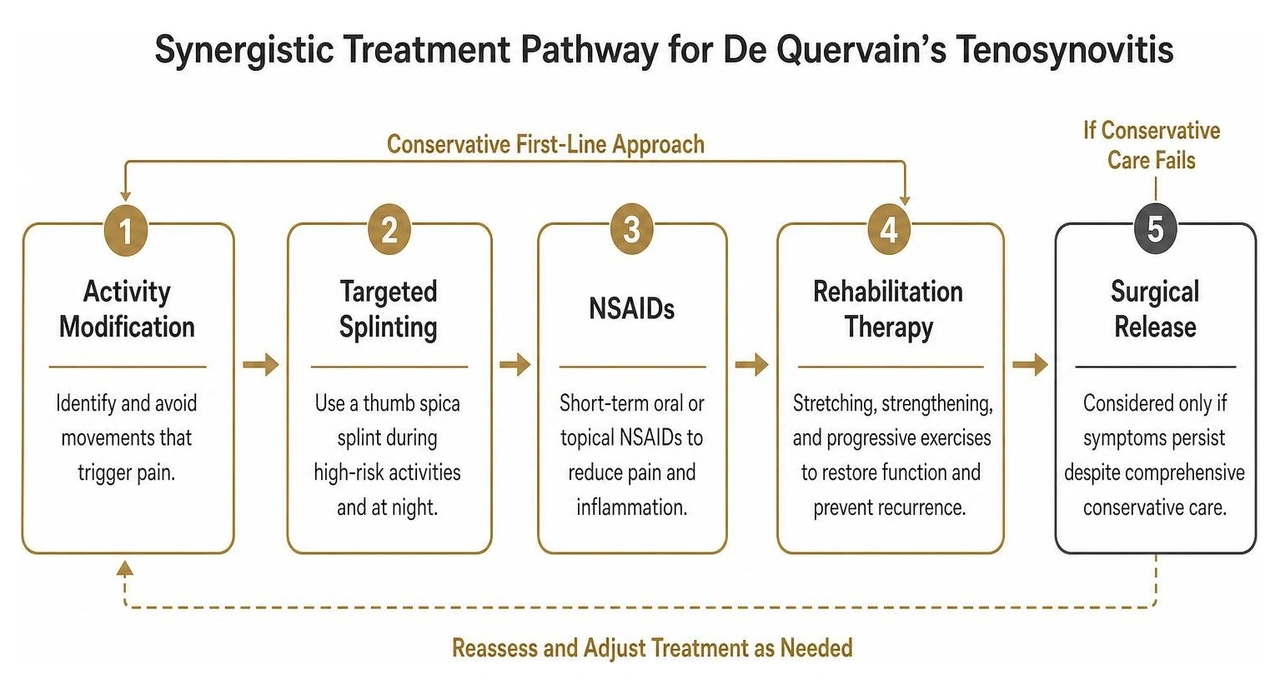
A comprehensive conservative treatment plan typically includes:
Treating the symptoms of De Quervain's is only half the battle; we must also modify the environment that triggered the condition. As a de quervain office worker, implementing a few key ergonomic adjustments can make a world of difference:
While conservative treatments are highly effective, a small percentage of patients with severe, chronic, or anatomically complex De Quervain's may require surgical intervention. This is particularly true if there is a physical barrier to healing, such as sub-compartmentalization (an extra wall of tissue inside the tendon tunnel that keeps the tendons separated and pinched).
If conservative measures fail to provide relief after several months, a minimally invasive procedure known as a surgical release (or first dorsal compartment decompression) may be recommended.
During this outpatient procedure, which is performed under local anesthesia, the surgeon makes a small incision over the thumb side of the wrist. The tight roof of the first dorsal compartment is carefully divided, releasing the pressure on the tendons and giving them ample room to glide freely without friction.
Following surgery, structured rehabilitation is vital to ensure a full, uncomplicated recovery. If you are looking for specialized care to get back to work safely, our team provides expert Physical Therapy for Work Injury Near Me Georgia across our multiple Metro Atlanta locations.
Here is what you can typically expect during the post-operative recovery process:
For patients who begin conservative treatment early (within the first six months of symptom onset), symptoms typically improve significantly within 4 to 6 weeks. If a corticosteroid injection is utilized, many patients experience complete pain relief within just a few days to two weeks. However, if the condition has become chronic or requires surgical release, the recovery and rehabilitation process generally takes about 6 weeks before you can comfortably resume heavy manual tasks or full-time, high-intensity typing.
Yes, but you must modify how you work. Continuing to use a standard keyboard and mouse while experiencing active inflammation will only prolong your recovery. We highly recommend wearing a supportive thumb spica splint during computer tasks, switching to a vertical mouse and an ergonomic keyboard, and taking frequent micro-breaks to rest and stretch your hands. If your symptoms are severe, discuss the possibility of temporary light-duty assignments or voice-to-text software with your employer.
It absolutely can be. While De Quervain's can also be triggered by non-work activities—such as lifting a newborn baby, playing racket sports, or gardening—highly repetitive, forceful, or ergonomically awkward office tasks can directly cause or severely aggravate the condition. If your job duties are the primary driver of your symptoms, our specialists can help document your condition, perform objective ergonomic risk assessments, and assist you with workers' compensation claims to ensure your treatment is fully covered.
Living with wrist pain can turn simple daily tasks into a source of constant frustration. For the modern office worker, De Quervain's tenosynovitis is a painful reminder of the physical toll that hours of typing and clicking can take on our bodies.
Fortunately, you do not have to just "click through the pain." With early intervention, targeted ergonomic adjustments, and comprehensive, integrated care, you can achieve lasting relief and protect your hands for the future.
At Medici Orthopaedics & Spine, our dedicated team—led by Dr. Sonny Dosanjh, M.D.—is committed to helping you restore your quality of life. Whether you need a customized physical therapy program, an ergonomic workstation evaluation, or advanced non-surgical pain treatments, we are here to support you at our convenient locations in Snellville, Kennesaw, Marietta, and Buckhead.
Don't let wrist pain hold you back from doing your best work. Explore our specialized De Quervain's Tenosynovitis care options today to schedule your comprehensive evaluation. Let us help you get back to clicking, typing, and living pain-free!
At Medici, you’re more than your MRI.
We take time to hear your story, understand your pain, and create a plan that actually works for you.

Our team delivers specialist care at convenient locations across Metro Atlanta:
Get expert tips on injury recovery, pain relief, joint health, and movement strategies—straight from our Fellowship-Trained team.