If you are struggling with a sharp, burning ache at the base of your thumb, finding the right de quervain pain management plan is the key to reclaiming your daily life.
To manage and treat this wrist pain quickly, medical experts recommend a progressive, non-surgical approach:
Every time you lift a coffee mug, type on your phone, or pick up a child, you rely on the tendons at the base of your thumb. When the protective sheath around these tendons becomes swollen and irritated, simple movements can turn into a painful struggle.
I am Dr. Sonny Dosanjh, M.D., a board-certified physical medicine and rehabilitation specialist who has spent my career helping active adults find lasting relief through personalized de quervain pain management plans. As the founder of Medici Orthopaedics & Spine, I specialize in advanced, non-surgical treatments that target the root cause of your pain so you can get back to doing what you love without undergoing unnecessary surgery.
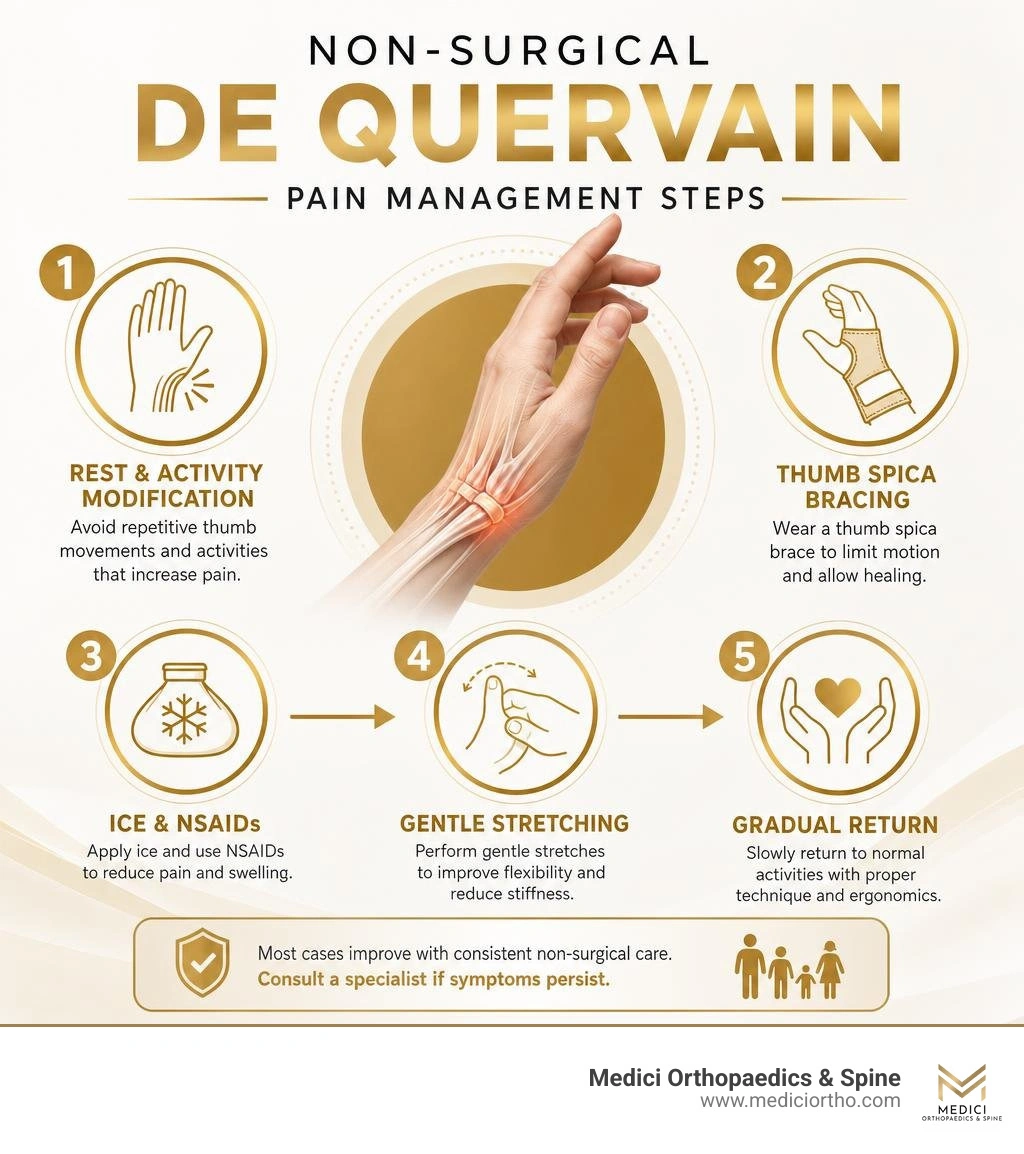
To understand why your wrist hurts, we must look at the unique anatomy of your thumb. De Quervain tenosynovitis is a stenosing condition that affects the first extensor (dorsal) compartment of the wrist. Inside this compartment, two primary tendons control the movement of your thumb: the abductor pollicis longus (APL) and the extensor pollicis brevis (EPB).
These tendons pass through a tight, fibro-osseous tunnel at the side of your wrist, covered by a protective, lubricating synovial sheath. When you repeatedly overwork your thumb, this sheath swells.
Historically, clinicians believed that De Quervain's was a purely inflammatory condition. However, modern histopathological research reveals that it is actually characterized by myxoid degeneration (disorganized collagen fibers and an increased cellular matrix) and tendon sheath thickening. This means the protective tunnel physically narrows, creating intense friction whenever the tendons try to glide.
This mechanical friction is incredibly common, affecting approximately 1% of people in the United States each year. It is highly prevalent in working-age adults, with a distinct demographic bias:
Another distinct clinical subset is pregnancy-related onset. Many women develop symptoms about four to six weeks postpartum. Hormonal changes during pregnancy can increase fluid retention, making the tendon sheath more prone to swelling, while the physical demands of caring for a newborn aggravate the area.
If you are experiencing pain that radiates from your thumb up into your forearm, it is crucial to understand the broader context of hand and wrist pain and injuries. To dive deeper into the clinical pathogenesis of this condition, you can explore the latest Scientific research on de Quervain tendinopathy.
The primary driver of De Quervain's is repetitive hand and wrist movements. When you perform the same pinching, grasping, or twisting motions over and over, you create microscopic wear and tear in the tendons.
In our modern digital world, we frequently refer to this as "texting thumb" because of the continuous, rapid thumb movements required to type on smartphones. For new parents, it is often called "baby wrist." This occurs because lifting a baby out of a crib or car seat requires you to extend your thumbs and bend your wrists downward, putting immense mechanical strain on the APL and EPB tendons.
Over time, this repetitive strain leads to collagen disorganization. The body attempts to repair the micro-tears, but instead of laying down neat, parallel collagen fibers, it produces disorganized tissue that thickens the sheath even further. This creates a vicious cycle: the thicker the sheath, the more friction is generated, and the more pain you experience.
For individuals who perform repetitive manual labor, office work, or heavy typing, this condition is a frequent culprit behind work-related injuries. If your job requires hours of computer use, we highly recommend reading our specialized guide for the De Quervain office worker to learn how workstation ergonomics can save your wrists.
When you visit an orthopedic or pain specialist, a proper clinical diagnosis is the first step toward recovery. Fortunately, diagnosing De Quervain's is highly straightforward and rarely requires expensive imaging. In fact, imaging tests like X-rays are generally not required because they only show bones, not the soft tendon sheaths. We only use X-rays to rule out other issues, such as arthritis at the base of the thumb.
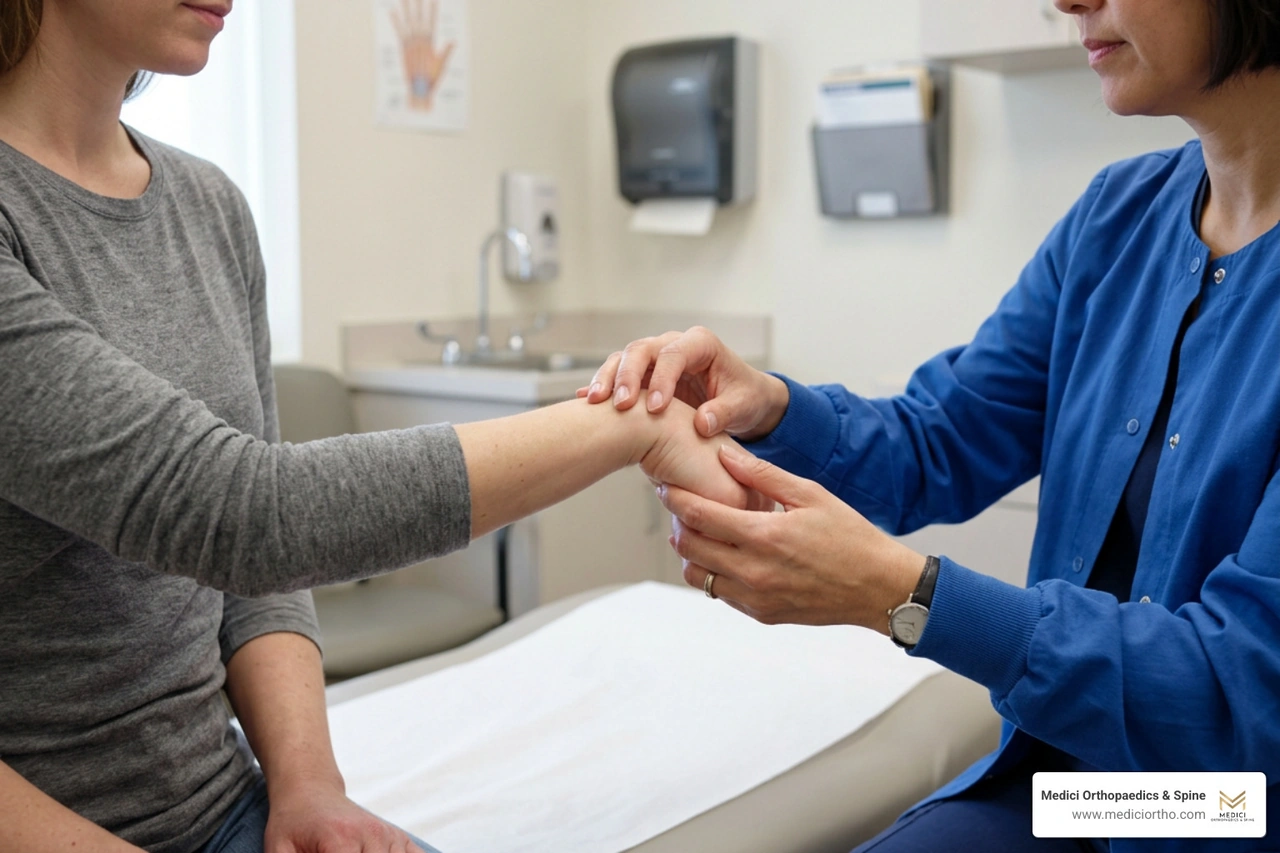
During your physical examination, we will carefully palpate the radial styloid (the bony bump on the thumb side of your wrist) to check for localized swelling, tenderness, or a warm sensation. We will also test your range of motion and resistance to see if moving your thumb against pressure triggers your symptoms.
An essential part of the diagnostic process is conducting a differential diagnosis. Several other conditions can mimic De Quervain's, and we must rule them out to ensure we are treating the correct issue:
To confirm De Quervain's, we rely on the clinical standard for diagnosis, as outlined in the Scientific research on de Quervain diagnosis and treatment.
The Finkelstein test is a simple, highly effective physical maneuver designed to stretch the APL and EPB tendons and evaluate pain provocation.
To perform this test:
If this movement causes a sharp, shooting pain along the thumb side of your wrist, the test is positive.
It is worth noting that there is a similar maneuver called the Eichoff maneuver, where you make a tight fist with the thumb tucked inside and forcefully bend the wrist. However, because the Eichoff maneuver is highly aggressive, it can sometimes cause pain even in perfectly healthy wrists.
To avoid false positives, we always use gentler variants of the Finkelstein test and perform a direct comparison with your healthy hand.
At Medici Orthopaedics & Spine, our core philosophy is to exhaust conservative care before ever considering surgery. Most cases of De Quervain's can be resolved completely without an operation, especially if we catch the condition early.
The European HANDGUIDE study, a major multidisciplinary Delphi consensus, established a clear, progressive therapeutic hierarchy for managing this condition. The consensus emphasizes that patient education and instructions should never be used as a standalone treatment; they must always be combined with active physical therapies or splinting to be effective.
To give you an idea of your non-surgical options, here is a comparison of common splinting and immobilization approaches:
| Splint Type | Design & Mechanics | Efficacy & Clinical Role |
|---|---|---|
| Short Hand-Based Splint | Immobilizes only the thumb joint, leaving the wrist free to move. | Low efficacy for acute De Quervain's. It fails to stop wrist ulnar deviation, which is the main source of tendon friction. |
| Thumb Spica Splint | Immobilizes both the wrist and the thumb metacarpophalangeal (MCP) joint, leaving the tip of the thumb free. | High efficacy. It is the gold standard for initial conservative care, allowing the inflamed tendons to rest completely. |
| Long Lower Arm-Based Splint | Extends further down the forearm to rigidly immobilize the wrist and thumb. | Maximum mechanical rest. Highly recommended for severe flare-ups or industrial workers who cannot avoid heavy hand use. |
For a broader look at how we manage joint and tendon pain without surgery, check out our frequently asked questions about non-surgical orthopedic treatment options.
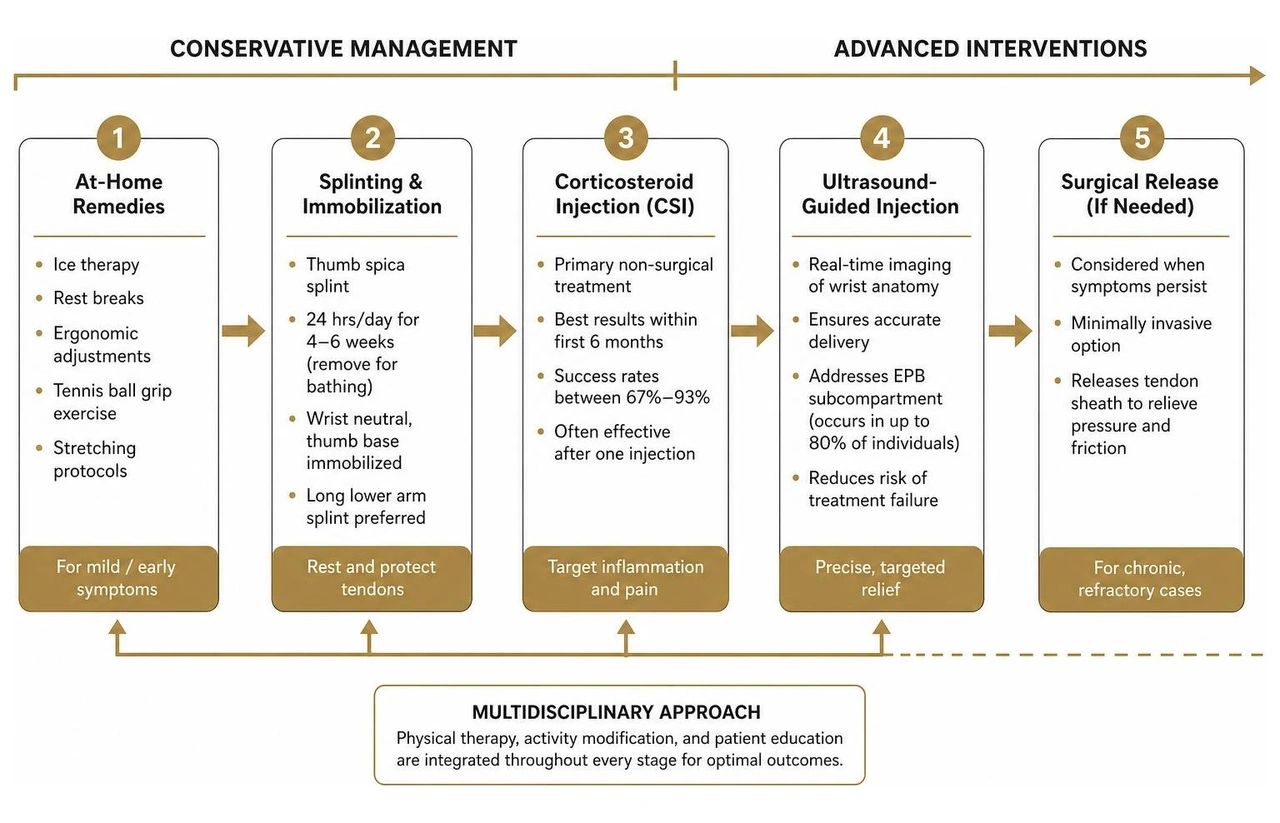
If you are managing mild or early-stage symptoms, several at-home remedies can make a massive difference:
To ensure you are performing these movements safely and effectively, working with a professional in physical therapy is highly recommended.
To truly rest the APL and EPB tendons, you must immobilize the joints they control. A standard, off-the-shelf wrist brace is not enough because it allows your thumb to move freely, which continues to pull the tendons through the swollen sheath.
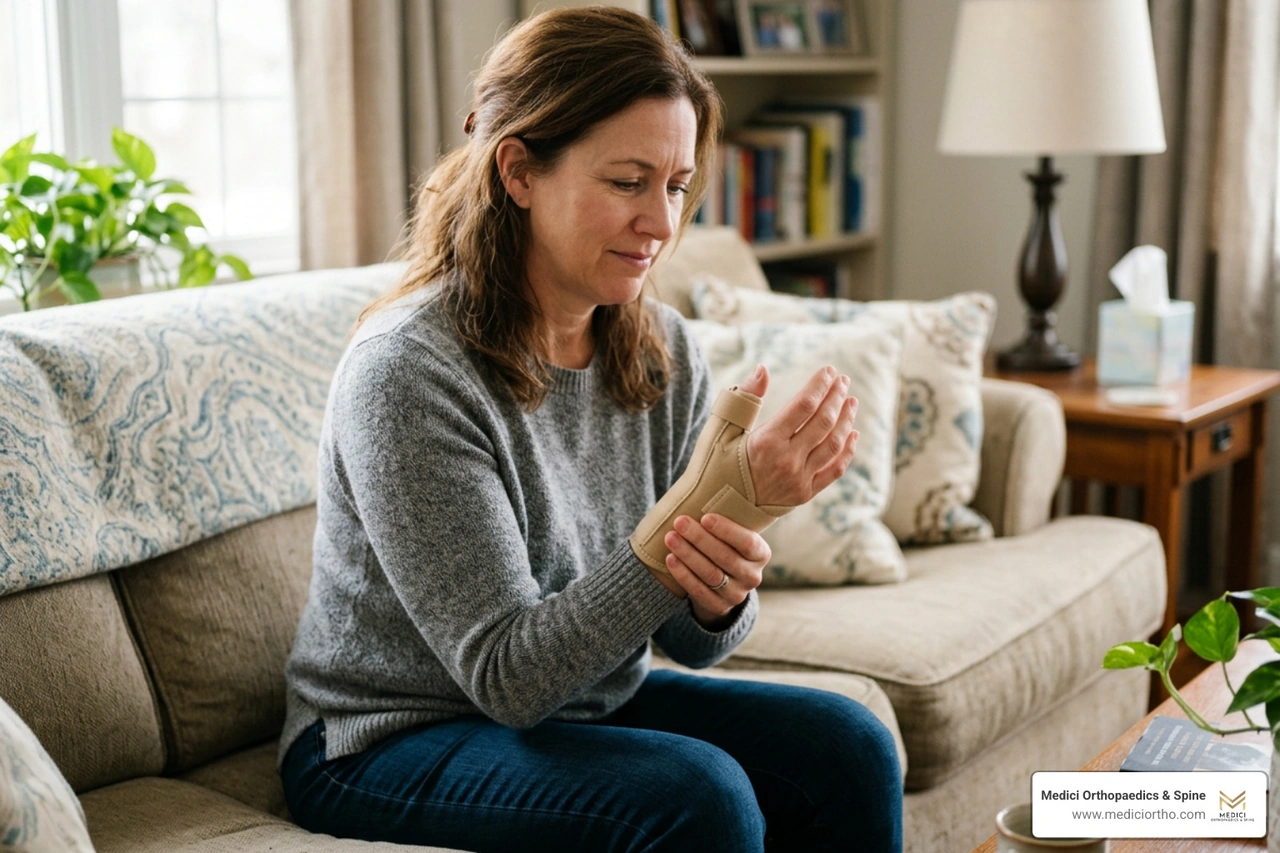
We recommend wearing a dedicated thumb spica splint for up to 24 hours a day (removing it only for bathing) for four to six weeks. The splint should keep your wrist in a neutral position and immobilize the base of your thumb, while leaving your other fingers and the very tip of your thumb free so you can still perform basic daily tasks.
According to the Scientific consensus on multidisciplinary treatment guidelines, a long lower arm-based splint that restricts wrist movement is vastly superior to a short, hand-based splint. By preventing ulnar deviation, we remove the mechanical friction, giving the tendon sheath a true opportunity to heal.
When at-home remedies and splinting are not enough to break the cycle of pain, we escalate to highly targeted clinical interventions.
Historically, corticosteroid injections (CSI) have been the primary non-surgical treatment for De Quervain's, boasting success rates between 67% and 93%. If you receive a corticosteroid injection within the first six months of your symptoms starting, you have an excellent chance of fully recovering—often after just a single injection.
At Medici Orthopaedics & Spine, we perform these as ultrasound-guided injections. Using high-resolution ultrasound allows us to see the exact anatomy of your wrist in real-time. This is incredibly important because up to 80% of individuals have a separate, bony subcompartment for the extensor pollicis brevis (EPB) tendon.
If a doctor performs a "blind" injection, they may miss this subcompartment entirely, leading to treatment failure. Ultrasound guidance ensures that we deliver the anti-inflammatory medication directly into the precise subcompartment where the friction is occurring.
To learn more about how we use targeted therapies to treat localized pain, explore our specialized options for injections. You can also read the comprehensive Scientific research on de Quervain tenosynovitis management to see how ultrasound-guided injections rank at the very top for clinical pain relief.
We believe that the best clinical outcomes are achieved when we combine different therapies. Many of our treatments work synergistically, delivering better results together than any single treatment could on its own.
For example, a major network meta-analysis of 30 clinical studies involving 1,663 patients showed that adding thumb spica immobilization for 3 to 4 weeks after a corticosteroid injection provided statistically significant functional benefits. Patients who combined the injection with a splint experienced a mean difference of 10.5 points on the Q-DASH (Quick Disabilities of the Arm, Shoulder, and Hand) functional scale in the short-term, and a 9.4-point benefit in the mid-term, compared to those who received the injection alone.
However, we also recognize that some patients find rigid splints highly disruptive to their work and daily hygiene. In those cases, we can customize your post-injection care. A prospective clinical trial showed that some patients achieve excellent, long-term pain resolution with an injection-only protocol combined with gentle, immediate movement, which avoids the muscle stiffness and kinesophobia (fear of movement) that can sometimes accompany strict casting.
In addition to traditional cortisone, we offer cutting-edge regenerative medicine options. These are ideal for patients who want to avoid steroids or who have underlying conditions like diabetes (as corticosteroids can cause temporary, dangerous spikes in blood glucose levels).
These advanced therapies include:
To discover if these biological therapies are right for you, read more about our options for regenerative medicine and prolotherapy.
If you have tried conservative treatments, dedicated splinting, and targeted injections for 6 to 8 months without relief, it may be time to consider a surgical release.
This is a highly effective, outpatient procedure known as a tendon sheath release. It is performed under local anesthesia, meaning you are awake but completely numb, and you can go home the very same day.
During the procedure:
Surgical release is highly successful, resulting in the complete resolution of symptoms in up to 95% of patients.
Post-operative care is straightforward. You will wear a soft bandage or a light wrist splint for about a month to protect the incision while it heals. However, we will encourage you to keep your fingers and the tip of your thumb moving immediately after surgery to prevent the tendons from scarring down or becoming stiff.
To read a detailed comparison of surgical and non-surgical outcomes, you can consult this Scientific trial on nonsurgical treatment of de Quervain.
If you begin treatment early (within the first six months of your symptoms starting), your symptoms will typically improve within 4 to 6 weeks of starting conservative care. For moderate cases, a typical recovery timeline is 6 to 8 weeks of combined splinting and physical therapy. Chronic cases that have been left untreated for many months may take longer to resolve and are more likely to require advanced injections or surgical release.
Leaving De Quervain's untreated can lead to severe, permanent complications. Over time, the constant mechanical friction can cause the protective tendon sheath to burst, or cause the tendons themselves to fray and eventually tear. This can result in a permanent loss of range of motion in your wrist and thumb, making it impossible to perform basic, everyday tasks like holding a pen or turning a doorknob due to chronic, debilitating pain.
Yes! If your De Quervain's symptoms start during pregnancy or shortly after childbirth, there is excellent news. Because these cases are heavily driven by pregnancy-related fluid retention and hormonal changes, the symptoms typically go away entirely on their own once your pregnancy ends or after you finish breastfeeding. During this period, we focus on safe, conservative management, such as ergonomic lifting techniques and comfortable splinting, to keep you pain-free without the need for medications.
Living with wrist pain can make even the simplest daily tasks feel like an uphill battle. But you do not have to suffer in silence, and you certainly do not have to jump straight into invasive surgery.
At Medici Orthopaedics & Spine, led by Dr. Sonny Dosanjh, M.D., we are committed to Optimally Restoring your Quality of Life using the most effective, least invasive, and least drug-dependent programs available today. Whether you need a custom physical therapy routine, a highly precise ultrasound-guided injection, or advanced regenerative therapies like PRP and prolotherapy, our multidisciplinary team is here to design a personalized treatment plan tailored to your unique lifestyle.
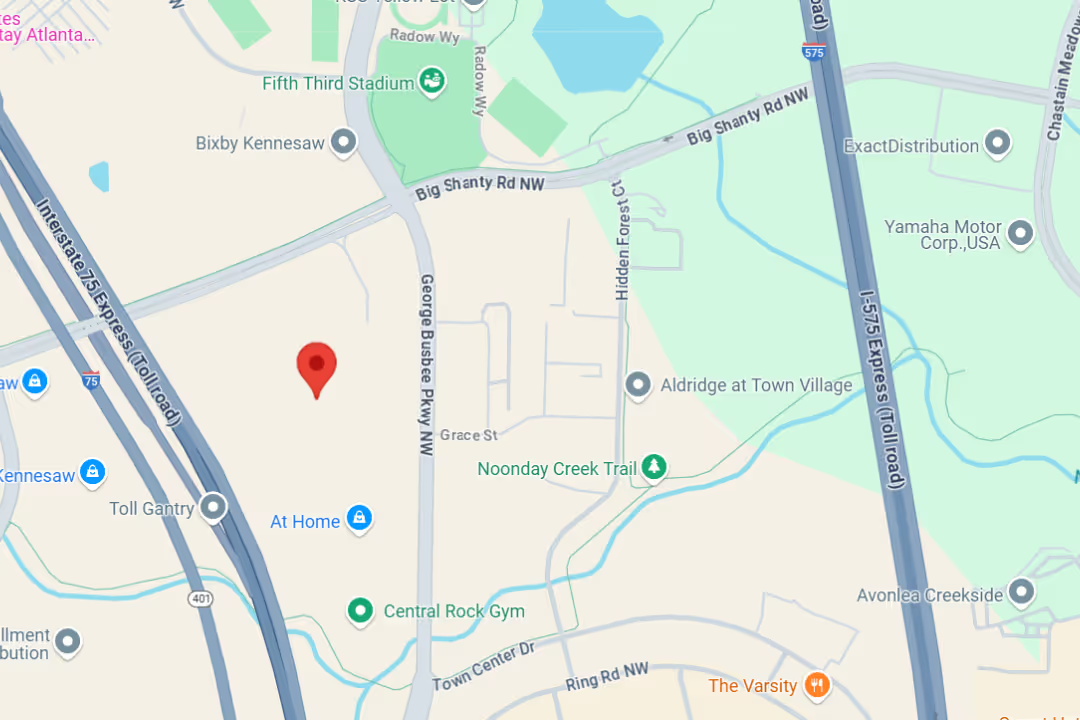
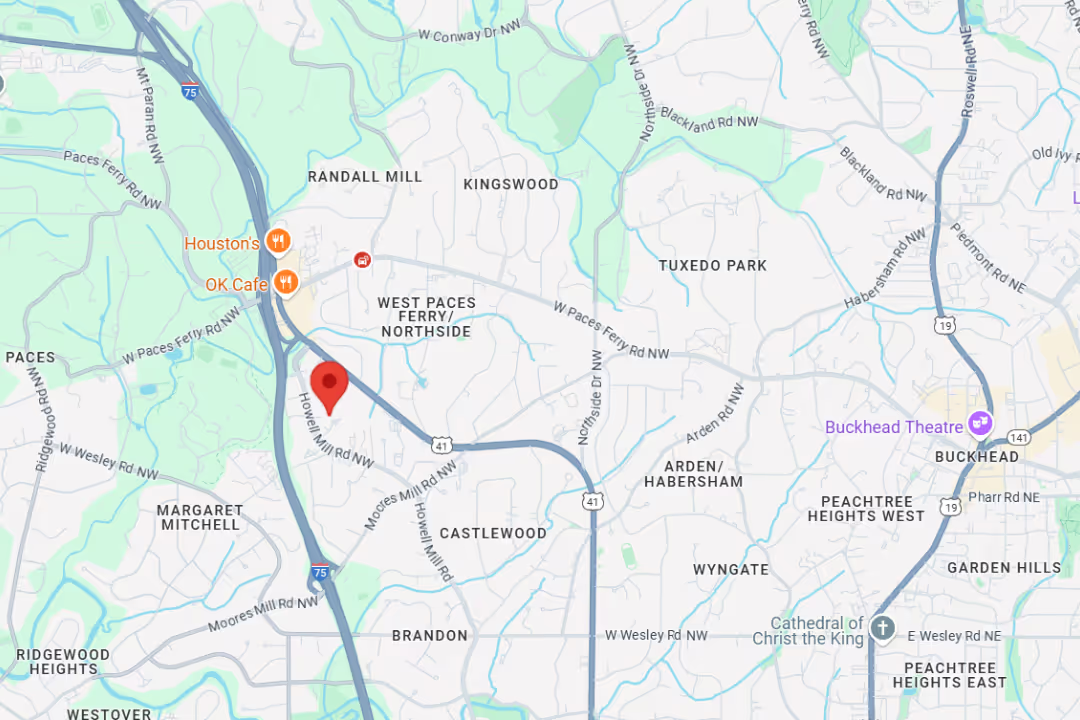
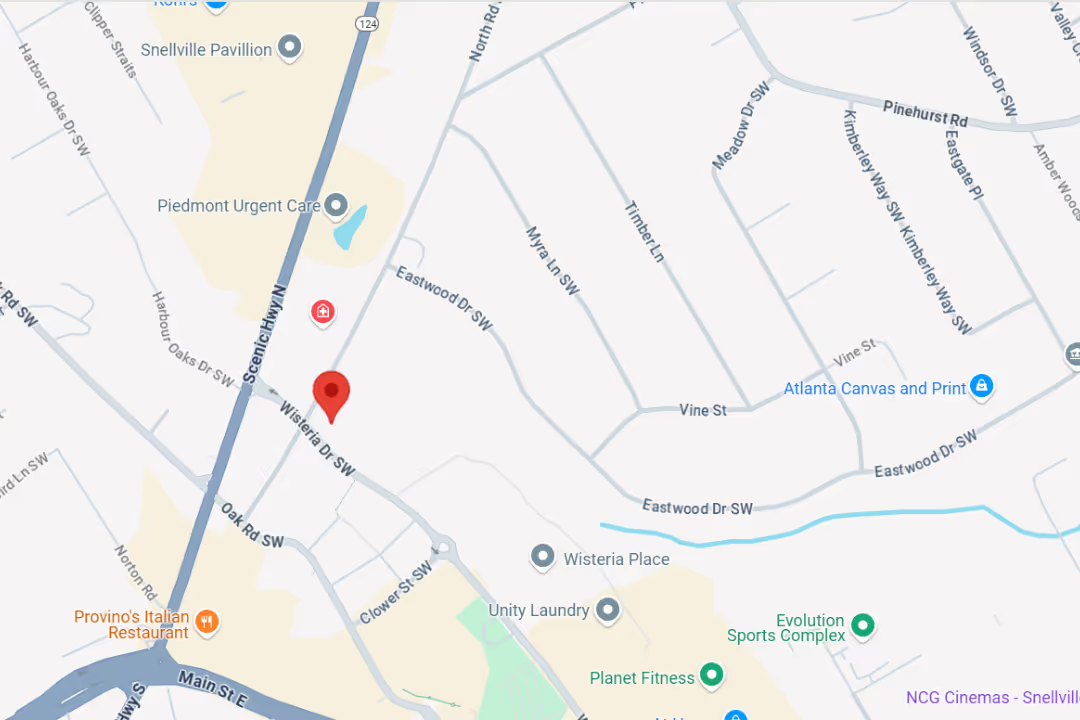
We make receiving expert care incredibly convenient with multiple state-of-the-art facilities across Metro Atlanta, Georgia:
If you are ready to put an end to thumb and wrist pain and get back to living life to the fullest, Schedule a consultation for De Quervain's tenosynovitis at the Medici location nearest you. Let us help you take the first step toward a pain-free future!
At Medici, you’re more than your MRI.
We take time to hear your story, understand your pain, and create a plan that actually works for you.

Our team delivers specialist care at convenient locations across Metro Atlanta:
Get expert tips on injury recovery, pain relief, joint health, and movement strategies—straight from our Fellowship-Trained team.