Feet and hands falling asleep is something almost everyone experiences — that sudden tingling, pins-and-needles sensation, or dead-weight numbness that hits after sitting too long or waking up in a strange position.
Most of the time, it's harmless. But sometimes, it's your body sending a signal worth paying attention to.
Here's a quick look at the most common reasons it happens:
If numbness resolves quickly after changing position, it's almost always benign. If it persists, spreads, or comes with weakness or pain — that's when it's time to dig deeper.
I'm Dr. Sonny Dosanjh, M.D., a board-certified Physical Medicine & Rehabilitation specialist and fellowship-trained pain management physician at Medici Orthopaedics & Spine, with extensive experience treating nerve-related conditions — including the chronic feet and hands falling asleep symptoms that point to peripheral neuropathy, spinal compression, and beyond. In this guide, I'll walk you through exactly what's behind this sensation, when to act on it, and what your options are.
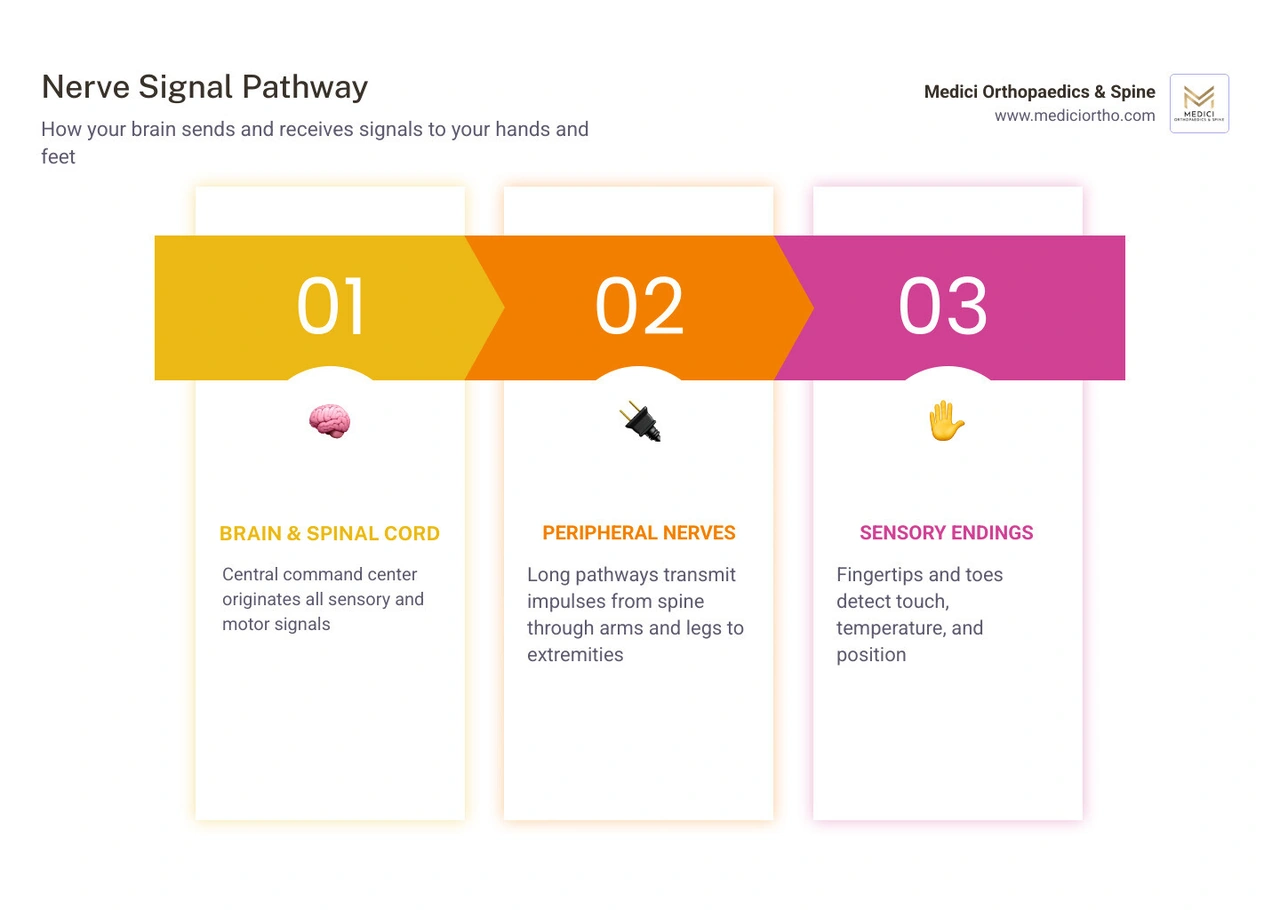
To understand why your limbs occasionally seem to take an unscheduled nap, we have to look at how your nervous system communicates. Your nerves act like a vast network of electrical cables running from your brain and spinal cord all the way down to your fingertips and toes. These pathways carry vital electrical impulses that dictate sensation and movement.
When you experience that classic "pins and needles" sensation, you are experiencing what doctors call paresthesia. This occurs when the pathways of communication between your extremities and your brain are temporarily disrupted. When a nerve is squeezed, or the tiny blood vessels supplying that nerve are compressed, the electrical signals get blocked.
Once you shift your weight or stretch out your limb, the pressure is relieved. Blood rushes back to the starved nerve fibers, and they all begin firing their stored-up signals to the brain at once. This sudden traffic jam of electrical impulses is what creates that prickly, buzzing, or vibrating sensation. To dive deeper into the mechanics of this sensory reboot, check out the Cleveland Clinic's guide on What That Pins and Needles Feeling Means.
In the vast majority of daily occurrences, feet and hands falling asleep is completely harmless. This is known as transient (or temporary) paresthesia.
Think of the times you have woken up in the morning with a hand that feels completely dead, heavy, and unresponsive because you slept directly on top of your arm. Or consider sitting through a long movie or dinner with your legs tightly crossed, only to find your foot completely numb when you stand up.
In these scenarios, the culprit is simple positional pressure. You have mechanically pinched a peripheral nerve against a bone, or temporarily restricted the local blood supply. As soon as you change your posture, stretch, or walk around, normal circulation and nerve signaling are restored within a minute or two. This is a normal physiological safety mechanism, and it does not indicate any permanent damage to your nervous system. For practical tips on how to handle these everyday occurrences, you can read the Harvard Health article on Hands or feet asleep? What to do.
While temporary numbness from an awkward sleeping position is nothing to worry about, chronic or recurring paresthesia is a different story. If you notice that your hands or feet are falling asleep frequently without an obvious postural cause, or if the numbness lingers for hours, days, or weeks, it may point to an underlying medical issue.
Chronic paresthesia often indicates that a nerve is not just temporarily squeezed, but actively irritated, inflamed, or damaged. This could be due to localized compression (such as a pinched nerve in the wrist or neck) or a systemic disease affecting nerves throughout the entire body. To help you understand when localized tingling transitions into a clinical concern, we have put together a detailed breakdown on What Causes Tingling and Numbness in Hands and Feet.
When patients visit our clinics in Metro Atlanta, we look closely at their clinical history to determine whether their numbness is structural, metabolic, or systemic. An estimated 20 million people in the United States suffer from some form of peripheral neuropathy, making it one of the most common chronic nerve issues we evaluate.
To help you distinguish between a harmless, temporary sleep posture issue and a deeper neurological concern, we have created this quick-reference comparison table:
| Characteristic | Temporary Nerve Compression | Chronic Neuropathy / Nerve Damage |
|---|---|---|
| Primary Cause | Prolonged pressure on a limb | Metabolic, structural, or systemic damage |
| Duration | Resolves within a few minutes of moving | Persistent, recurring, or constant |
| Distribution | Limited to the specific compressed area | Often bilateral (both sides), spreading upward |
| Triggers | Sleep positions, crossed legs, tight footwear | Occurs spontaneously, often worse at night |
| Accompanying Signs | None; full motor control returns quickly | Muscle weakness, burning pain, balance issues |
Diabetes is the single most common identifiable cause of chronic peripheral neuropathy, accounting for nearly a third of all diagnosed cases. In fact, up to 50% of individuals living with diabetes will develop some form of neuropathy during their lifetime.
When blood sugar levels remain consistently elevated, it damages the delicate walls of the microscopic blood vessels (capillaries) that supply your nerves with oxygen and nutrients. Over time, this nutrient deprivation causes the nerve fibers—particularly the long nerves extending to your feet and hands—to wither and misfire. This typically starts as a symmetrical "stocking-glove" pattern, meaning the tingling and numbness begin in the toes and feet before gradually climbing up the legs and eventually affecting the hands.
Environmental changes can also play a surprising role in how these damaged nerves behave. For example, we often see patients experience shifts in their symptoms as the seasons change; read more about how this works in our guide on Diabetic Neuropathy Pain in Spring: How Warmer Weather Affects Nerve Health & What to Do. For an exhaustive overview of how metabolic changes damage peripheral pathways, you can explore Healthline's resource on Tingling in Hands and Feet: 25 Causes, Treatments & More.
Sometimes the nerve itself is healthy, but the structural tunnels it must pass through have become narrow and inflamed.
In mild to moderate cases of compression, wearing a supportive wrist or ankle splint at night can keep the joint in a neutral, straight position, relieving pressure and letting the nerve rest.
Because all the nerves in your limbs originate from your spinal cord, structural problems in your neck or back can easily cause symptoms in your hands and feet. This is known as radiculopathy.
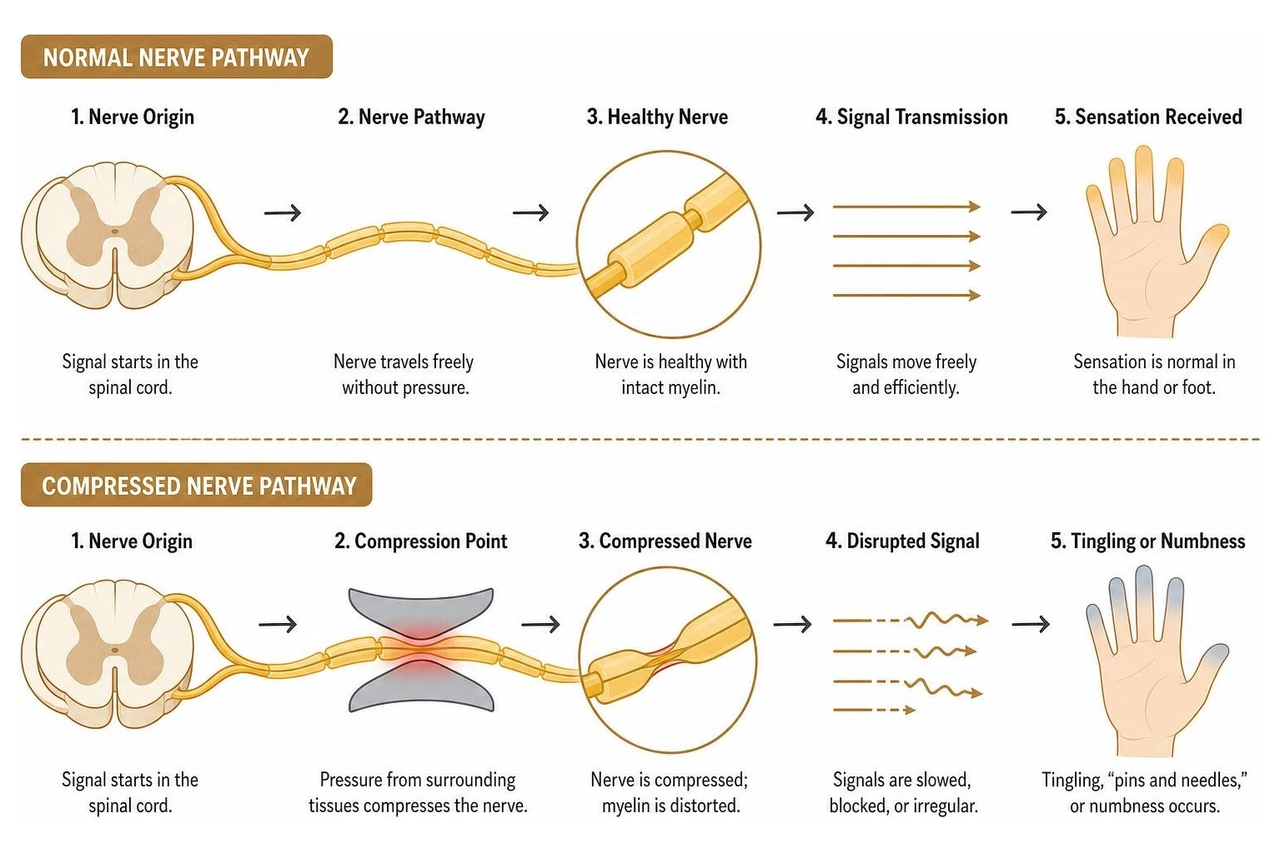
Nerves require a precise chemical environment to maintain their protective myelin sheaths and transmit electrical signals smoothly.
Notably, despite advanced diagnostic testing, nearly a third of all peripheral neuropathy cases have no clear identifiable cause. This is medically referred to as idiopathic neuropathy.
While most episodes of feet and hands falling asleep are benign or point to a slow-growing chronic condition, there are times when sudden numbness is a medical emergency.

If you or someone near you experiences a sudden onset of numbness, you must quickly evaluate for signs of a stroke. Medical professionals use the FAST protocol to identify these critical warning signs:
Beyond stroke symptoms, other neurological red flags require urgent evaluation. If numbness and tingling are accompanied by a sudden loss of bowel or bladder control, or progressive weakness that makes it difficult to lift your foot (foot drop) or grip objects, it could indicate severe spinal cord compression or a rapid-onset neurological condition like Guillain-Barré syndrome. For a comprehensive list of symptoms that warrant emergency medical care, refer to the Numbness and tingling: MedlinePlus Medical Encyclopedia.
At Medici Orthopaedics & Spine, we believe that effective treatment starts with an exceptionally thorough and accurate diagnosis. When you visit us with persistent hand or foot numbness, we use a variety of diagnostic tools to pinpoint the exact location and cause of your nerve irritation:
If your diagnostic workup reveals that your symptoms are not an emergency, there are several highly effective, drug-free ways to find relief and protect your nerve health.
Many patients ask how they can begin managing these sensations at home. To support your journey, we have compiled a step-by-step approach on How to Naturally Relieve Tingling in Hands, as well as a broader guide exploring Natural Remedies to Relieve Tingling in Hands Without Medication.
Simple changes to your daily habits can make a dramatic difference in reducing the frequency of your extremities falling asleep:
For active relief when tingling strikes, we recommend integrating these soothing home therapies:
Yes, indirectly. While high blood pressure itself does not typically cause tingling as a direct symptom, chronic hypertension can damage your blood vessels over time. This limits their ability to deliver oxygen-rich blood to your peripheral nerves, which can lead to paresthesia. Additionally, some common blood pressure medications can have side effects that include mild numbness or tingling. To understand this connection better, read our detailed article on High Blood Pressure Tingling Hands and Feet.
When we sleep, our conscious control over our posture disappears. We often curl our wrists inward, sleep directly on top of our arms, or bend our knees and hips at sharp angles for hours. This creates prolonged, direct mechanical pressure on major peripheral nerves (like the median, ulnar, and sciatic nerves). Furthermore, our blood pressure naturally drops slightly while we sleep, which can reduce blood flow to compressed limbs, making them fall asleep more easily.
Absolutely. When you experience high anxiety or panic, your body enters a "fight-or-flight" response. This often causes rapid, shallow breathing (hyperventilation), which lowers the level of carbon dioxide in your blood. This chemical shift causes your blood vessels to constrict, reducing blood flow to your extremities and triggering a transient, tingling sensation around your mouth, hands, and feet. Once you practice deep, slow breathing and your body relaxes, the sensation typically fades.
Whether your feet and hands falling asleep is a simple case of temporary positional pressure or a symptom of an underlying condition like diabetic neuropathy or spinal radiculopathy, you do not have to navigate it alone.
At Medici Orthopaedics & Spine, Dr. Sonny Dosanjh, M.D., and our entire medical team are committed to Optimally Restoring your Quality of Life. We specialize in delivering highly effective, non-surgical, and minimally invasive treatments for joint, spine, and nerve pain. By integrating physical therapy, advanced interventional pain management, and regenerative medicine, we design customized care plans tailored to your unique needs.
If persistent tingling, numbness, or pins and needles are disrupting your daily life, let us help you find the answers and relief you deserve. We invite you to schedule an evaluation at one of our convenient Metro Atlanta locations in Marietta, Snellville, Kennesaw, or Buckhead. To take your first step toward drug-free, natural relief, read our guide on How to Relieve Tingling Sensation in Hands Naturally.
At Medici, you’re more than your MRI.
We take time to hear your story, understand your pain, and create a plan that actually works for you.

Our team delivers specialist care at convenient locations across Metro Atlanta:
Get expert tips on injury recovery, pain relief, joint health, and movement strategies—straight from our Fellowship-Trained team.