If your feet get numb when standing, pressure on a nerve in your foot or lower back may be disrupting sensation. Shoes that squeeze your feet or standing in one position for too long can make this worse. If numbness keeps coming back, lasts after you move, or affects your balance, get it checked. Diabetes, vitamin B12 deficiency, and circulation problems can also cause numb feet.
Seek urgent care if numbness starts suddenly with weakness, trouble speaking, loss of bladder or bowel control, or a foot that becomes cold and severely painful.
I'm Sonny Dosanjh, M.D., a physician board certified in physical medicine and rehabilitation and fellowship trained in multidisciplinary pain management. At Medici Orthopaedics & Spine, I help evaluate nerve and spine problems that may explain why feet get numb when standing, with a focus on finding the cause before choosing treatment.
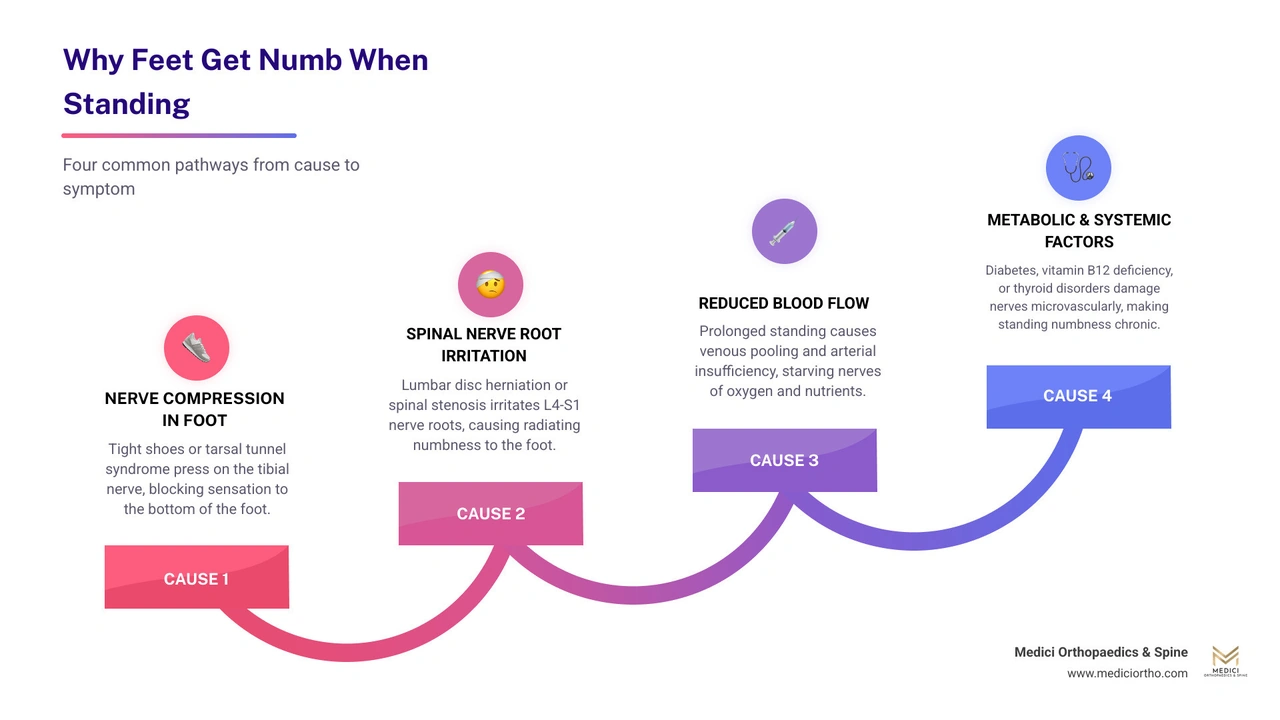
Feet get numb when standing terms to remember:
When you stand upright, your body engages in a complex balancing act involving muscles, bones, blood vessels, and extensive nerve networks. Under normal conditions, specialized sensory receptors in the soles of your feet transmit electrical signals through peripheral nerves, up the spinal cord, and directly to the brain, informing you of the surface texture, balance, and spatial orientation.
However, standing still for long intervals places continuous static weight on the lower extremities. This posture can cause gravity-induced venous pooling, reduce microvascular perfusion to delicate nerve endings, and increase postural nerve traction. When nerve conduction pathways face physical compression or reduced blood supply, sensory signals stall—a sensation known as paresthesia, or "pins and needles."
While occasional numbness from standing in an awkward stance is normal, persistent loss of sensation points toward structural or physiological issues. It is important to distinguish temporary mechanical compression from chronic peripheral neuropathy.
| Feature | Temporary Positional Numbness | Chronic Peripheral Neuropathy |
|---|---|---|
| Primary Trigger | Sustained static posture, tight footwear | Metabolic, systemic, or nerve damage |
| Duration | Resolves within minutes of moving | Persistent or progressively worsening |
| Associated Symptoms | Transient prickling sensation | Burning pain, weakness, balance loss |
| Underlying Mechanism | Brief local ischemia or nerve pressure | Axonal degeneration or demyelination |
| Medical Attention | Rarely requires clinical care | Requires formal medical evaluation |
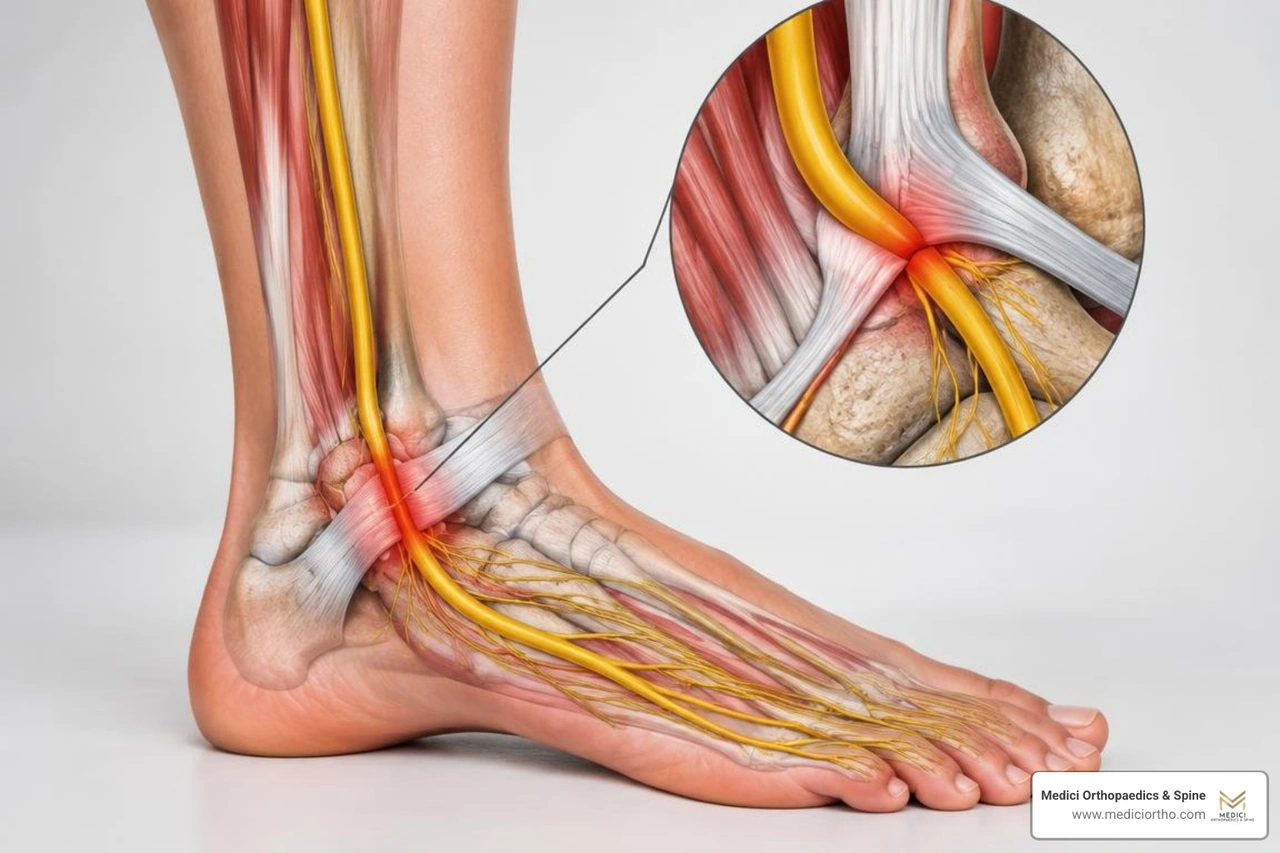
A frequent local culprit behind standing-induced numbness is peripheral nerve entrapment in the lower leg and ankle. The tibial nerve travels down the back of the leg and passes through a narrow fibrous space on the inside of the ankle known as the tarsal tunnel.
When you stand, body weight spreads across the arches of your feet. In individuals with flat feet (overpronation), the arch collapses inward, placing immense mechanical stretch and compression on the tibial nerve beneath the medial malleolus (the inner ankle bone). This entrapment condition, known as tarsal tunnel syndrome, leads to burning, tingling, and numbness across the plantar surface of the foot and toes.
According to clinical resources like the Tarsal Tunnel Syndrome guide, this condition affects fewer than 200,000 individuals in the United States, yet it remains an underdiagnosed cause of unexplained numbness. If you notice that the bottom of foot feels numb primarily after prolonged periods on your feet, local nerve entrapment at the ankle may be the underlying cause.
The nerves providing sensation to your feet originate in your lower back. The L4, L5, and S1 spinal nerve roots exit the lumbar spine and join together to form the sciatic nerve, which travels down the leg into the foot.
When you stand upright, axial loading—the downward force of gravity compressing your spine—increases pressure on your intervertebral discs and facet joints. If you have a herniated disc, degenerative disc disease, or lumbar spinal stenosis (narrowing of the spinal canal), standing narrows the openings where nerve roots exit. This mechanical pressure triggers sciatica lumbar radiculopathy, transmitting shooting nerve pain, tingling, and numbness down the back or side of your leg into your foot.
Sciatica affects up to 40% of people at some point in their lives. Recognizing compressed nerve in lower back symptoms is essential, because standing-induced foot numbness often originates in the lumbar spine, even when lower back pain is minimal or absent.
Nerves require a constant supply of oxygen-rich blood to generate electrical impulses. If blood flow down the legs is compromised, peripheral nerves quickly lose functionality, producing numbness, weakness, and cramping.
One major vascular trigger is Peripheral artery disease - legs, a condition where plaque buildup (atherosclerosis) narrows the arteries supplying the lower extremities. While PAD often causes claudication—muscle cramping during walking—standing still can also reveal vascular insufficiency. Signs of vascular-related numbness include cool skin temperature in the feet, slow toenail growth, pale or bluish skin coloration when standing, and diminished pulses in the feet. Understanding how to improve circulation for peripheral neuropathy helps maintain both vascular perfusion and long-term nerve viability.
When nerve fibers are compromised by underlying systemic health conditions, they become far more vulnerable to the normal physical stresses of standing. Metabolic disruptions degrade the protective myelin sheath and damage the delicate microvessels supplying your peripheral nerves, leading to generalized foot tingling and numbness.
Diabetes is the most common metabolic cause of nerve dysfunction. Sustained high blood glucose levels trigger biochemical cascades that cause intracellular sorbitol accumulation and chronic inflammation. Over time, this leads to microvascular nerve ischemia, starving peripheral nerves of oxygen and nutrients.
As documented in Diabetic Neuropathies research, diabetic neuropathy affects up to 66% of people with diabetes, and the vast majority of individuals who have lived with diabetes for 25 years develop some form of nerve damage.
Diabetic nerve damage typically presents in a "stocking-glove" distribution, starting symmetrically in the toes and soles of both feet. Furthermore, autonomic neuropathy can impair the vascular system's ability to maintain blood pressure when standing, compounding sensory loss with dizziness or orthostatic drops. Implementing targeted diabetic neuropathy treatments—such as strict glycemic management, physical therapy, and specialized lifestyle modifications—is vital for preserving nerve function.
Peripheral nerves also depend on specific vitamins and hormonal balances to function properly. According to Peripheral neuropathy data, peripheral neuropathy affects nearly 1 in 10 adults aged 55 and older.
Key metabolic contributors include:
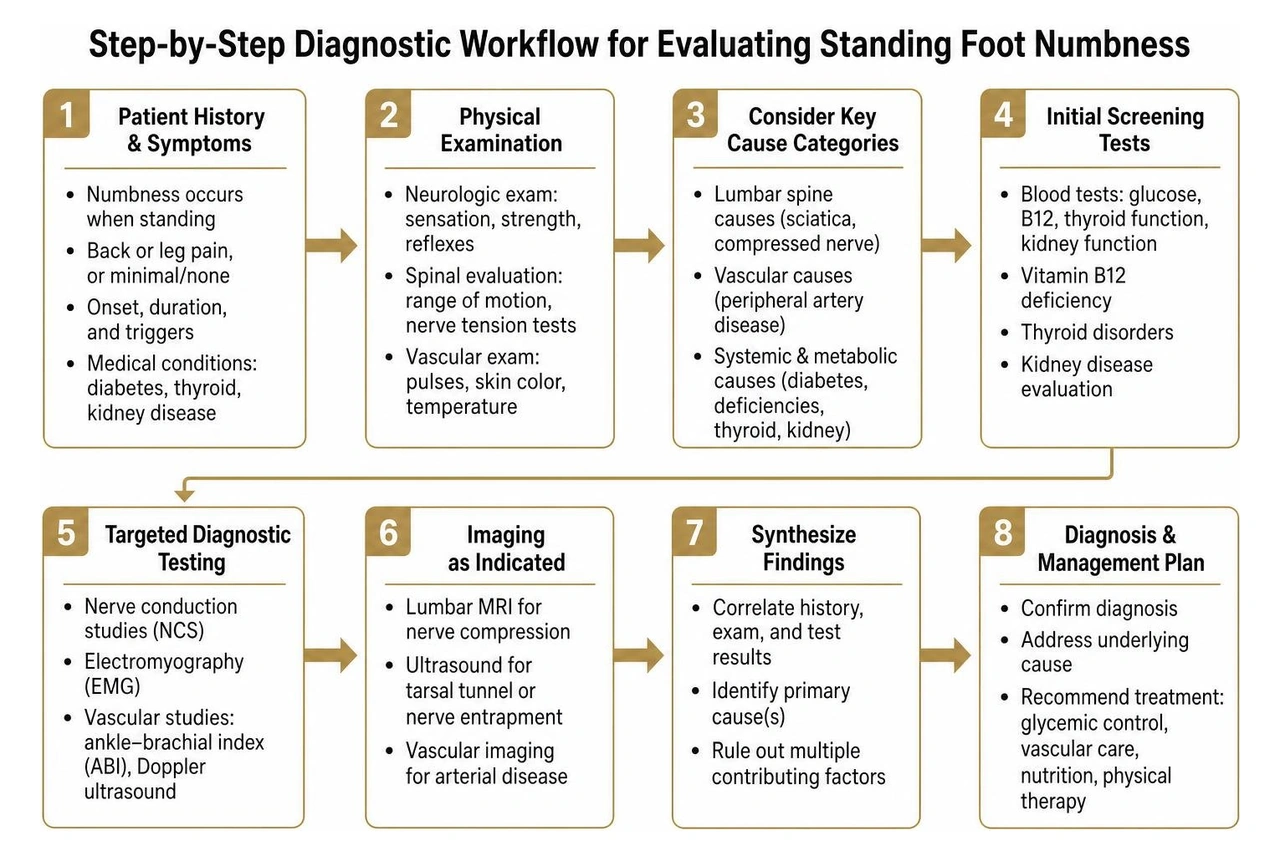
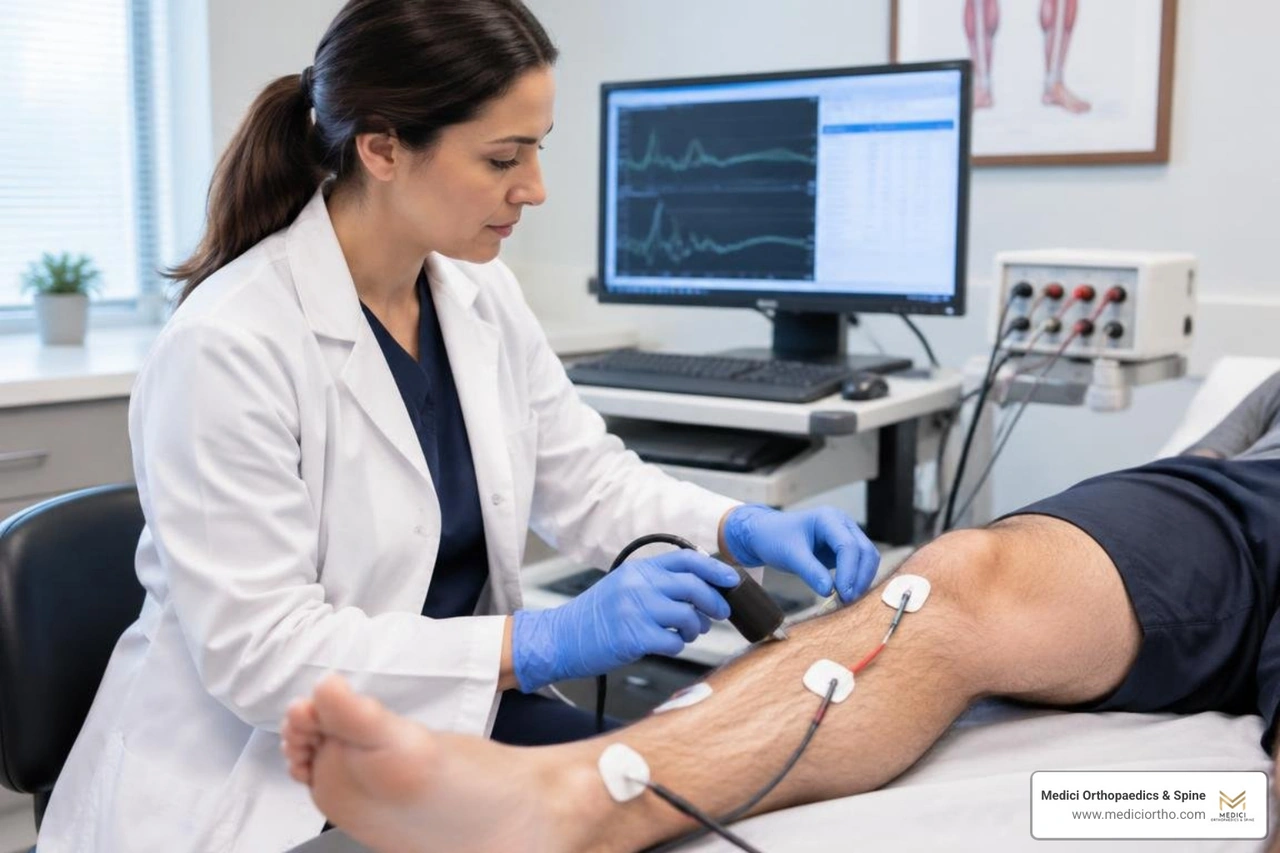
Because foot numbness while standing can stem from the spine, peripheral nerve tunnels, blood vessels, or systemic disease, an accurate clinical diagnosis is the first step toward effective relief.
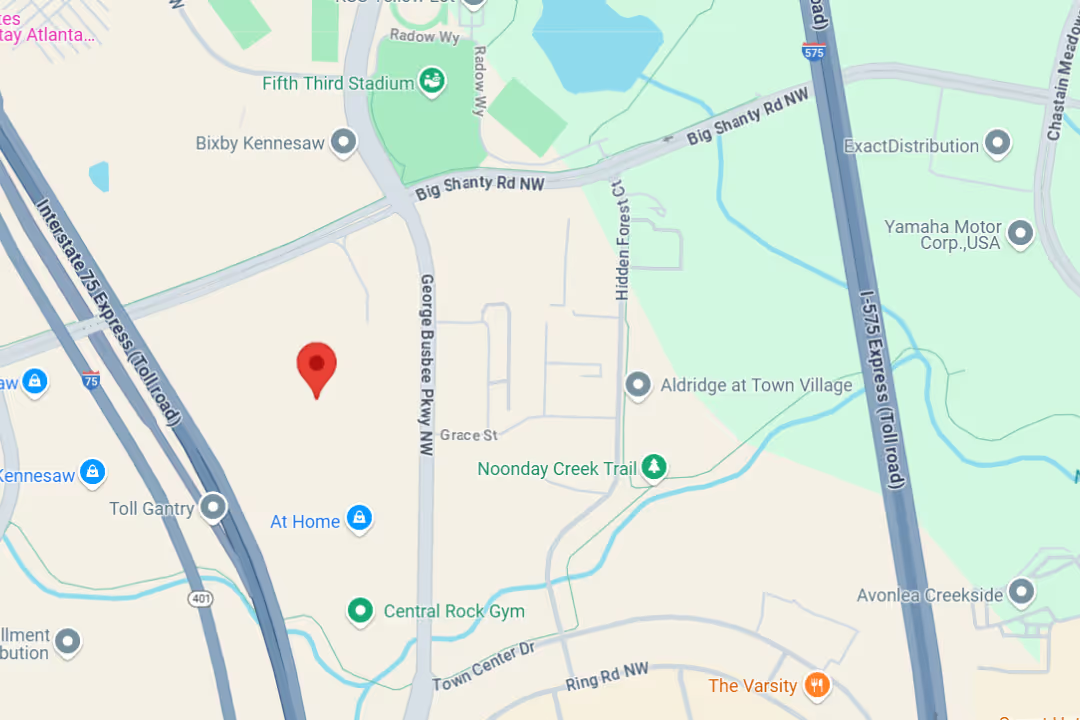
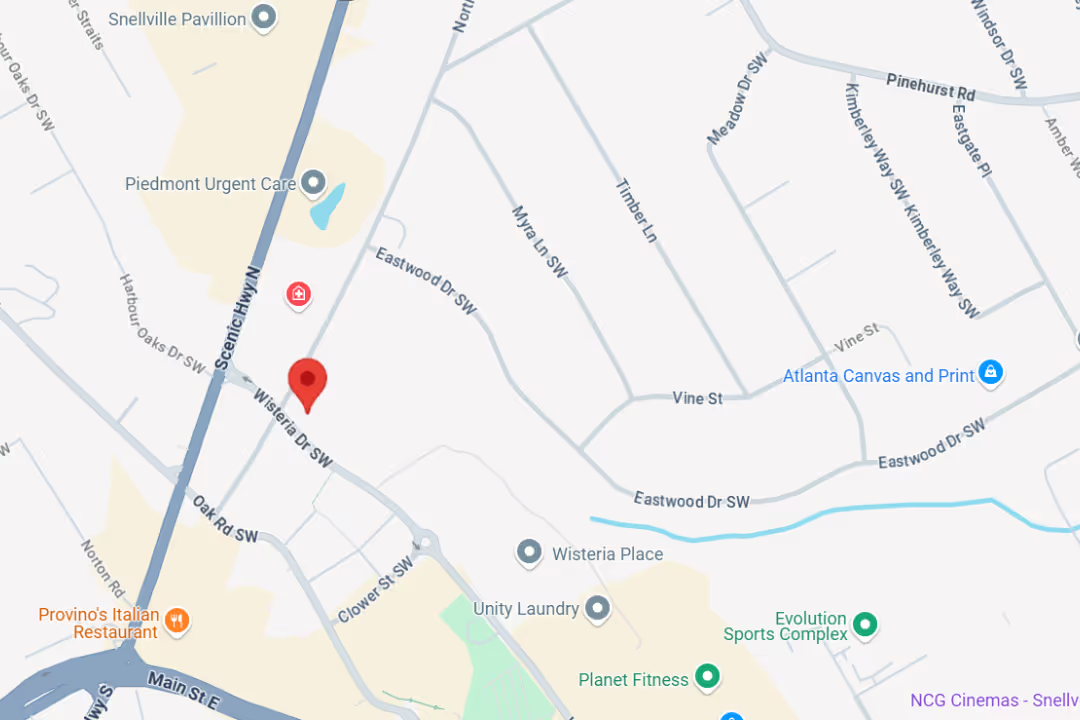
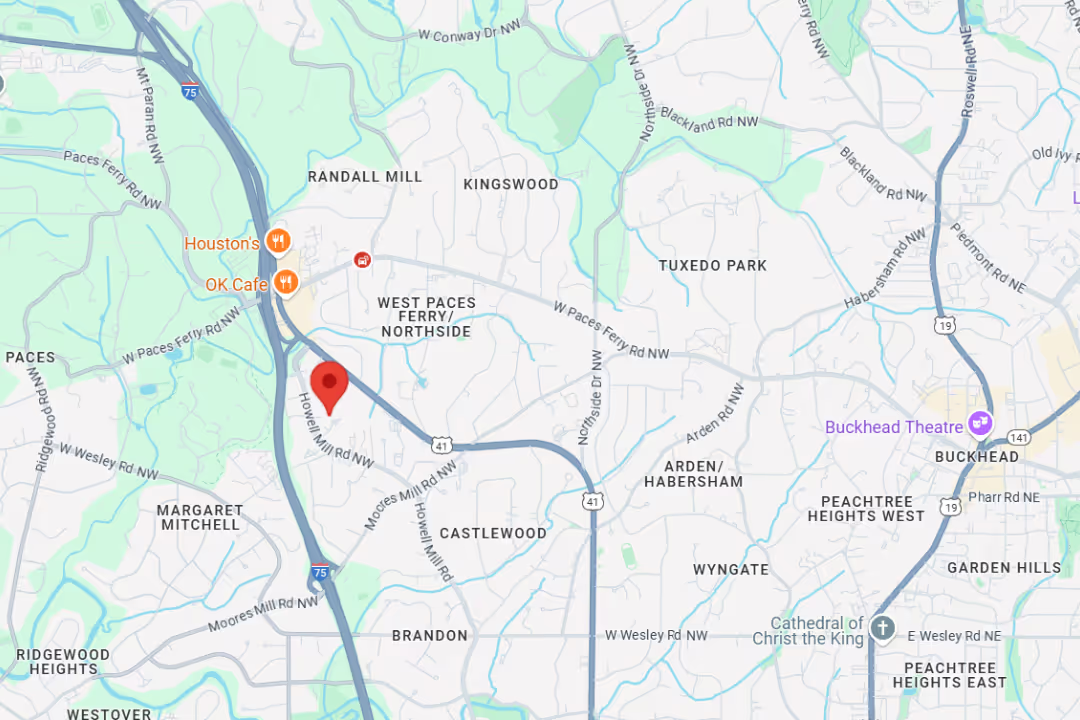
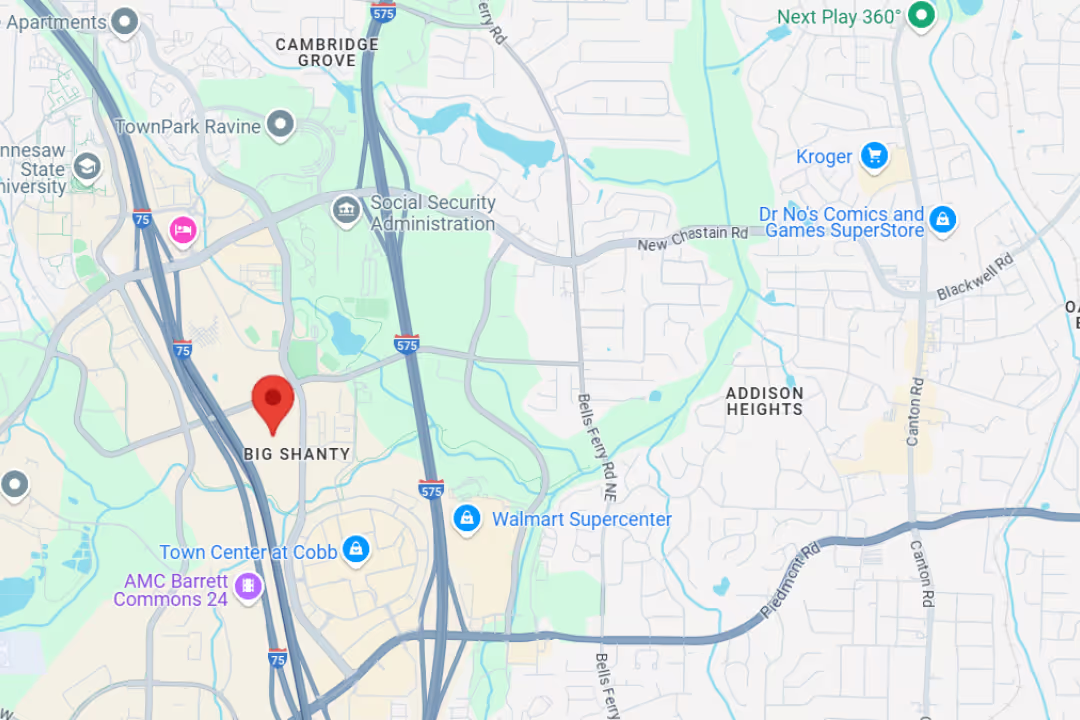
During an evaluation at our clinics across Metro Atlanta—including Snellville, Kennesaw, Buckhead, and Marietta—we perform a comprehensive physical and neurological exam. This includes:
While many causes of foot numbness can be managed through conservative care, certain symptoms require immediate emergency medical attention:
Managing foot numbness caused by standing involves relieving mechanical pressure on nerves, enhancing blood flow, and stabilizing underlying systemic conditions. At Medici Orthopaedics & Spine, our team focuses on non-surgical, minimally invasive treatments designed to restore mobility without heavy reliance on medications.
Simple daily adjustments can significantly reduce nerve compression and improve standing tolerance:
When conservative changes are not enough, interventional pain management therapies can provide targeted relief:
No. While diabetic peripheral neuropathy is a common systemic cause, standing-induced numbness is often mechanical. Pinched nerve roots in the lumbar spine (sciatica), nerve entrapment at the ankle (tarsal tunnel syndrome), vascular insufficiency (PAD), and poorly fitted footwear are all frequent non-diabetic causes. A clinical evaluation is necessary to identify the exact source.
Symptoms originating in the lumbar spine (such as a herniated disc) often follow a clear dermatomal path, causing numbness or shooting discomfort that travels from the lower back or buttock down the leg into specific areas of the foot. In contrast, local entrapment like tarsal tunnel syndrome typically causes symptoms isolated to the sole of the foot and toes, frequently producing a positive Tinel's sign (a tingling sensation when tapping the inner ankle).
If your feet go numb while using a standing desk, take immediate steps to restore blood flow and reduce nerve compression. Shift your weight from side to side, place one foot on an elevated footrest, perform simple ankle pumps (raising up onto your toes and back onto your heels), step onto a cushioned anti-fatigue mat, and ensure your footwear is not laced too tightly across the top of your foot.
Experiencing foot numbness when standing upright is a clear signal from your nervous or vascular system that something is disrupting normal function. Whether caused by nerve compression in the lower back, mechanical entrapment at the ankle, circulatory insufficiency, or systemic metabolic factors like diabetes, addressing symptoms early prevents permanent nerve injury and protects your long-term mobility.
At Medici Orthopaedics & Spine, Dr. Sonny Dosanjh and our multidisciplinary team provide thorough diagnostics and personalized, minimally invasive treatment plans across our Metro Atlanta locations. If standing has become uncomfortable or unsteady, schedule an evaluation for neuropathy neuralgia with our team to find the underlying cause and take positive steps toward lasting relief.
At Medici, you’re more than your MRI.
We take time to hear your story, understand your pain, and create a plan that actually works for you.

Our team delivers specialist care at convenient locations across Metro Atlanta:
Get expert tips on injury recovery, pain relief, joint health, and movement strategies—straight from our Fellowship-Trained team.