Finger tingling is often a brief "pins and needles" feeling caused by pressure or irritation on a nerve, such as sleeping on your arm, gripping tools, or keeping your wrist bent while typing. But when it keeps coming back, spreads, causes weakness, or starts suddenly, it can point to a nerve problem in the wrist, elbow, neck, or a health condition such as diabetes.
| Pattern | What it may suggest |
|---|---|
| Tingling that fades after changing position | Temporary pressure on a nerve |
| Thumb, index, and middle finger tingling | Median nerve irritation, often carpal tunnel syndrome |
| Ring and pinky finger tingling | Ulnar nerve compression, often near the elbow or wrist |
| Tingling from the neck into the arm and fingers | Cervical nerve irritation |
| Tingling in both hands or hands and feet | Peripheral neuropathy, including diabetic neuropathy |
Sudden tingling with facial drooping, weakness, confusion, severe headache, dizziness, trouble speaking, chest pain, or poor coordination needs emergency care right away. Persistent or worsening symptoms deserve a medical evaluation because finding the source early can help protect nerve function.
I am Sonny Dosanjh, M.D., a board-certified Physical Medicine and Rehabilitation physician and fellowship-trained pain specialist who evaluates finger tingling related to nerve compression, spine conditions, injuries, and neuropathy. At Medici Orthopaedics & Spine, we start by identifying where the nerve signal is being disrupted before building a personalized, least-invasive care plan.
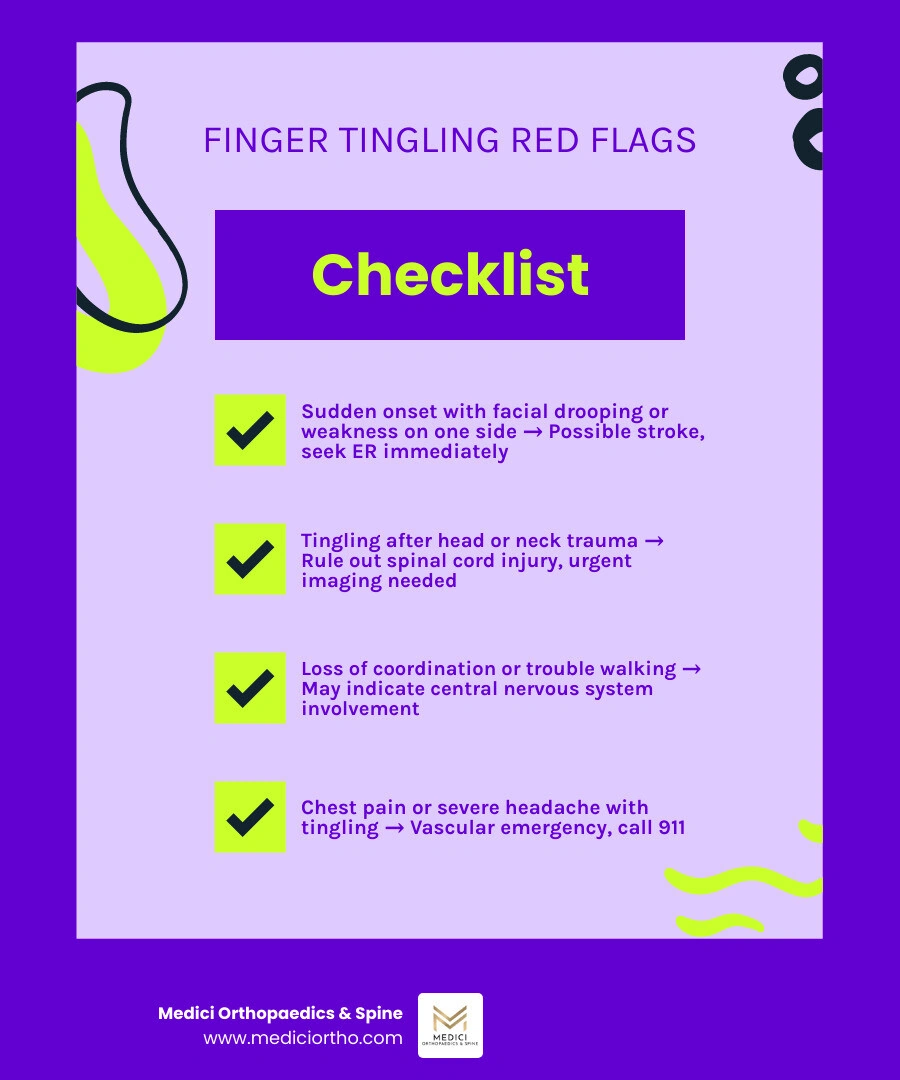
While most instances of finger tingling stem from localized nerve pressure or gradual overuse, a sudden onset of paresthesia (the medical term for pins and needles) can be a sign of a life-threatening medical emergency. When sensory changes occur abruptly, they may not originate in the hand at all, but rather in the brain or central nervous system.
It is vital to distinguish between routine orthopedic nerve issues and vascular or neurological crises. Understanding these red flags ensures you receive appropriate care without dangerous delay.
If you or someone near you experiences sudden finger tingling, quickly check for associated neurological red flags. A cerebrovascular event, such as an ischemic stroke or transient ischemic attack (TIA), frequently causes unilateral sensory loss—meaning it affects only one side of the body.
Call emergency services (911) immediately if sensory changes in the hand occur alongside any of the following symptoms:
Reviewing Pins and needles warning signs helps clarify how emergency neurological triage protects against permanent brain or spinal damage. If these emergency symptoms are absent and your symptoms are intermittent or localized, you can safely proceed to step-by-step diagnostic evaluation.
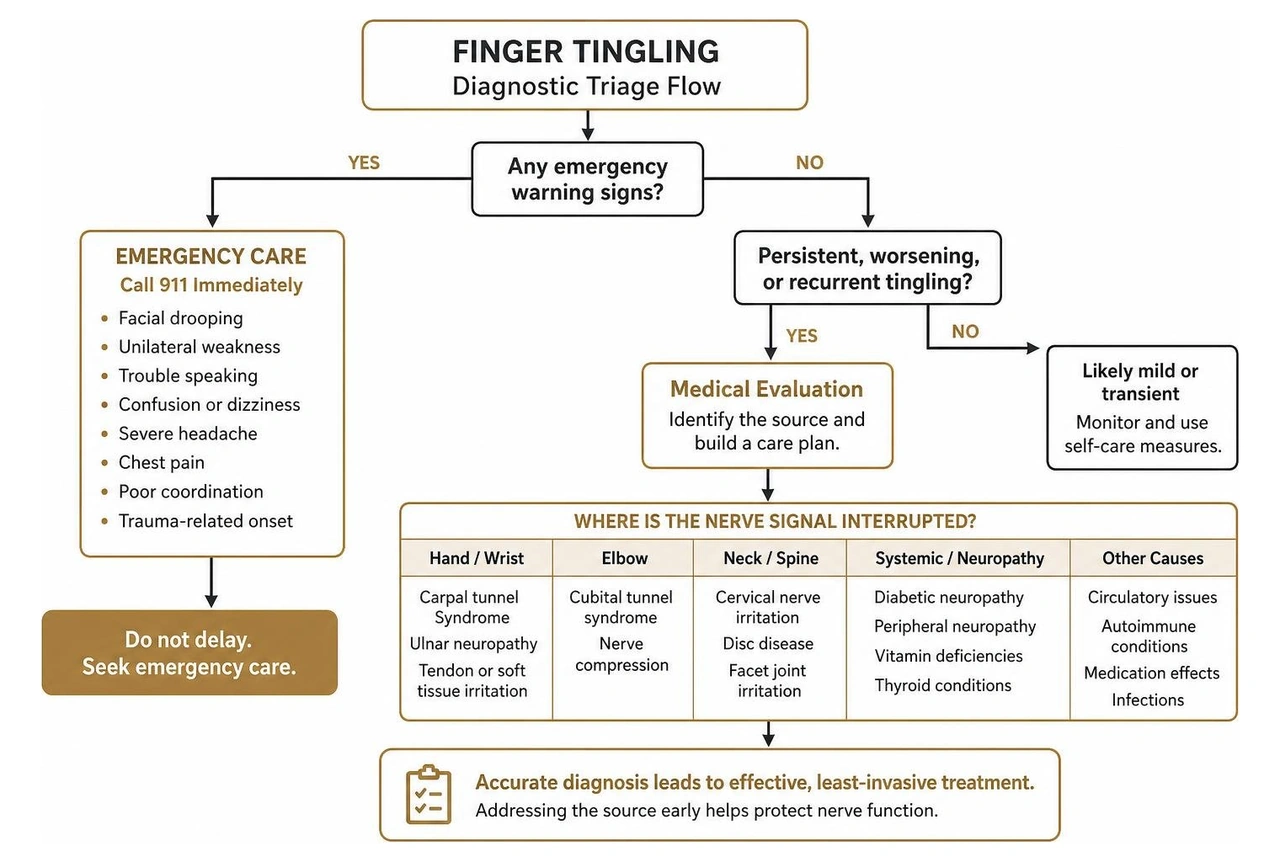
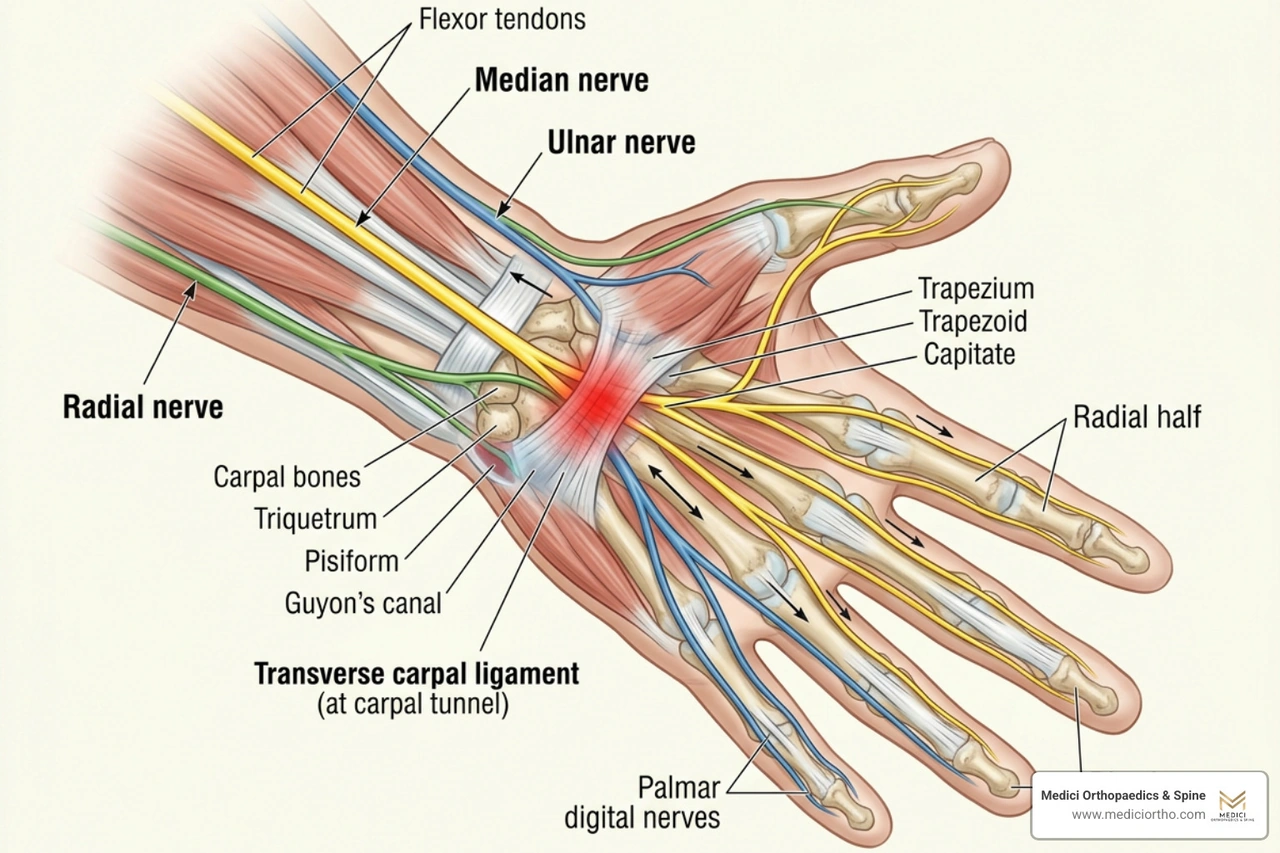
To figure out why your fingers are prickling or buzzing, we first look at the nerve highways feeding your hand. Sensory signals travel from your fingertips, through peripheral nerves in the hand, wrist, and elbow, up the arm, into the cervical spine (neck), and finally to the brain. Interruption anywhere along this line can trigger finger tingling.
To better understand how central and peripheral issues interact, explore What Causes Tingling and Numbness in Hands and Feet. Identifying which specific fingers are affected provides immediate clues about where the nerve is being squeezed or irritated.
There are three primary sensory nerves responsible for hand function: the median nerve, the ulnar nerve, and the radial nerve. Mapping your exact symptoms to these pathways helps pinpoint the cause.
| Affected Nerve | Primary Location of Entrapment | Associated Fingers Affected | Common Triggers & Symptoms |
|---|---|---|---|
| Median Nerve | Carpal Tunnel (Wrist) | Thumb, Index, Middle, & half Ring finger | Typing, driving, holding phone; nighttime awakening |
| Ulnar Nerve | Cubital Tunnel (Elbow) / Guyon’s Canal (Wrist) | Pinky finger & half Ring finger | Leaning on elbows, bending arm during sleep |
| Radial Nerve | Radial Groove (Upper Arm / Forearm) | Back of the hand, web space of thumb | Prolonged arm pressure ("Saturday night palsy") |
| Cervical Nerve Root | Neck (Cervical Spine C6, C7, C8) | Variable patterns extending down the arm | Head turning, neck extension, sharp radiating pain |
A common fear among patients is that any sensation of finger tingling means their nerves are permanently damaged. Fortunately, that is rarely the case early on. In many instances, paresthesia is simply a transient, reversible mechanical block—like a kink in a garden hose. When you lean on your arm awkwardly and it "falls asleep," removing the pressure restores normal nerve firing once blood flow returns.
However, chronic, systemic, or unaddressed compressions are different:
The key takeaway is that early treatment prevents long-term nerve loss. Even in mechanical cases, leaving a severely compressed nerve untreated for months or years can cause permanent sensory loss and thumb muscle atrophy. Early medical evaluation stops temporary irritation from turning into permanent damage.

Because there are dozens of reasons why your fingers might tingle, self-diagnosis can lead to delay or improper care. An expert medical evaluation confirms the precise point of nerve irritation.
When you visit Medici Orthopaedics & Spine, our team takes time to evaluate your complete history, perform detailed sensory tests, and run targeted diagnostic procedures. Read more about comprehensive nerve evaluations in What Causes Nerve Pain in Your Hands: Symptoms, Causes, and Treatments.
A systematic diagnostic evaluation often follows a clear, multi-step progression to uncover the source of your symptoms:
Once we identify the underlying cause of your finger tingling, we focus on effective treatment. At Medici Orthopaedics & Spine, our core mission is delivering least-invasive, non-surgical options that help you avoid major surgery whenever possible.
Combining modern interventional therapies with daily home habits offers the fastest route to relief. To explore a wide variety of clinical approaches, check out Tingling hands and feet causes and treatments.
For persistent, moderate, or severe nerve compression and peripheral neuropathy, targeted interventional therapies restore nerve function without long recoveries:
For mild or early-stage finger tingling, consistent home management and ergonomic habits play a huge role in recovery:
Here are key daily habits to help protect your nerve health:
It is very common to wake up during the night with numb, tingling hands. When we sleep, we unconsciously curl our wrists inward or bend our elbows tightly. These positions compress the median nerve inside the carpal tunnel or the ulnar nerve inside the cubital tunnel.
Additionally, lying flat increases fluid retention in the upper body overnight, raising tissue pressure within tight anatomical compartments. Wearing a neutral wrist splint to bed prevents wrist flexion and provides fast nighttime relief.
Yes, absolutely. Modern habits like leaning over a computer screen or bending your neck down to look at a smartphone ("text neck") put intense strain on the cervical spine.
Over time, poor posture contributes to muscle spasms, disc herniation, and bone spur formation in the neck. These structural changes compress spinal nerve roots, causing tingling, electric shock sensations, or pain that radiates down your shoulder and arm into specific fingers.
If your finger tingling goes away quickly after changing positions or moving your arm, it is likely temporary nerve pressure and not a concern.
However, if tingling persists for more than two weeks, worsens over time, wakes you from sleep, or is accompanied by hand weakness or poor coordination, you should schedule a medical evaluation. Getting evaluated within two weeks helps protect against long-term nerve injury and muscle loss.
Finger tingling is an important warning sign from your nervous system—whether it signals temporary pressure from poor wrist positioning, a pinched nerve root in your neck, or an underlying systemic condition like diabetic peripheral neuropathy. By paying attention to which fingers are affected and getting a thorough medical evaluation, you can identify the underlying cause and take clear steps toward full recovery.
At Medici Orthopaedics & Spine, we believe in restoring your quality of life through integrated, non-surgical care. Our experienced medical team uses diagnostic testing and advanced therapies—including physical therapy, image-guided injections, hyperbaric oxygen, and spinal cord stimulation—to deliver personalized, long-lasting relief.
If persistent hand numbness, weakness, or pins-and-needles sensations are affecting your daily routine, contact our specialists today to schedule an evaluation. Explore our comprehensive resources on Comprehensive Neuropathy and Neuralgia Care to learn how we can help you move, work, and sleep without pain.
At Medici, you’re more than your MRI.
We take time to hear your story, understand your pain, and create a plan that actually works for you.

Our team delivers specialist care at convenient locations across Metro Atlanta:
Get expert tips on injury recovery, pain relief, joint health, and movement strategies—straight from our Fellowship-Trained team.