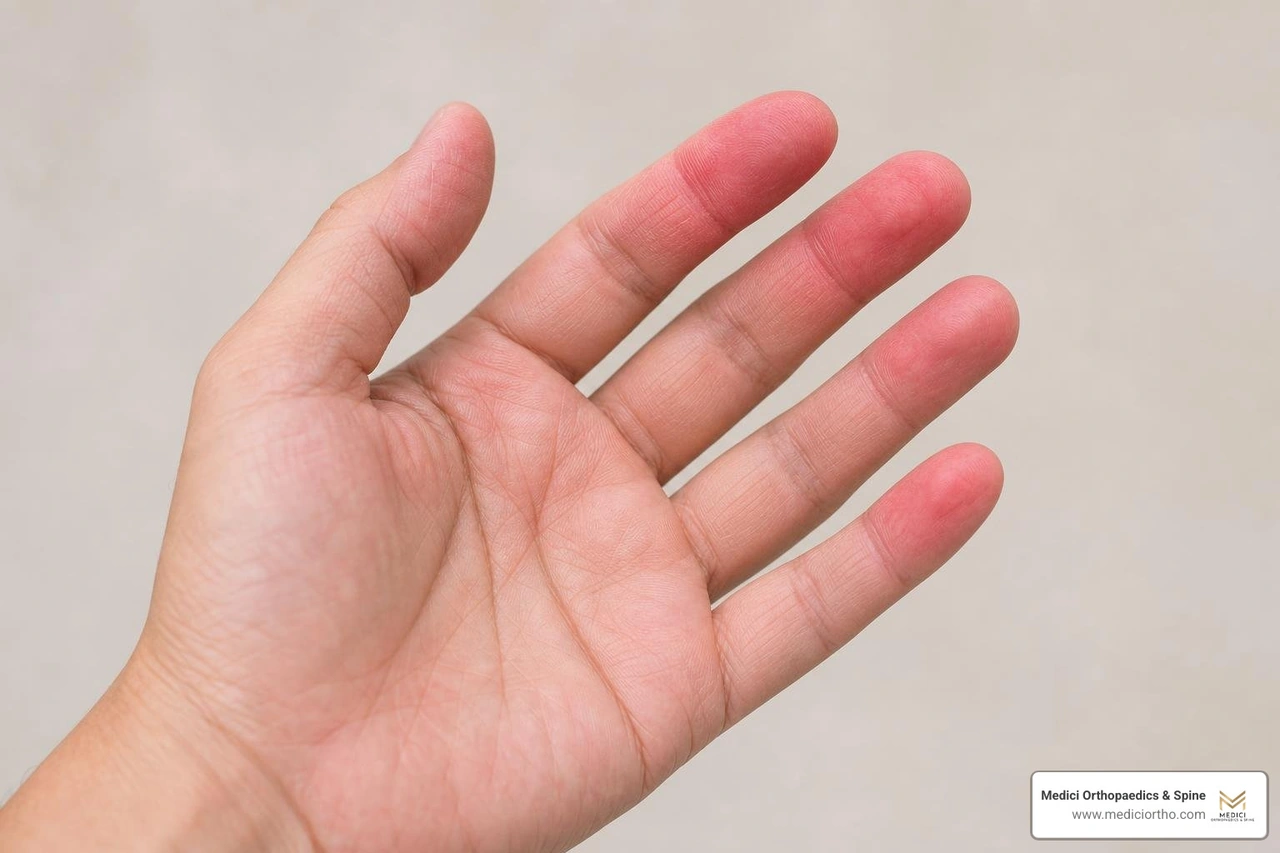
Fingertips tingling is one of the most common nerve-related symptoms adults experience — and it has dozens of possible causes, ranging from a simple awkward sleeping position to a serious medical condition.
Quick answer: What causes fingertips to tingle?
| Cause | Who It Typically Affects |
|---|---|
| Carpal tunnel syndrome | People with repetitive hand use (typing, tools) |
| Pinched nerve in the neck | Adults with cervical spine issues |
| Diabetic neuropathy | Up to 50% of people with diabetes |
| Vitamin B12 deficiency | Vegans, older adults |
| Medication side effects | Chemotherapy or hormone therapy patients |
| Temporary pressure on a nerve | Anyone who sleeps on their arm or holds a position too long |
| Raynaud's phenomenon | Those sensitive to cold temperatures |
| Autoimmune conditions (MS, lupus) | Varies widely |
Most people have felt that prickly, "pins and needles" sensation at some point — like waking up after sleeping on your arm. That kind of tingling is usually harmless and fades in seconds. But when it keeps coming back, spreads, or shows up without an obvious trigger, it's worth paying attention.
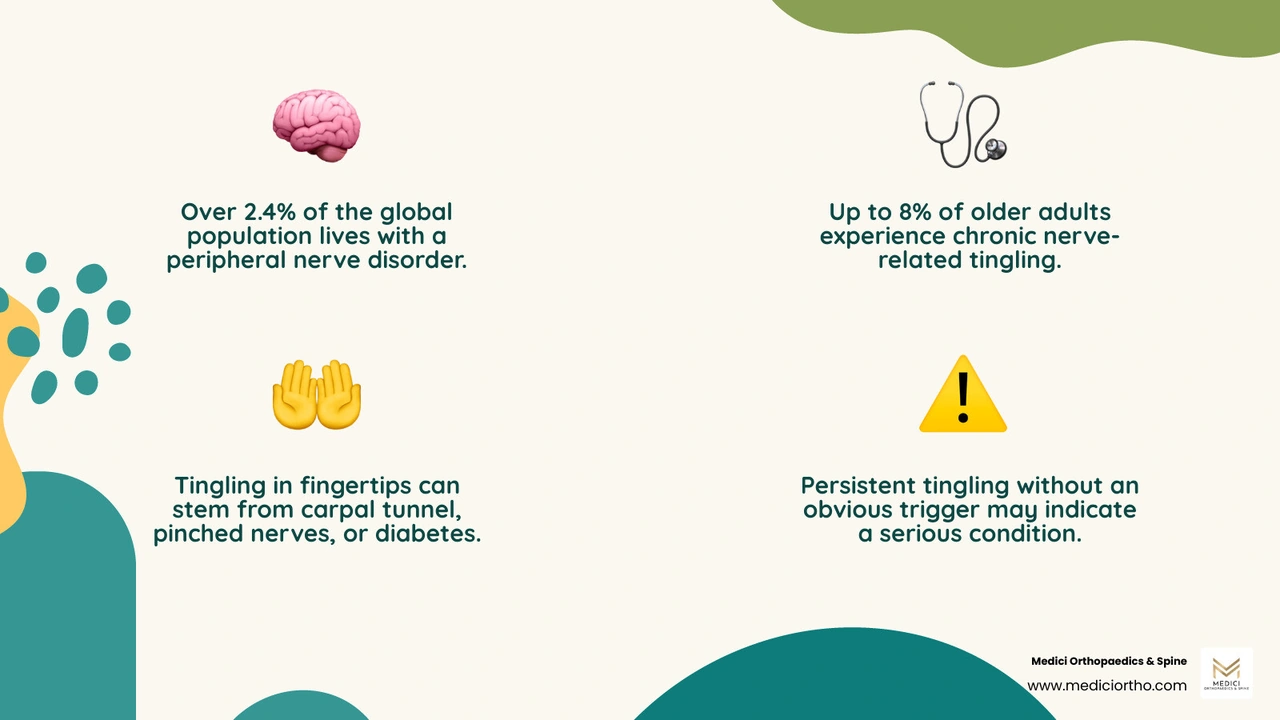
The medical term for this sensation is paresthesia — an abnormal signal from a nerve that can feel like numbness, burning, prickling, or buzzing. Approximately 2.4% of the global population lives with a peripheral nerve disorder, and that number rises to nearly 8% among older adults.
The tricky part? The same symptom — tingling fingertips — can point to very different problems depending on which fingers are affected, when it happens, and what other symptoms come with it.
I'm Sonny Dosanjh, M.D., CEO and Founder of Medici Orthopaedics & Spine, board certified in Physical Medicine & Rehabilitation and fellowship trained in Multidisciplinary Pain Management through Emory University — and evaluating the root causes of fingertips tingling is a core part of the nerve and spine care I provide every day. In this guide, I'll walk you through everything you need to know to understand your symptoms and find the right path to relief.
To understand why your fingertips are tingling, it helps to understand what is happening inside your nervous system. The term paresthesia refers to any abnormal skin sensation, including buzzing, prickling, or the classic "pins and needles."
We can split this sensation into two main categories:
If your nerves are constantly irritated, they can eventually lose their ability to transmit signals properly, leading to permanent numbness, muscle weakness, or a complete loss of coordination in your hands.
The nerves that provide feeling to your hand originate in your neck (cervical spine) and travel all the way down your arm, passing through narrow pathways in your shoulder, elbow, and wrist. If a nerve is compressed or irritated anywhere along this path, it can cause your fingertips to tingle.
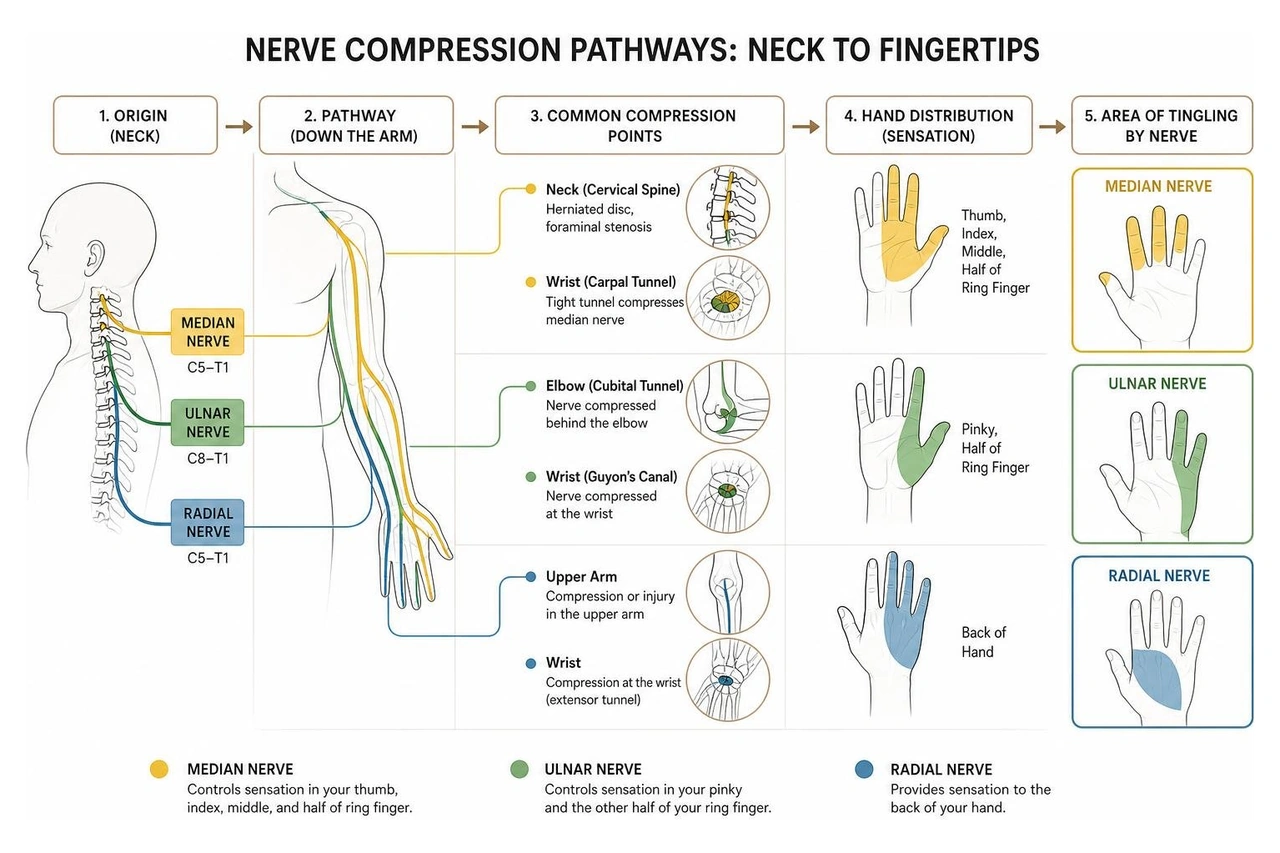
The three primary sensory nerves responsible for hand function are:
Let's look at the most common conditions we diagnose and treat at Medici Orthopaedics & Spine that affect these pathways:
Because different conditions require vastly different treatment approaches, pinpointing the exact cause of your symptoms is critical. We look closely at "symptom mapping" — analyzing which specific fingers tingle, when the symptoms occur, and what triggers them.
To help you understand what your body might be telling you, we have put together a detailed comparison of the three most common culprits behind hand tingling. For a deeper dive, you can also explore our guide on What causes tingling and numbness in hands and feet.
| Symptom Characteristic | Carpal Tunnel Syndrome | Cervical Radiculopathy (Pinched Neck Nerve) | Diabetic Neuropathy |
|---|---|---|---|
| Specific Fingers Affected | Thumb, index, middle, and half of the ring finger. | Varies depending on the pinched nerve root (e.g., C6 affects the thumb; C8 affects the pinky). | Usually affects all fingertips symmetrically, often alongside the toes. |
| Common Triggers | Repetitive hand use, typing, gripping a steering wheel, or holding a phone. | Tilting or turning your head, sitting in a static posture for too long. | Prolonged stillness, cold temperatures, or high-sugar meals. |
| When It Worsens | Worsens significantly at night (often due to sleeping with bent wrists). | Can flare up at any time, especially with certain neck movements. | Often worsens at night or during periods of physical inactivity. |
| Accompanying Symptoms | Weakness in grip strength, dropping objects, or hand clumsiness. | Shooting pain down the arm, neck stiffness, or shoulder blade pain. | Burning sensations, extreme sensitivity to touch, or loss of temperature sensation. |
It is also important to note that fingertips tingling can sometimes be an unintended side effect of medical treatments.
If you recently started a new medication and noticed a sudden onset of hand tingling, it is highly recommended to discuss these symptoms with your prescribing doctor. You can read more about drug-induced nerve symptoms in this comprehensive list of Tingling in Hands and Feet: 25 Causes, Treatments & More.
While most cases of fingertips tingling can be evaluated during a standard office visit, there are times when tingling is a sign of a life-threatening medical emergency, such as a stroke.

Go to the nearest emergency room or call 911 immediately if your hand or fingertip tingling begins suddenly and is accompanied by any of the following "red flag" symptoms:
If your symptoms do not meet these emergency criteria but have persisted for more than two weeks, are gradually worsening, or are waking you up from sleep, you should schedule a comprehensive evaluation with a nerve specialist.
To effectively treat chronic tingling, we must first locate the exact site of nerve irritation. During your visit to Medici Orthopaedics & Spine, we perform a thorough physical and neurological exam, testing your reflexes, muscle strength, and sensitivity to touch.
Depending on our findings, we may recommend one or more of the following diagnostic tests:
To learn more about what to expect during a clinical evaluation for nerve symptoms, you can refer to the Numbness and tingling: MedlinePlus Medical Encyclopedia.
For mild, occasional, or early-stage fingertips tingling, simple lifestyle modifications and at-home care can provide significant relief.
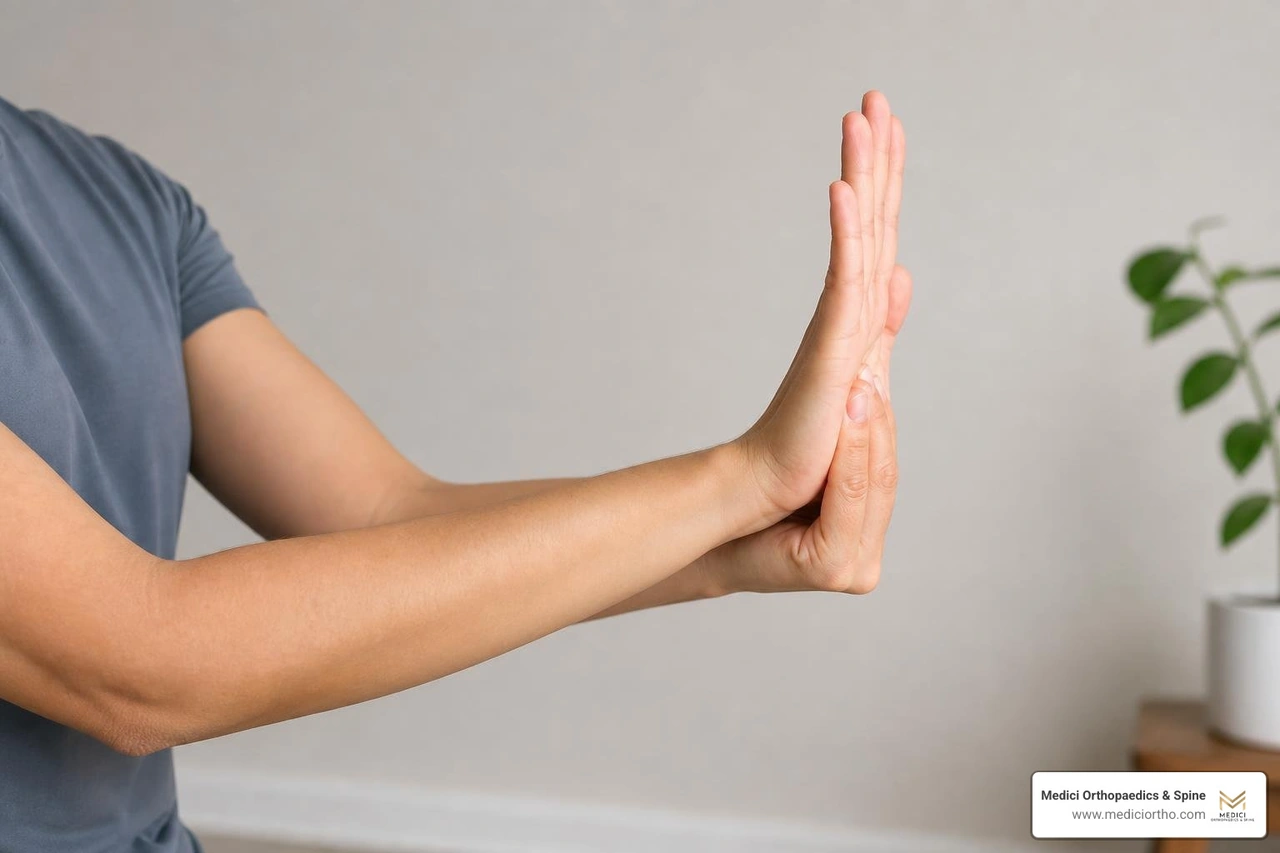
For more practical, non-pharmacological tips, check out our articles on Natural remedies to relieve tingling in hands without medication and Stretch, Soak, or Stim: Home Remedies That Actually Help with Neuropathy.
When conservative home remedies aren't enough, our team at Medici Orthopaedics & Spine offers advanced, minimally invasive treatments designed to restore nerve function and get you back to living pain-free.
We believe in a synergistic approach, combining different therapies to achieve the best possible outcomes for our patients. Our advanced treatment options include:
If you are looking for advanced care in the Metro Atlanta area, explore our specialized options for Neuropathy Treatment Snellville.
Many people experience worse tingling at night because of their sleeping positions. We often sleep with our wrists bent or our elbows tucked, which directly compresses the median and ulnar nerves. Additionally, blood pressure naturally drops slightly when we sleep, which can reduce circulation to our extremities and make compressed nerves even more sensitive.
Yes, absolutely. The nerves that control feeling in your hands and fingers originate in your cervical spine (neck). A neck injury, herniated disc, or arthritis can pinch these nerve roots, causing a radiating tingling sensation that travels all the way down your arm and into your fingertips. This is known as cervical radiculopathy.
The duration of chemotherapy-induced neuropathy varies widely. For some patients, the tingling gradually fades over several weeks or months after completing cancer treatments. For others, the nerve damage can be more persistent or even permanent if left untreated. Early intervention with therapies like laser therapy or nerve-supportive care can help speed up recovery.
Fingertips tingling is more than just an annoying distraction — it is your nervous system's way of sending an early warning signal. Whether your symptoms are caused by repetitive strain, a pinched nerve in your neck, or a systemic condition like diabetes, addressing the root cause early is the key to preventing permanent nerve damage.
At Medici Orthopaedics & Spine, Dr. Sonny Dosanjh and our dedicated medical team are committed to helping you find lasting relief. We specialize in delivering integrated, minimally invasive, and non-surgical treatments tailored to your unique lifestyle and goals.
If you are experiencing persistent or worsening tingling in your fingertips, we invite you to schedule a comprehensive evaluation at one of our convenient Metro Atlanta locations, including Snellville, Marietta, Kennesaw, and Buckhead.
Take the first step toward restoring your quality of life. Explore our specialized care for Neuropathy Neuralgia and contact our team today to book your consultation.
At Medici, you’re more than your MRI.
We take time to hear your story, understand your pain, and create a plan that actually works for you.

Our team delivers specialist care at convenient locations across Metro Atlanta:
Get expert tips on injury recovery, pain relief, joint health, and movement strategies—straight from our Fellowship-Trained team.