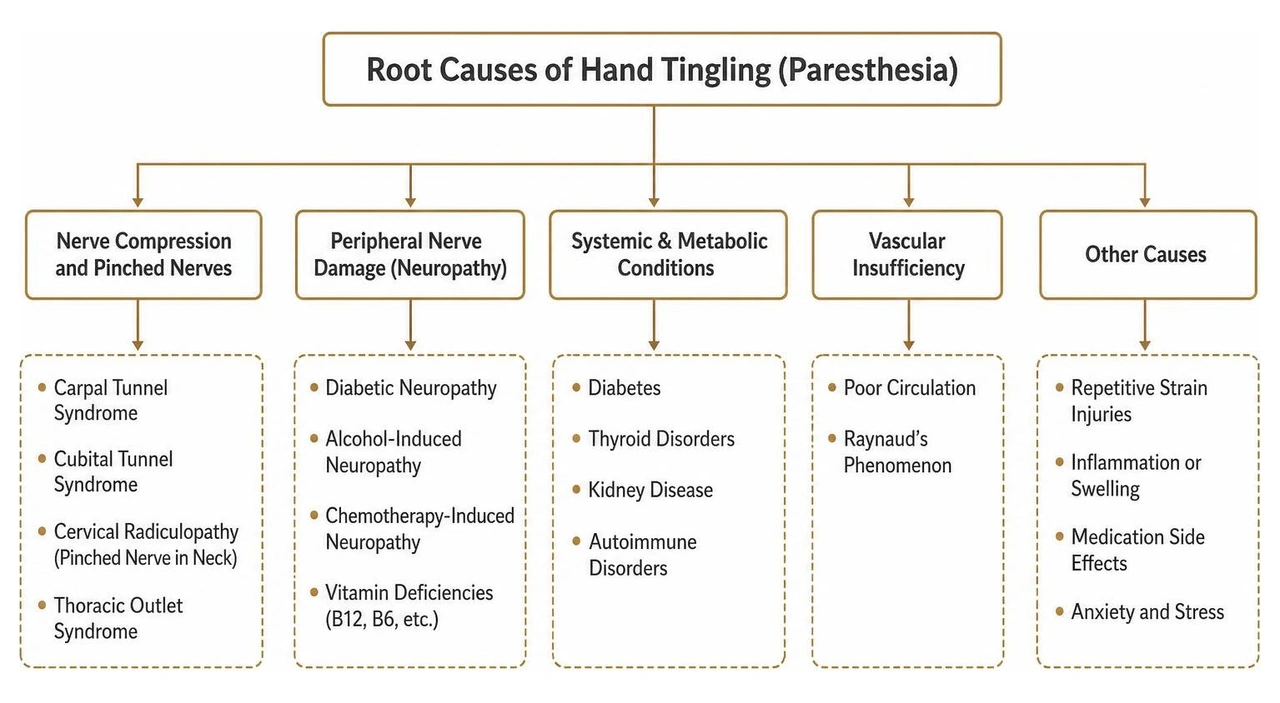
When you experience a persistent hand tingling sensation, identifying the root cause is the first step toward finding relief. Medically referred to as paresthesia, this prickling, buzzing, or "pins and needles" feeling occurs when signal transmission between your peripheral nerves and central nervous system is disrupted.
While temporary episodes are often harmless, recurring symptoms usually stem from structural nerve damage, systemic illness, or localized tissue compression. More than 20 million Americans suffer from peripheral neuropathy, highlighting how common nerve dysfunction really is. Recognizing whether your symptoms are originating from a pinched nerve in your wrist or an underlying metabolic issue ensures you get the right care early.
The most frequent source of a localized hand tingling sensation is mechanical pressure on a peripheral nerve. Because key nerves travel through narrow anatomical pathways in your neck, elbow, and wrist, even minor soft tissue swelling or joint degeneration can trap a nerve.
Beyond physical pressure on a single nerve, broader systemic conditions can impair nerve fibers throughout the body. These metabolic causes frequently affect both hands and feet symmetrically.
Vascular health and daily habits also play significant roles in maintaining healthy sensory function in your hands.
Pinpointing why your hands are tingling requires careful symptom mapping and clinical evaluation. Because different nerves innervate distinct regions of your hand, paying close attention to exactly where you feel the sensation provides crucial clues.
Your hand receives sensory input from three main nerves originating from the brachial plexus: the median, ulnar, and radial nerves. Tracking which digits are affected helps isolate the site of entrapment.
| Nerve Pathway | Affected Hand Regions | Common Underlying Condition | Typical Triggers |
|---|---|---|---|
| Median Nerve | Thumb, index finger, middle finger, and radial half of the ring finger | Carpal Tunnel Syndrome | Repetitive typing, gripping tools, sleeping with bent wrists |
| Ulnar Nerve | Little finger (pinky) and the ulnar half of the ring finger | Cubital Tunnel Syndrome (Elbow Entrapment) | Leaning on elbows, holding a phone for long periods, sleeping with deeply flexed arms |
| Radial Nerve | Back of the hand, thumb web space, back of the index and middle fingers | Radial Nerve Palsy | External pressure on the upper arm, wedging an arm over a chair or under a head |
| Cervical Nerve Root (C6–C8) | Variable distribution radiating down the entire arm into specific fingers | Cervical Radiculopathy / Spine Compression | Turning or extending the neck, heavy lifting, poor desk posture |
When conservative monitoring isn't enough, accurate diagnosis relies on advanced testing to differentiate between localized nerve compression, spine pathology, and generalized neuropathy.
While a hand tingling sensation is frequently linked to manageable nerve compression, sudden neurological symptoms can signal a life-threatening emergency like an ischemic stroke or spinal spinal injury.

Call 911 or visit the nearest emergency room immediately if hand tingling occurs alongside any of the following warning signs:
Restoring healthy nerve function requires a comprehensive approach tailored to the underlying cause. At Medici Orthopaedics & Spine, our care philosophy centers on delivering non-surgical, integrated solutions that resolve pain while restoring overall quality of life. For detailed information on structural hand care, explore our guides on Hand & Wrist Pain and Injuries and learn What Causes Nerve Pain in Your Hands? Symptoms, Causes, and Treatments.
For mild, intermittent tingling caused by overuse or posture, conservative self-care can provide substantial relief:
When conservative measures aren't enough, non-surgical interventional options can resolve severe nerve irritation:
Yes. During periods of severe stress, panic attacks, or anxiety, people often hyperventilate by breathing too quickly or deeply. This rapid breathing exhales too much carbon dioxide, causing a temporary blood chemistry shift known as respiratory alkalosis. This shift alters cellular calcium levels, triggering widespread, benign tingling across your hands, feet, and face. Managing your breathing through calm, rhythmic abdominal inhalation quickly restores chemical balance and resolves the sensation.
Localized physical nerve issues (like carpal tunnel syndrome or a pinched nerve in the neck) typically affect one arm or specific fingers, fluctuating based on body position, repetitive motion, or sleeping posture. In contrast, broader systemic medical conditions (like diabetic neuropathy or vitamin B12 deficiency) usually present symmetrically in both hands and both feet simultaneously. Systemic causes tend to progress gradually over time regardless of how you hold your arms or wrists.
A deficiency in vitamin B12 (cobalamin) is the primary nutritional driver of nerve paresthesia. B12 is essential for producing myelin, the insulating coating that protects peripheral nerves. Deficiencies in vitamin B1 (thiamine), vitamin B9 (folate), and vitamin E can also trigger nerve pain and tingling. However, exercise caution with supplements: taking excessive doses of vitamin B6 can actually induce nerve toxicity, leading to identical hand and foot tingling symptoms. Always confirm vitamin levels with blood work before starting high-dose therapy.
A hand tingling sensation should never be ignored—whether it's an occasional inconvenience or an ongoing challenge. By paying attention to finger patterns, triggers, and timing, you can partner with your healthcare team to address nerve irritation before it leads to lasting damage.
At Medici Orthopaedics & Spine, we believe in restoring your quality of life using the least invasive, most effective treatments available. Servicing communities across Snellville, Kennesaw, Marietta, Buckhead, and Metro Atlanta, our integrated team provides personalized diagnostic and interventional care. If chronic hand tingling is affecting your day-to-day life, discover How to Relieve Tingling Sensation in Hands Naturally or schedule a consultation with our specialists today.
At Medici, you’re more than your MRI.
We take time to hear your story, understand your pain, and create a plan that actually works for you.

Our team delivers specialist care at convenient locations across Metro Atlanta:
Get expert tips on injury recovery, pain relief, joint health, and movement strategies—straight from our Fellowship-Trained team.