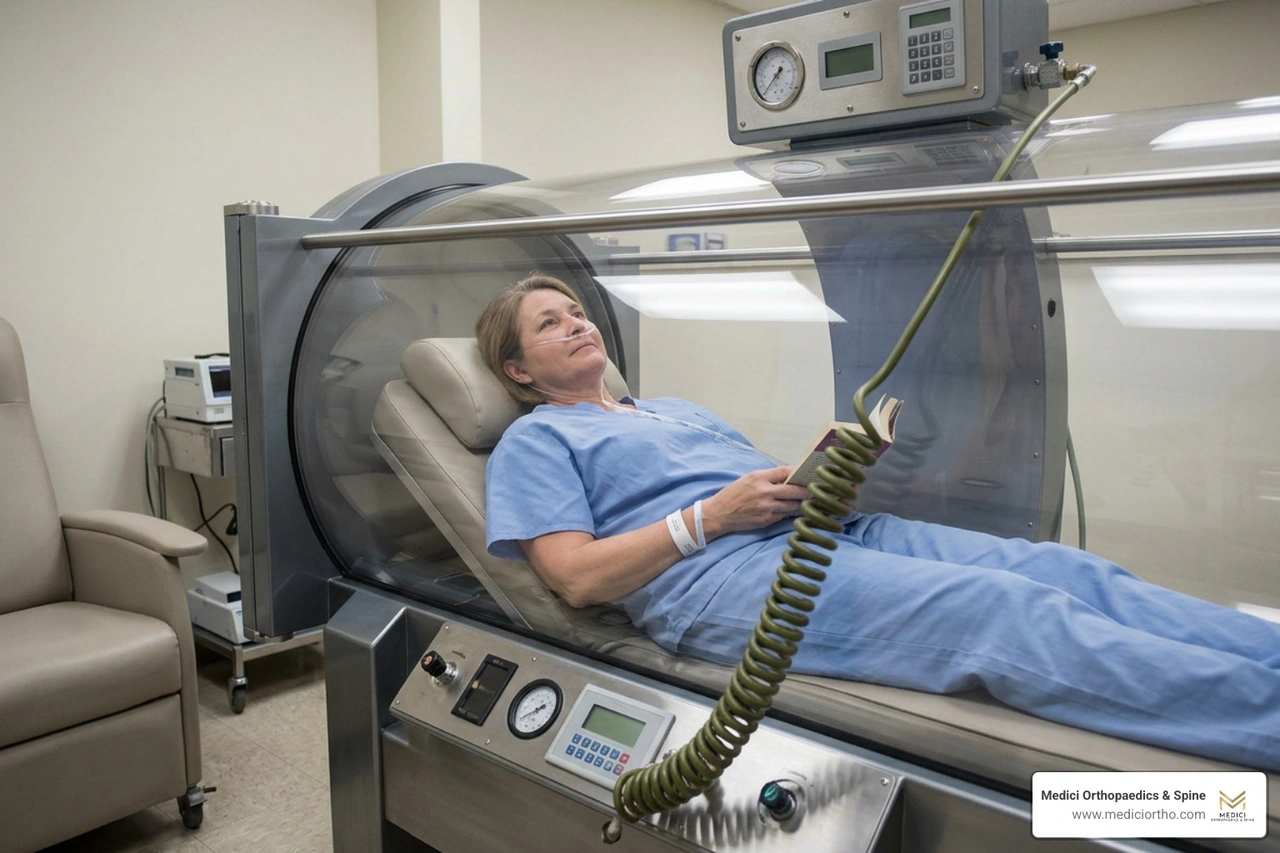
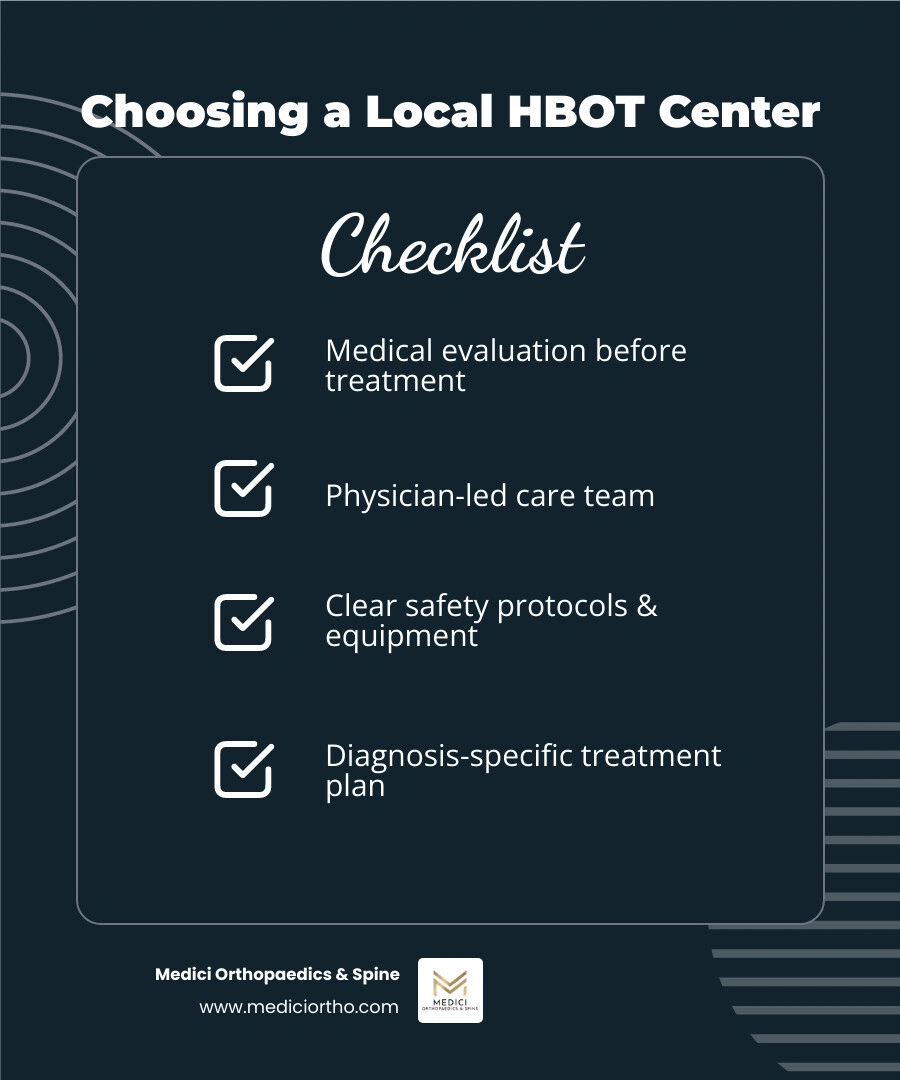
Hyperbaric chamber treatments near me should begin with a medical evaluation at a facility that uses appropriate equipment, trained staff, and clear safety protocols. For proven medical uses, look for a physician-led program that can explain the chamber type, pressure level, expected treatment schedule, insurance requirements, and how HBOT fits into your larger care plan.
Hyperbaric oxygen therapy, or HBOT, involves breathing oxygen in a pressurized chamber. The added pressure helps oxygen dissolve more readily into the blood plasma, which can support injured or poorly oxygenated tissue. It is used for certain urgent conditions, nonhealing wounds, radiation-related tissue injury, and other medically appropriate needs.
For people managing pain, a sports injury, surgical recovery, or a chronic condition, proximity matters - but it should not be the only factor. The right local center should prioritize diagnosis, safety, medical oversight, and measurable goals rather than promise a one-size-fits-all recovery.
I am Sonny Dosanjh, M.D., a board-certified Physical Medicine and Rehabilitation physician and founder of Medici Orthopaedics & Spine. My work with complex pain, spine conditions, sports injuries, rehabilitation, and non-surgical care informs how patients should evaluate hyperbaric chamber treatments near me as part of a personalized recovery plan.
At standard sea level, the air we breathe consists of approximately 21% oxygen and 78% nitrogen, delivering an atmospheric pressure defined as 1.0 Atmosphere Absolute (ATA). Under normal circumstances, our red blood cells carry nearly all the oxygen bound to hemoglobin, leaving very little oxygen dissolved directly in the fluid portion of our blood (the plasma).
When you undergo hyperbaric oxygen therapy in a specialized medical chamber, two major variables change: the concentration of inhaled oxygen increases to 100%, and the atmospheric pressure inside the chamber is elevated to between 1.5 and 3.0 ATA—equivalent to diving 15 to 60 feet underwater.
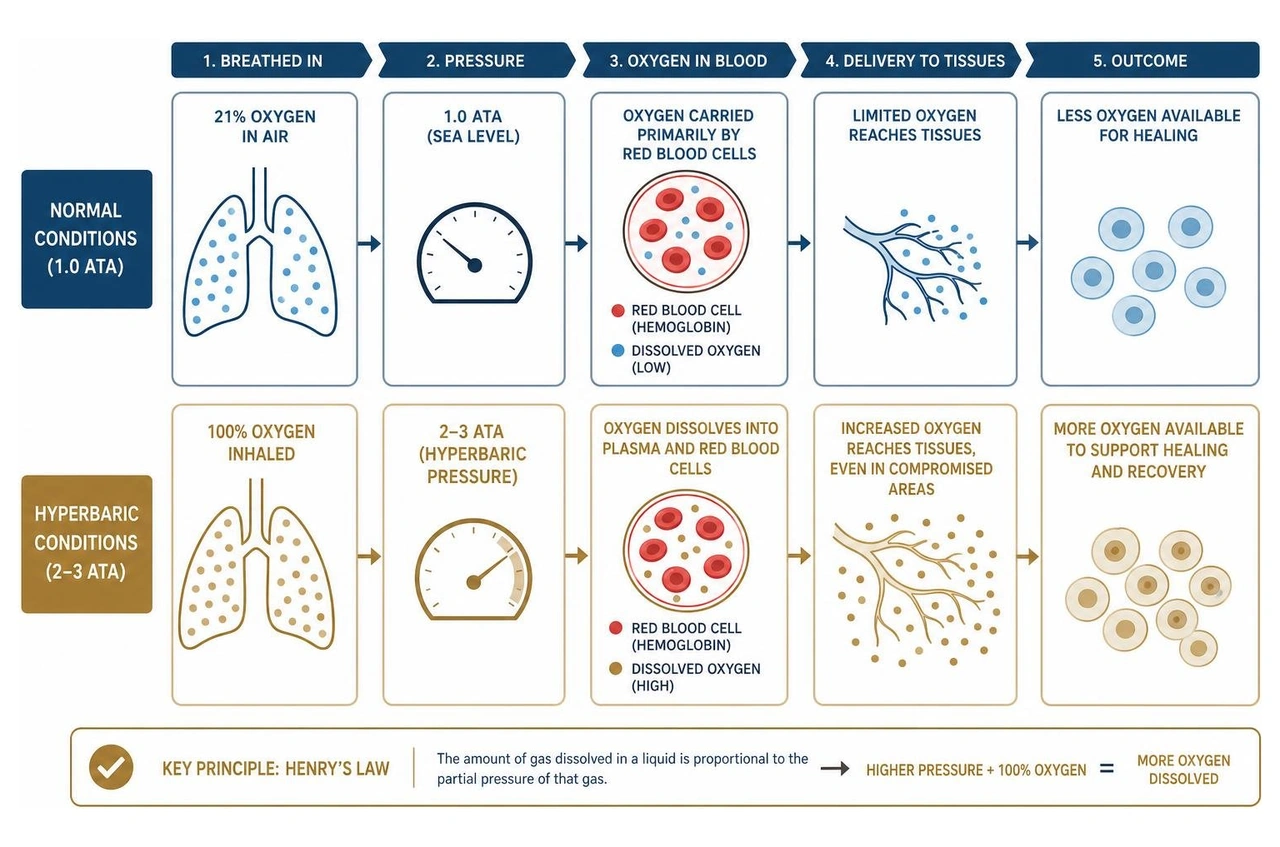
This increase in physical pressure relies on Henry’s Law of physics, which states that the amount of gas dissolved in a liquid is proportional to the partial pressure of that gas. Under 2 to 3 ATA of pure oxygen, oxygen is forcibly dissolved directly into blood plasma, lymph fluid, and cerebrospinal fluid. In fact, medical-grade HBOT can increase oxygen absorption into body tissues by up to 1,200%.
This supersaturation allows oxygen to bypass compromised blood vessels, constricted capillaries, and swollen tissues where red blood cells cannot easily pass. Understanding how HBOT works reveals why this therapy is so vital for sluggish or stalled healing. To explore the biological cascades in depth, learn more about how hyperbaric oxygen therapy heals the body at the cellular level.
Hyperbaric oxygen acts as a potent biological signal that triggers tissue repair and anti-inflammatory cascades throughout the body. When tissues suffer from chronic ischemia (lack of blood supply) or severe inflammation, cellular energy production drops, halting repair mechanisms. HBOT breaks this cycle through several physiological processes:
For patients dealing with slow-healing ulcers, specialized modalities like wound healing oxygen therapy provide the micro-environmental boost required to close stubborn wounds. In fact, a landmark study published in Diabetes Care demonstrated a 52% improvement in wound healing rates when adjunctive HBOT was added to standard wound protocols. Discover how oxygen therapy for diabetic wounds can help prevent severe complications and limb amputations.
The Food and Drug Administration (FDA) currently recognizes 14 specific clinical indications for medical-grade hyperbaric oxygen therapy. These include urgent lifesaving applications as well as chronic tissue-sparing treatments:
Beyond these classical indications, clinical evidence and ongoing research support the application of medical HBOT for orthopedic recovery, neuro-inflammation, and chronic pain conditions. We frequently integrate hyperbaric therapy into comprehensive rehabilitation plans to accelerate recovery from complex musculoskeletal injuries and surgical procedures.
By downregulating pro-inflammatory cytokines, utilizing HBOT for inflammation reduction addresses the underlying driver of systemic pain. Furthermore, emerging neuro-imaging studies show promising outcomes when using hyperbaric oxygen for TBI recovery, helping reactivate stunned neuronal networks and alleviate post-concussion symptoms.
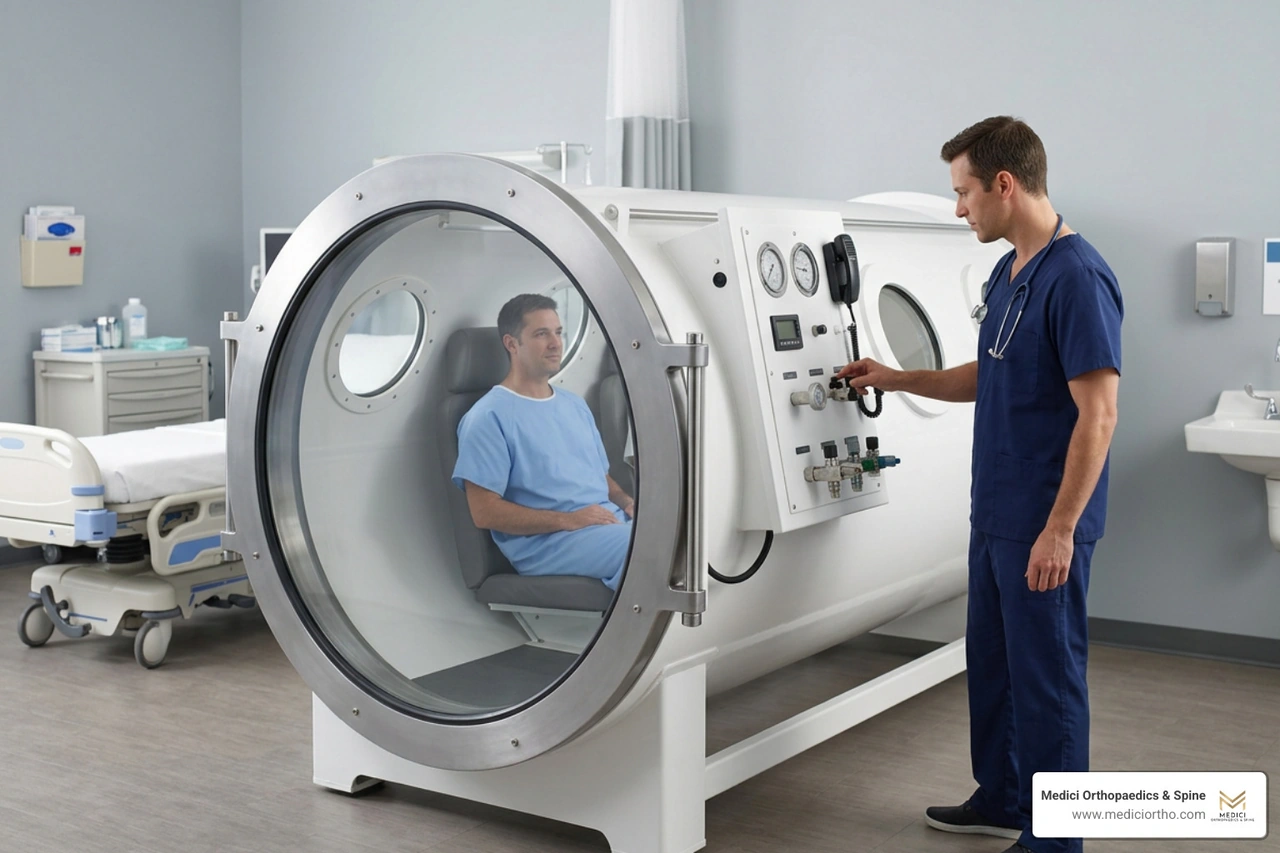
When searching for hyperbaric chamber treatments near me, it is crucial to understand that not all hyperbaric chambers are created equal. The mechanical construction of the chamber directly dictates the atmospheric pressure it can achieve and the concentration of pure oxygen delivered to your body.
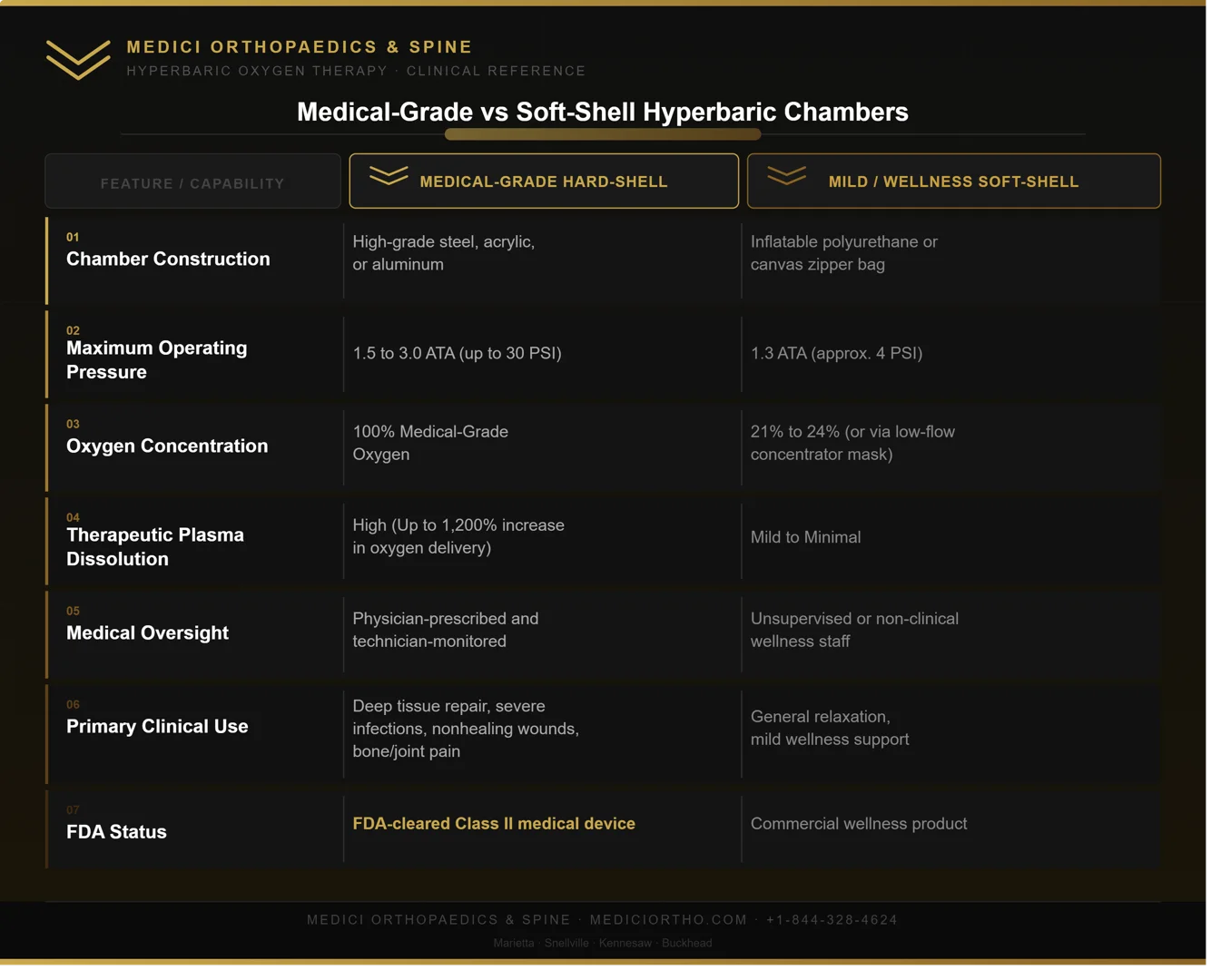
Soft-shell chambers—often located in commercial spas, wellness studios, or sold for home use—are restricted by physical structure to low pressures around 1.3 ATA. At this pressure, they cannot deliver pure medical-grade 100% oxygen safely due to fire risks in soft fabrics, meaning tissue oxygen dissolution remains far below true clinical thresholds. High-pressure hard-shell chambers, by contrast, are medical devices engineered to deliver therapeutic benefit for deep tissue healing.
Clinical hard-shell facilities typically utilize one of two primary chamber configurations:
Monoplace Chambers: Designed for a single patient, a monoplace chamber consists of a clear, heavy-duty acrylic tube pressurized directly with 100% pure medical oxygen. You lie down comfortably inside the chamber on a cushioned bed with a clear view of the surrounding room. Because the entire vessel is pressurized with oxygen, you do not need to wear a tight mask or hood over your face. You can speak directly to the attending certified hyperbaric technician through an integrated intercom while watching television or listening to music.
Multiplace Chambers: Designed to accommodate multiple patients simultaneously (often 2 to 12 people), multiplace chambers are large steel pressurized rooms. The room itself is pressurized with medical-grade compressed air, while patients inhale 100% pure oxygen through a lightweight head hood or fitted face mask. A medical technician usually sits inside the room with patients during the session.
Both chamber types provide identical therapeutic benefits when pressurized to the same ATA levels. Monoplace chambers offer superior individual privacy, personal entertainment control, and a cozy environment, making them ideal for outpatient orthopedic and pain management protocols. To learn how pressurization feels in practice, read about how a hyperbaric treatment dive feels.
The popularity of wellness modalities has led to a proliferation of soft-chamber "mild hyperbaric" spas. However, patients seeking genuine medical improvement for joint pain, nonhealing surgical incisions, bone infections, or neurological injuries must understand the clinical distinction.
Medical-grade HBOT requires strict adherence to institutional standards set by organizations such as the Undersea and Hyperbaric Medical Society (UHMS). A genuine medical hyperbaric center features:
Spa facilities operating soft-shell bags at 1.3 ATA simply cannot replicate these biological effects. When health and mobility are at stake, choose a physician-led clinical practice.
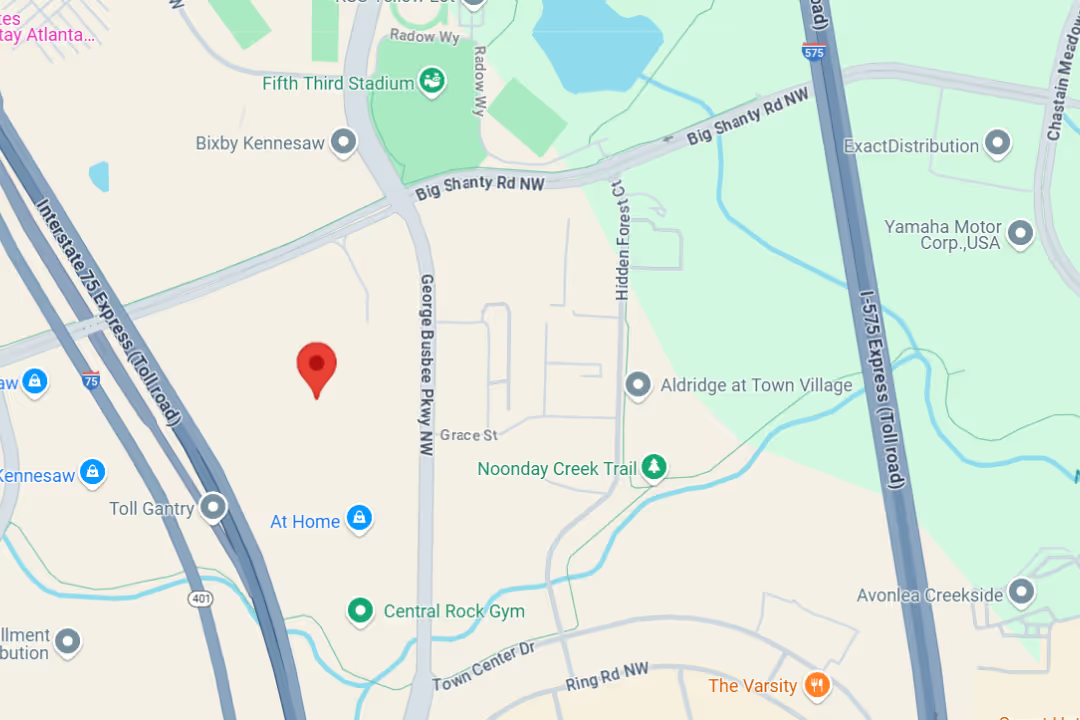
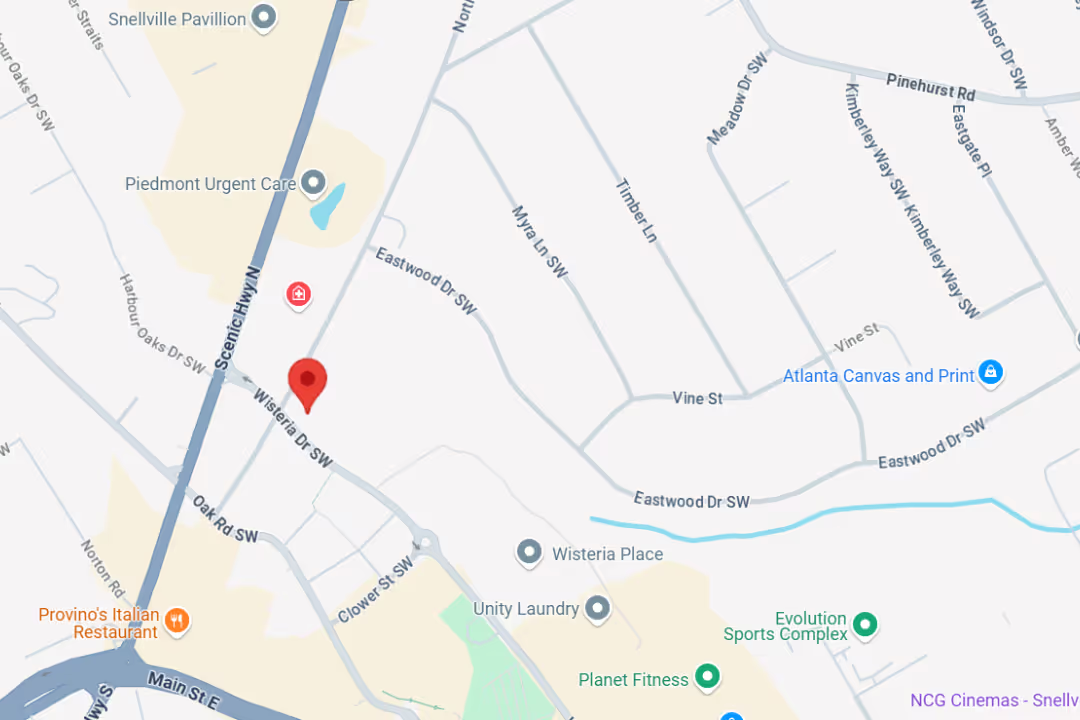
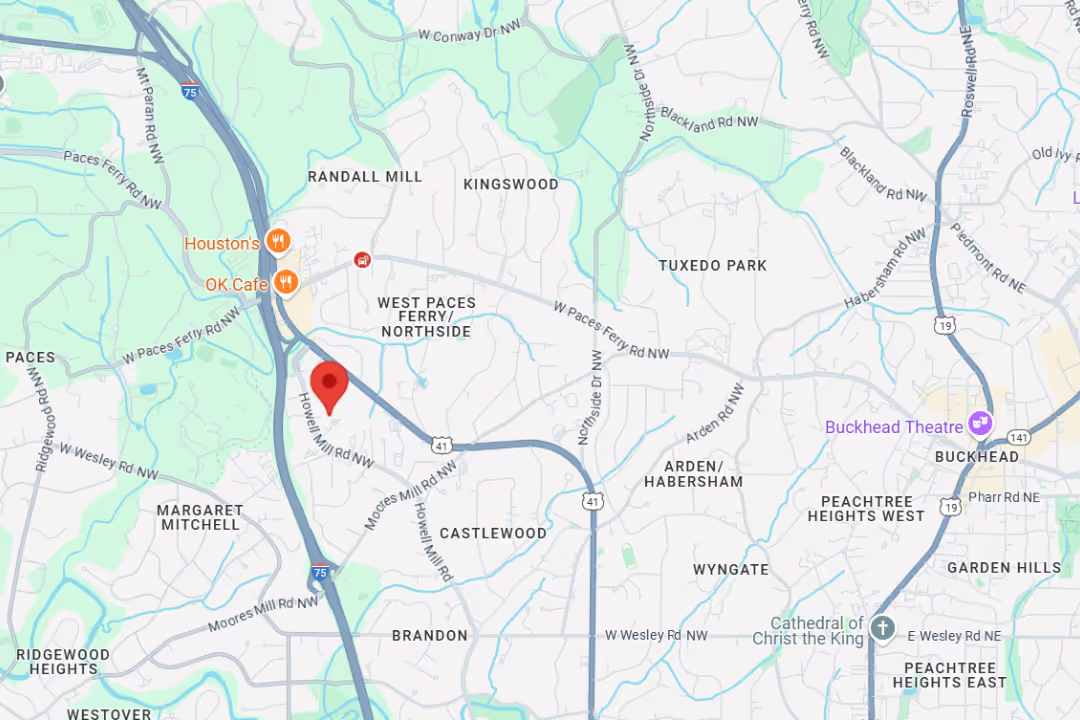
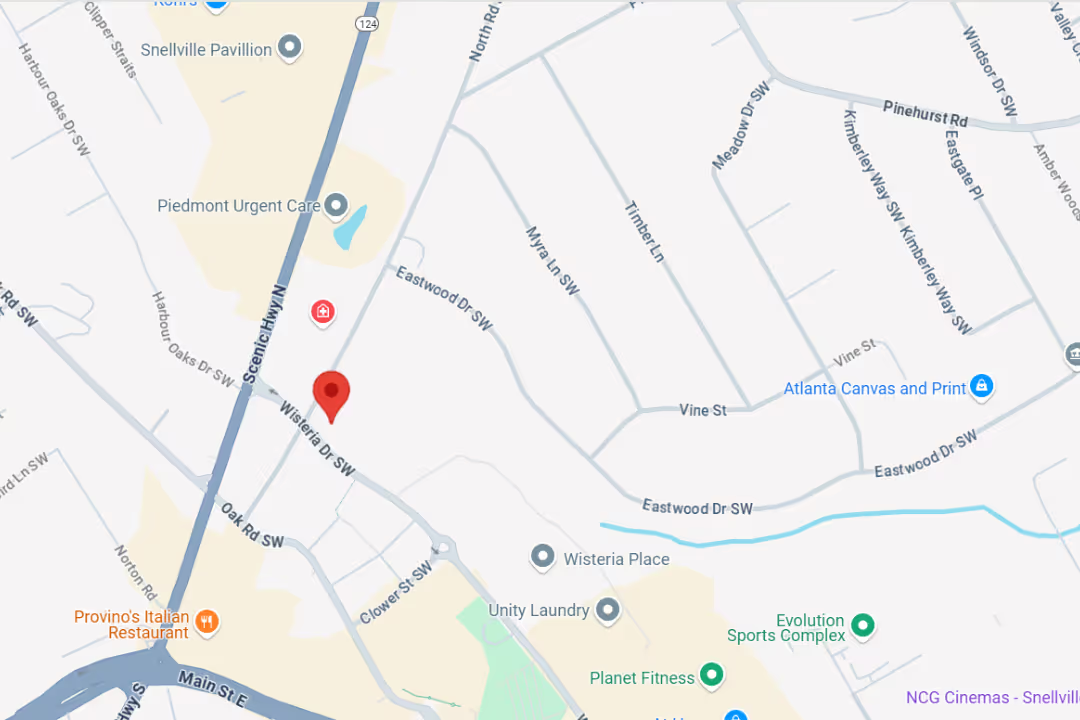
When evaluating potential centers for hyperbaric chamber treatments near me, selecting a center convenient to your home or workplace in Metro Atlanta is critical, as HBOT protocols often involve frequent sessions over consecutive weeks. Whether you visit our state-of-the-art facilities in Kennesaw, Marietta, Snellville, or Buckhead, confirm that your chosen provider offers comprehensive care under direct physician supervision.
Consider the following evaluation framework when choosing a local HBOT provider:
Exploring options for hyperbaric oxygen therapy near me will guide you to high-standard, accredited clinical settings across Georgia.
Preparing for a hyperbaric oxygen session involves simple safety steps designed to protect you inside the oxygen-enriched environment. Because pure oxygen under pressure is extremely sensitive to static electricity and ignition sources, clinical centers maintain strict rules regarding garments and personal items.
Before entering the chamber, you will change into 100% hospital-approved cotton scrubs or gowns provided by the clinic. You must be completely free of petroleum-based skin care products, cosmetics, and hair treatments.
During the pressurization phase—which takes approximately 10 to 15 minutes—you will feel a sensation in your ears similar to taking off in a commercial airplane or descending a mountain drive. You can easily equalize ear pressure by swallowing, yawning, or performing the Valsalva maneuver (gently blowing through your nose while holding your nostrils closed).
Once the chamber reaches full therapeutic pressure, you simply relax, lie back, read printed material, watch a movie, or take a peaceful nap for 60 to 90 minutes. Depressurization at the end of the session takes another 10 to 15 minutes. For complete guidelines on personal preparations, review what to bring into the chamber and check potential side effects of hyperbaric therapy to feel confident before your first dive.
Understanding the time commitment and financial structure of hyperbaric medicine helps you plan your recovery journey effectively:
When administered in a clinical setting by trained professionals, hyperbaric oxygen therapy is exceptionally safe with a low incidence of complications. However, because atmospheric pressure and oxygen concentrations are altered significantly, patients should understand potential minor side effects:
Certain underlying medical conditions represent contraindications to hyperbaric oxygen therapy due to elevated safety risks.
Absolute Contraindication:
Relative Contraindications (Requiring Careful Medical Evaluation):
Read our complete medical resource detailing health conditions contraindicated for HBOT to review your personal medical background with our clinical team.
Look for medical facilities owned and operated by board-certified physicians, staffed by certified hyperbaric technicians, and equipped with FDA-cleared hard-shell chambers operating at therapeutic clinical pressures (1.5 to 3.0 ATA). Avoid non-medical soft-chamber spas if you require treatment for genuine tissue healing, joint pain, or complex medical diagnoses.
Health insurance and Medicare cover HBOT for conditions on the FDA-approved list (such as nonhealing diabetic ulcers, radiation necrosis, chronic bone infections, and compromised skin grafts). Preauthorization is typically required. For non-covered applications such as athletic recovery, chronic orthopedic pain, or neuro-rehabilitation, cash packages and HSA/FSA funds are widely utilized.
During pressurization, you will feel a gentle warming sensation inside the chamber and mild pressure fullness in your ears similar to descending in an airplane. Once at depth, the treatment is entirely comfortable and relaxing. You lie down comfortably, breathe normally, and spend the time listening to music, watching a screen, or sleeping. As the chamber depressurizes at the end of the session, your ears will pop gently, and the air temperature inside the chamber will cool slightly.
Hyperbaric oxygen therapy is a scientifically validated medical treatment that harnesses pure oxygen under atmospheric pressure to accelerate tissue repair, combat systemic inflammation, stimulate stem cell mobilization, and restore cellular energy. When evaluating hyperbaric chamber treatments near me, prioritize clinical excellence, physician oversight, and hard-shell chamber safety over mere geographic proximity.
At Medici Orthopaedics & Spine, our team—led by Dr. Sonny Dosanjh—is committed to restoring your quality of life with the most effective, least invasive, and least drug-dependent medical programs available today. We integrate hyperbaric medicine seamlessly alongside physical therapy, interventional spine care, orthopedics, and regenerative medicine to help you achieve long-term pain relief and complete recovery.
If you are recovering from surgery, dealing with a sports injury, or seeking relief from chronic tissue or nerve pain across Metro Atlanta—including our locations in Kennesaw, Marietta, Snellville, and Buckhead—we welcome you to take the next step. Contact us today to schedule your comprehensive evaluation and discover how our integrated clinical team can support your healing journey.
Explore our dedicated Hyperbaric Oxygen Therapy Services to learn more or schedule your initial consultation.
At Medici, you’re more than your MRI.
We take time to hear your story, understand your pain, and create a plan that actually works for you.

Our team delivers specialist care at convenient locations across Metro Atlanta:
Get expert tips on injury recovery, pain relief, joint health, and movement strategies—straight from our Fellowship-Trained team.