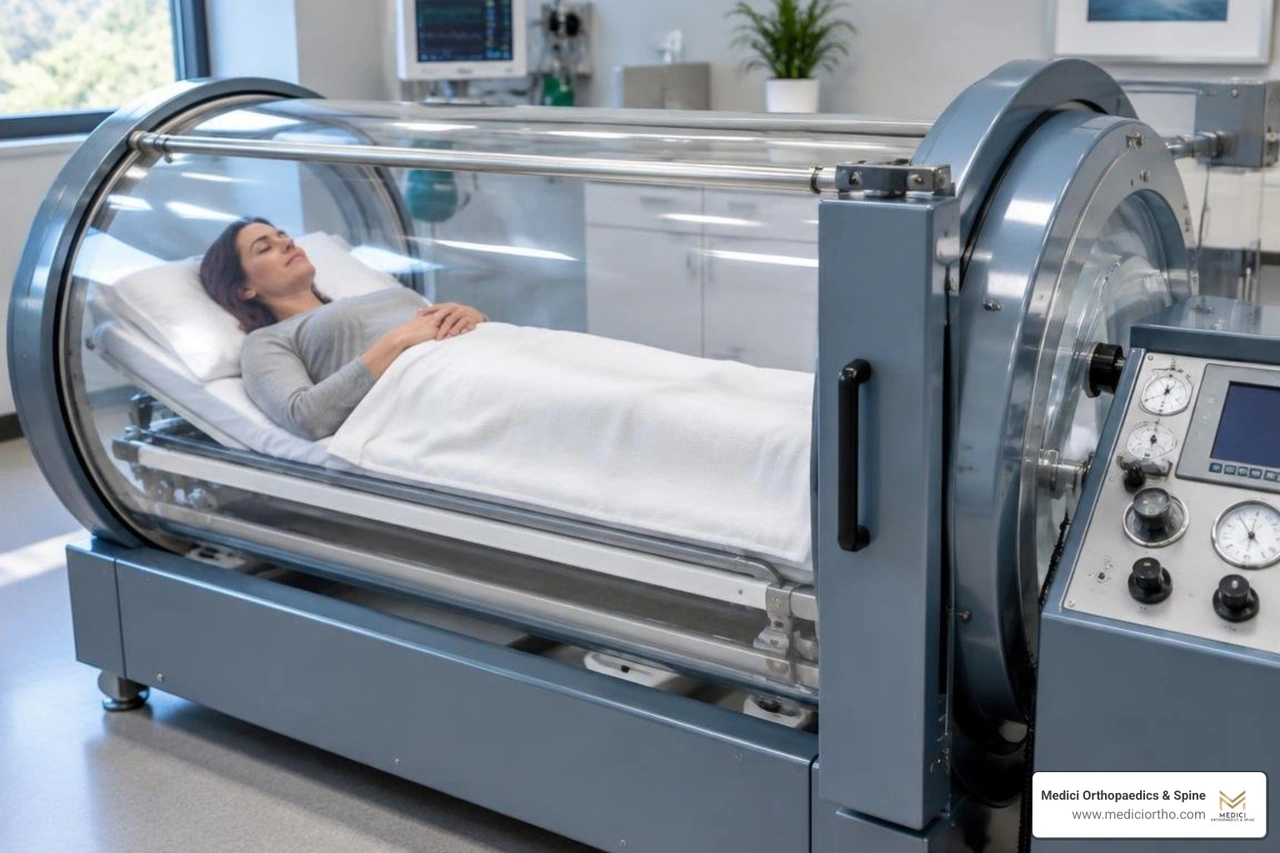
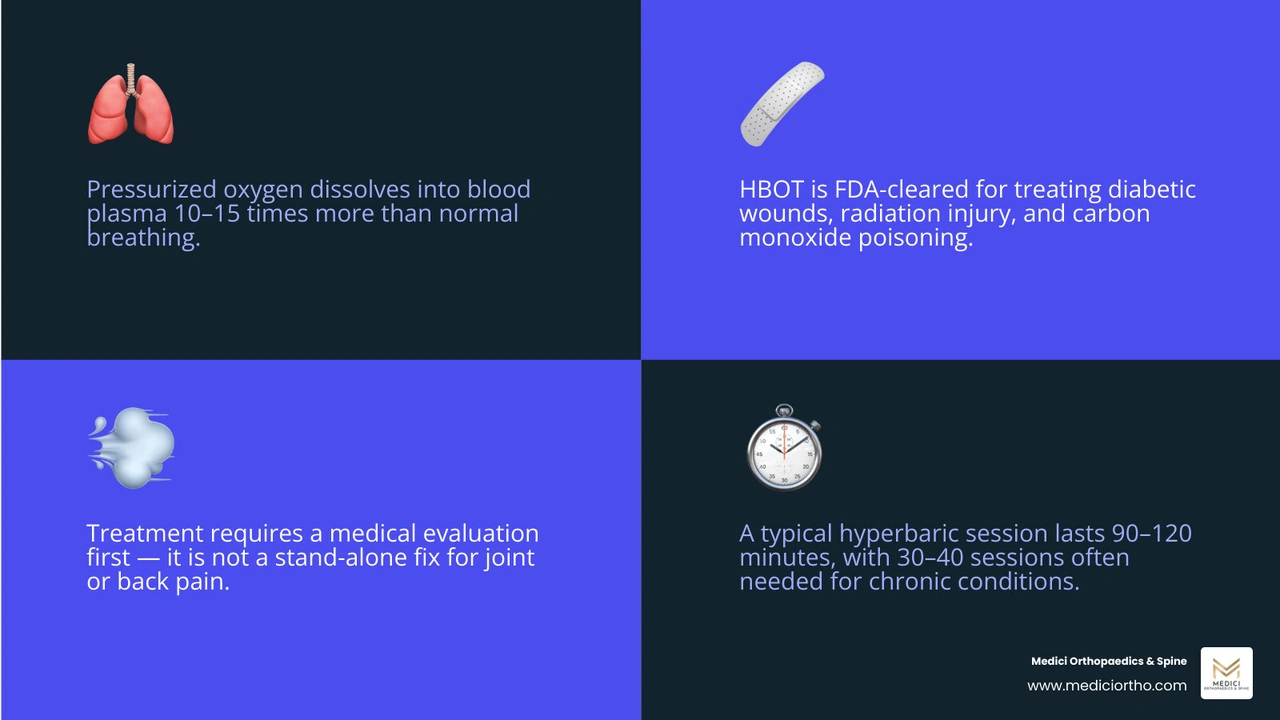
A hyperbaric medicine clinic treats certain medical conditions by having patients breathe oxygen inside a pressurized chamber. The added pressure helps more oxygen reach tissues that need it. Doctors may use this treatment for selected hard-to-heal wounds, radiation injuries, carbon monoxide poisoning, and decompression sickness. It is not a proven stand-alone treatment for everyday joint or back pain.
If you are considering hyperbaric oxygen therapy, start with a medical evaluation. A clinician can check whether your condition is appropriate for treatment, explain chamber safety, and tell you what a session and treatment schedule may involve.
I’m Sonny Dosanjh, M.D., founder of Medici Orthopaedics & Spine. My work in physical medicine, rehabilitation, and pain management shapes how I discuss care at a hyperbaric medicine clinic: start with the diagnosis, then decide whether the treatment fits the patient’s broader recovery plan.
Terms related to hyperbaric medicine clinic:
Under normal conditions, red blood cells carry nearly all the oxygen circulating through our bodies, while very little dissolves directly into liquid blood plasma. At sea level, we experience 1 atmosphere absolute (ATA) of environmental pressure. In a clinical hyperbaric setting, patients breathe near-100% medical-grade oxygen while inside a chamber pressurized to between 2.0 and 3.0 ATA—equivalent to the pressure experienced 33 to 66 feet below sea level.
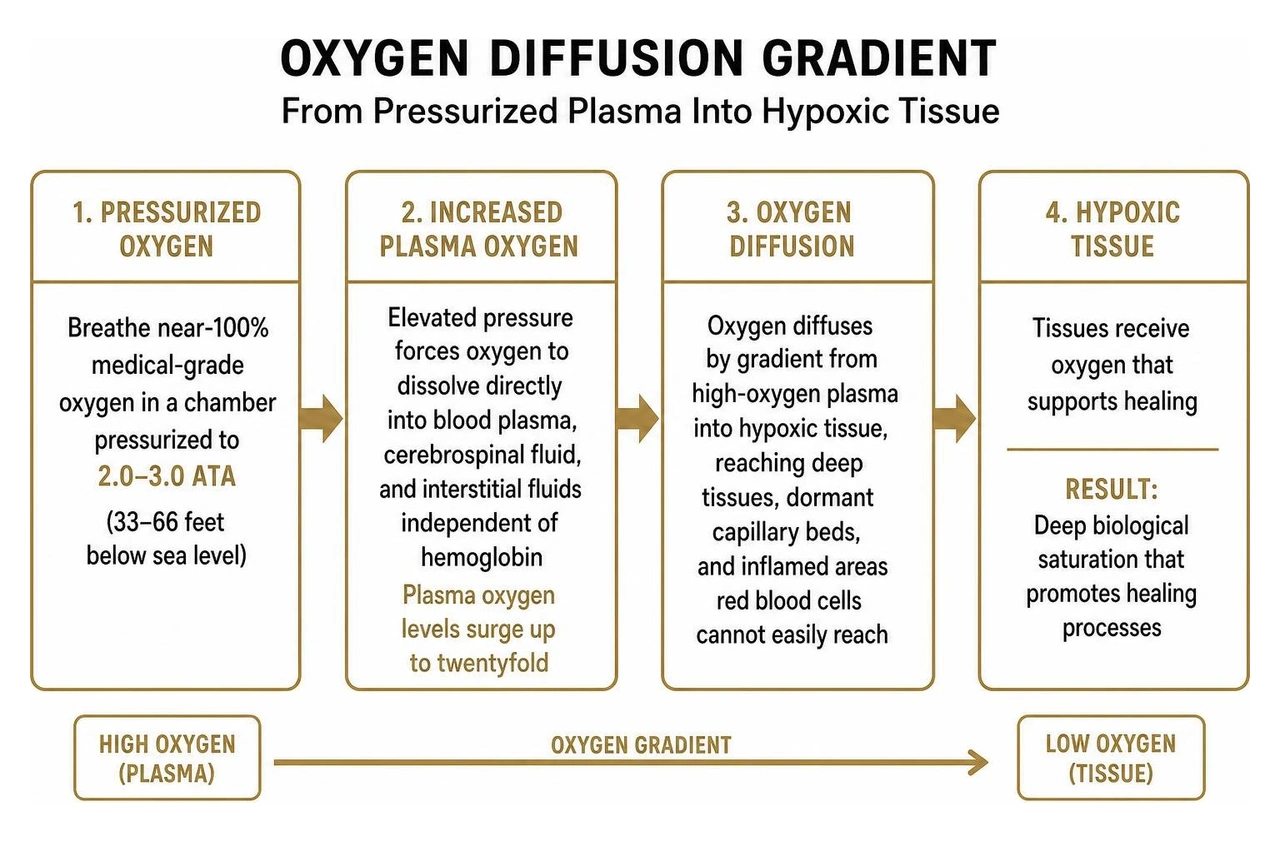
This elevated atmospheric pressure forces oxygen to dissolve directly into blood plasma, cerebrospinal fluid, and interstitial fluids independent of hemoglobin. As plasma oxygen levels surge up to twentyfold, oxygen diffuses deep into compromised tissues, dormant capillary beds, and inflamed areas that red blood cells cannot easily reach.
This deep biological saturation triggers several healing mechanisms:
Understanding these cellular benefits of HBOT treatment allows physicians to integrate pressurized oxygen alongside physical medicine and regenerative protocols. These biological principles are what allow pressurized oxygen therapy to turn stalled physiological healing into active tissue recovery.

Hyperbaric oxygen therapy (HBOT) is an evidence-based medical treatment recognized by the Undersea and Hyperbaric Medical Society (UHMS) and the FDA for specific conditions. These primary indications include:
Clinicians evaluate how these physiological pathways interact with regional blood flow. For example, observing how hyperbaric therapy helps heal wounds faster highlights how resolving localized tissue hypoxia directly supports natural healing.
In modern outpatient care, we often see patients dealing with complex, slow-to-heal musculoskeletal conditions. While hyperbaric oxygen is not a standalone cure for standard mechanical back strains or routine degenerative joint changes, its ability to reduce swelling and improve tissue perfusion makes it a helpful supportive therapy in broader orthopedic and pain rehabilitation programs.
When combined with interventional treatments, physical rehabilitation, and regenerative therapies, hyperbaric oxygen can assist recovery from severe soft tissue trauma, crush injuries, and complex post-surgical healing delays. By downregulating inflammatory cytokines and providing sustained oxygen to healing tendons, ligaments, and peripheral nerves, pressurized oxygen supports tissue recovery.
Patients exploring hyperbaric oxygen for recovery frequently benefit from an approach where structural alignment, active therapy, and cellular oxygenation work together. Furthermore, in cases where chronic nerve inflammation or localized tissue hypoxia complicates long-term comfort, utilizing HBOT for chronic pain relief as part of a structured pain management plan helps patients work toward their rehabilitation goals with less reliance on medication.
Hyperbaric chambers come in two main designs: monoplace chambers and multiplace chambers. Both deliver therapeutic hyperbaric oxygen, but their construction, patient experience, and operational requirements differ.
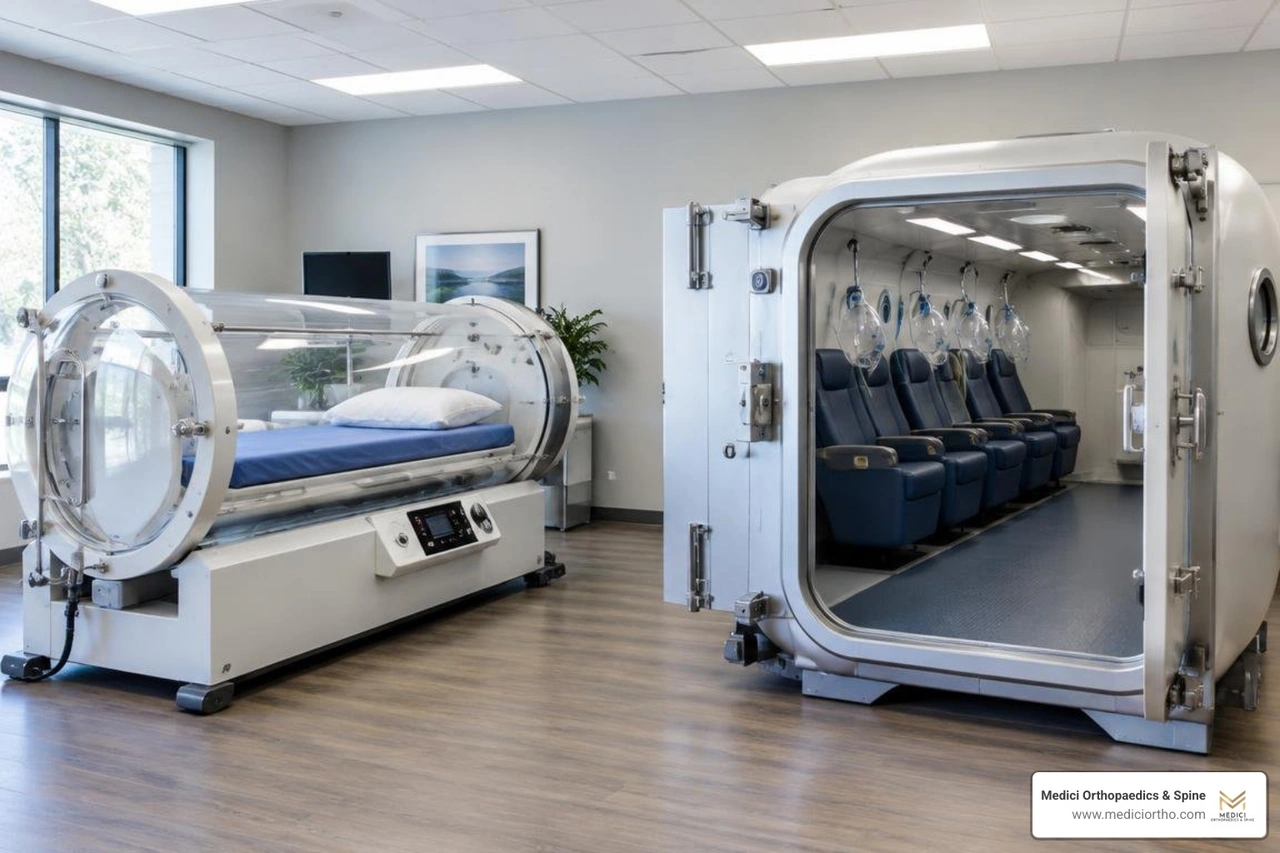
| Feature | Monoplace Chamber | Multiplace Chamber |
|---|---|---|
| Patient Capacity | Single occupant | Multiple occupants (2 to 20+ patients) |
| Pressurization Medium | 100% Medical-grade oxygen | Medical breathing air |
| Oxygen Delivery Method | Ambient chamber atmosphere | Specialized hoods or face masks |
| In-Chamber Attendant | External monitoring via intercom | Inside clinical nurse or technician present |
| Patient Environment | Private, reclining or lying flat | Communal seating, walk-in capability |
| Primary Clinical Setting | Outpatient specialty centers & clinics | Regional trauma centers & hospitals |
| Privacy & Comfort | High personal privacy, individualized media | Group setting, shared environment |
The broader medical system maintains a clear operational distinction between regional emergency hyperbaric departments and specialized outpatient hyperbaric clinics:
A typical treatment session—often called a "dive"—follows a predictable, relaxing routine designed around patient safety and comfort.
A standard session takes between 90 and 120 minutes and progresses through three distinct phases:
Chronic conditions usually follow a cumulative schedule of daily dives, Monday through Friday, across a 30 to 40-session treatment course.
Before beginning hyperbaric therapy, patients undergo a thorough clinical evaluation to confirm the treatment is safe and appropriate for their condition.
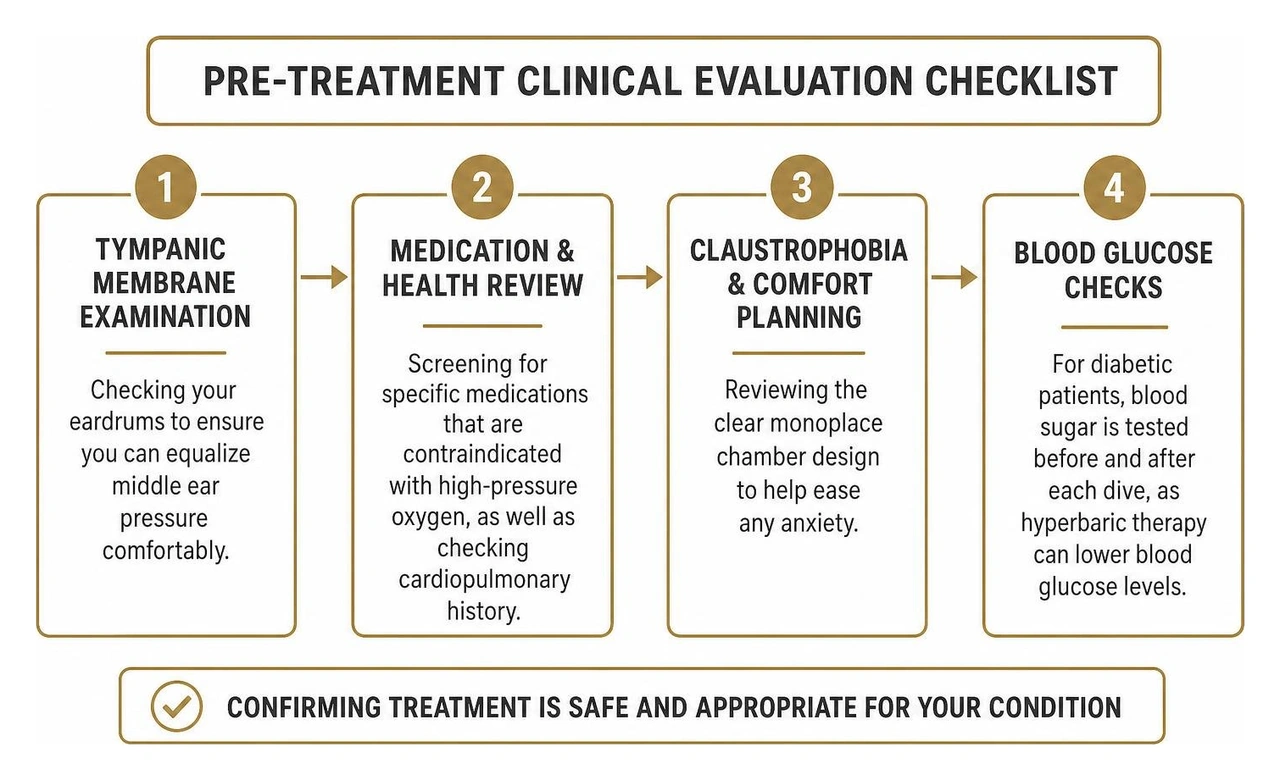
Your pre-treatment evaluation includes:
To maintain strict chamber safety, you will change into clinic-provided 100% medical cotton scrubs before every treatment. Personal electronic devices, watches, metal jewelry, petroleum-based lotions, hairsprays, perfumes, and thermal heat patches are strictly prohibited inside the chamber to ensure a completely safe, static-free environment.
When choosing a hyperbaric medicine facility, accreditation and clinical credentials are essential quality markers. The gold standard in the field is clinical accreditation by the Undersea and Hyperbaric Medical Society (UHMS).
UHMS-accredited facilities adhere to rigorous guidelines covering chamber engineering, life safety systems, medical gas purity, and staff certifications. In these accredited settings, treatments are administered by Certified Hyperbaric Technicians (CHTs) or trained hyperbaric nurses under the direct supervision of physicians with advanced training in Undersea and Hyperbaric Medicine.
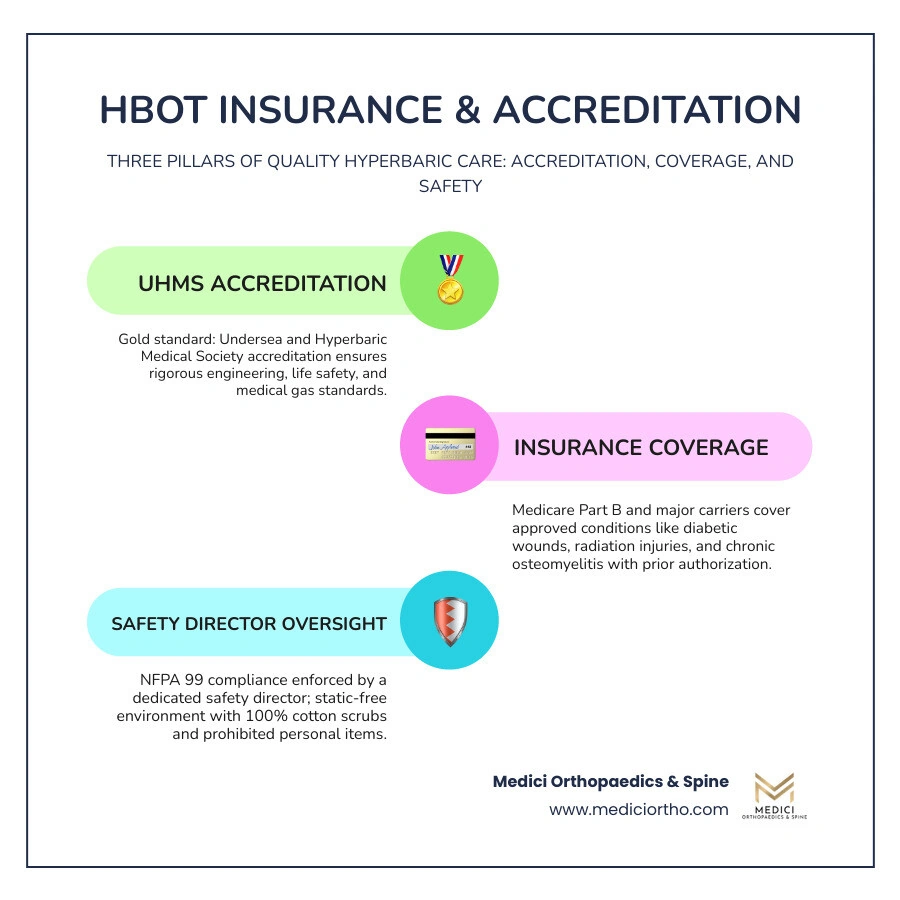
When it comes to billing, Medicare Part B and major commercial insurance carriers provide established coverage for approved conditions, including diabetic wounds of the lower extremities (Wagner Grade III or higher), late radiation injuries, chronic osteomyelitis, and compromised surgical flaps. Most chronic outpatient protocols require prior authorization, which involves submitting detailed clinical notes, wound measurements, and imaging before starting your treatment series. When looking for hyperbaric oxygen therapy near you, verifying that the center meets these safety standards ensures you receive qualified, fully compliant care.
No, hyperbaric oxygen therapy is non-invasive and painless. The only noticeable physical sensation occurs during the compression and decompression phases, when pressure changes cause a sensation of fullness in the ears—much like flying in a commercial airplane or driving through the mountains.
Technicians teach patients simple ear-clearing techniques, such as swallowing, yawning, or the Valsalva maneuver (pinching your nose and gently blowing). Once the chamber reaches its target pressure, the fullness subsides, and patients rest comfortably for the remainder of their session.
The total number of sessions depends on the underlying medical diagnosis and individual tissue response. Acute conditions, such as carbon monoxide exposure, may require only 1 to 3 sessions.
In contrast, chronic conditions like non-healing diabetic wounds or radiation tissue injuries generally follow a protocol of 30 to 40 sessions, scheduled once daily, five days a week for 6 to 8 weeks. Because tissue regeneration and new blood vessel growth develop gradually over time, sticking to the daily treatment schedule is key to achieving lasting clinical results.
Medicare Part B, TRICARE, and most major commercial insurance providers cover hyperbaric therapy for established, FDA-cleared indications that meet medical necessity criteria.
Coverage generally requires documentation of failed conservative therapies—such as 30 days of standard wound care without healing progress—along with detailed clinical evaluations. Routine, unapproved, or experimental uses are typically not covered by insurance and are billed as self-pay services.
Hyperbaric oxygen therapy provides valuable physiological support by delivering high concentrations of oxygen deep into compromised tissues, stimulating new blood vessel growth, and accelerating cellular repair. While it is not a standalone cure for common back or joint aches, it serves as an effective, evidence-based therapy for complex wounds, radiation injuries, and challenging rehabilitation cases.
At Medici Orthopaedics & Spine, we believe lasting recovery is best achieved through integrated, patient-centered care. We combine advanced interventional pain management, physical therapy, regenerative medicine, and supportive modalities so our patients can find meaningful relief and return to active lives.
To learn more about our comprehensive approach to recovery, explore specialized hyperbaric oxygen therapy and schedule an evaluation with our clinical team.
At Medici, you’re more than your MRI.
We take time to hear your story, understand your pain, and create a plan that actually works for you.

Our team delivers specialist care at convenient locations across Metro Atlanta:
Get expert tips on injury recovery, pain relief, joint health, and movement strategies—straight from our Fellowship-Trained team.