Lower back left side pain affects a surprising number of people — roughly 84% of adults will experience lower back pain at some point in their lives, and about half the time, that pain lands on just one side.
So what's actually causing it? Here's a quick overview:
Most common causes of lower back left side pain:
The tricky part? Many of these conditions feel similar on the surface. A dull ache in the lower left back could be a strained muscle — or it could be a kidney stone, a slipped disc, or even a gynecological condition. That's what makes this type of pain so easy to mismanage.
Lower back pain is the single leading cause of disability worldwide, and most people either wait too long to get help or jump straight to treatments that don't address the actual source of the problem.
This guide breaks down exactly what's going on, how to tell the difference between causes, and what actually works — without surgery in most cases.
I'm Sonny Dosanjh, M.D., board-certified in Physical Medicine & Rehabilitation and fellowship-trained at Emory University in Multidisciplinary Pain Management — I've spent my career helping patients identify the true root cause of lower back left side pain and recover through the least invasive, most effective treatment path available. As the founder of Medici Orthopaedics & Spine, I'll walk you through everything you need to know to get answers and get back to moving.
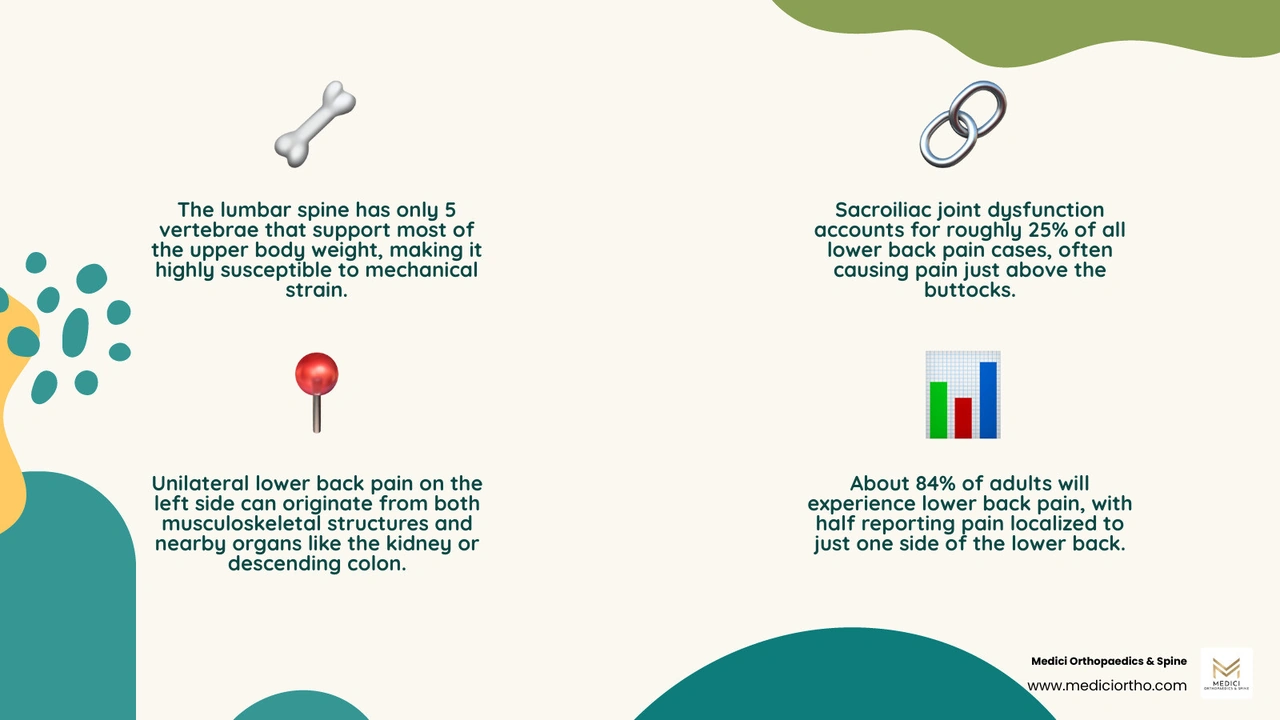
When you experience lower back left side pain just above the buttocks, the source is often structural. The human lower back, or lumbar spine, is an engineering marvel. It consists of only five vertebrae that bear the vast majority of your upper body weight. Because of this heavy mechanical load, even minor imbalances can trigger significant discomfort.
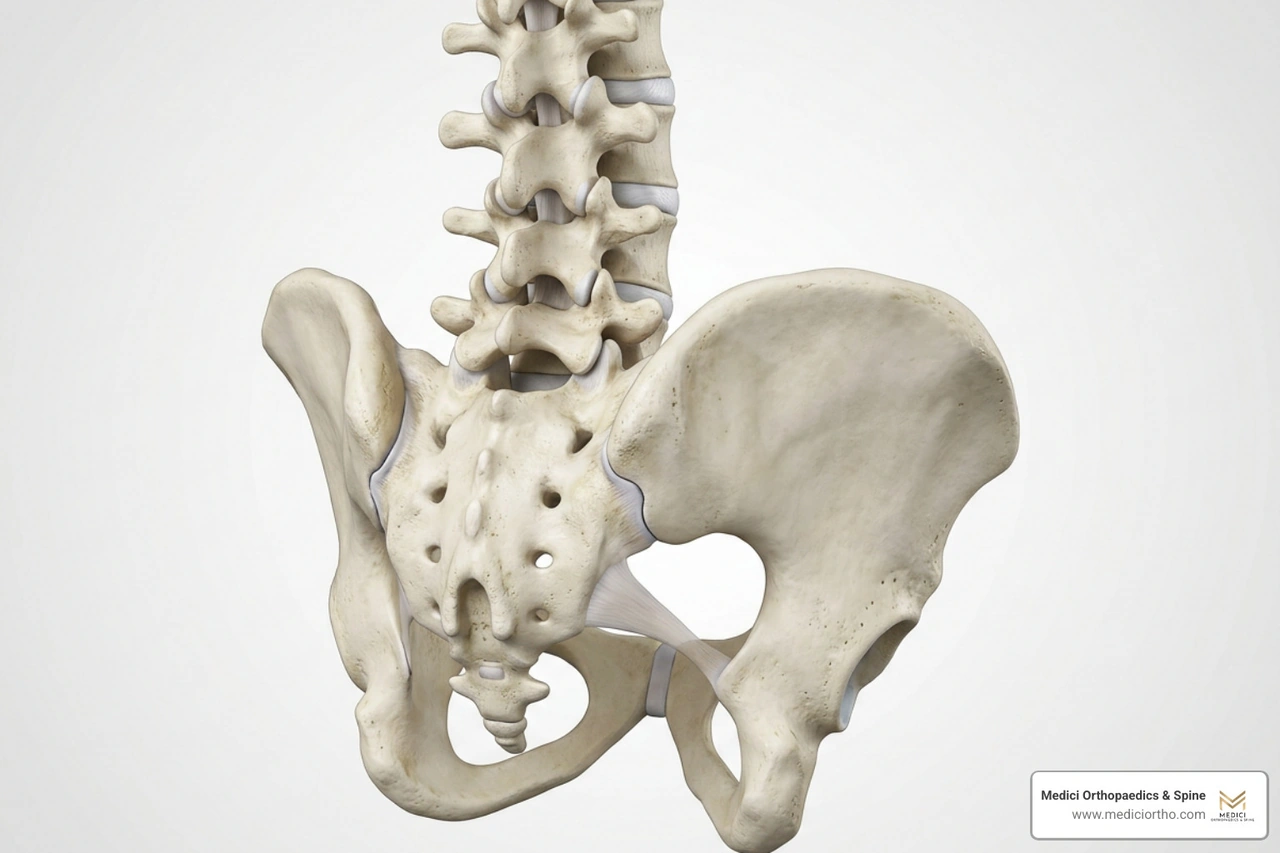
To understand why your left side is screaming at you, we first have to look at the primary musculoskeletal suspects:
For a deeper look into how these structural issues develop and overlap, you can read more about the 10 Causes of Lower Left Back Pain and How to Get Relief.
If your lower back left side pain isn't just a dull, localized ache but feels more like a hot, electric shock traveling down your leg, you are likely dealing with a herniated disc and sciatica.
Your spinal discs are often compared to jelly donuts—they have a tough outer shell (the annulus fibrosus) enclosing a viscous, shock-absorbing gel center (the nucleus pulposus). As we age, or due to sudden trauma, the outer shell can weaken or tear, allowing the inner gel to bulge or herniate outward.
If this herniation occurs on the left side of your lumbar spine (most commonly at the L4-L5 or L5-S1 levels), it can directly compress or irritate the adjacent left nerve roots.
This compression triggers a cascade of symptoms:
Because the spine divides nerve pathways into distinct left and right sides, a left-sided herniation will almost exclusively produce symptoms on your left side. For a detailed breakdown of nerve root compression and how it behaves, check out this guide on Pain in the lower left back: Causes and treatments.
While anyone can experience a herniated disc or a muscle strain, women face a unique set of anatomical and hormonal triggers that can cause or mimic unilateral back pain.
One of the most critical steps in diagnosing unilateral back pain is determining whether the pain is coming from your spine and muscles (musculoskeletal) or from your internal organs (visceral).
Because your lower back houses and sits adjacent to major organs—including the left kidney, the tail of the pancreas, and the descending colon—problems in these organs can refer pain directly to your back.
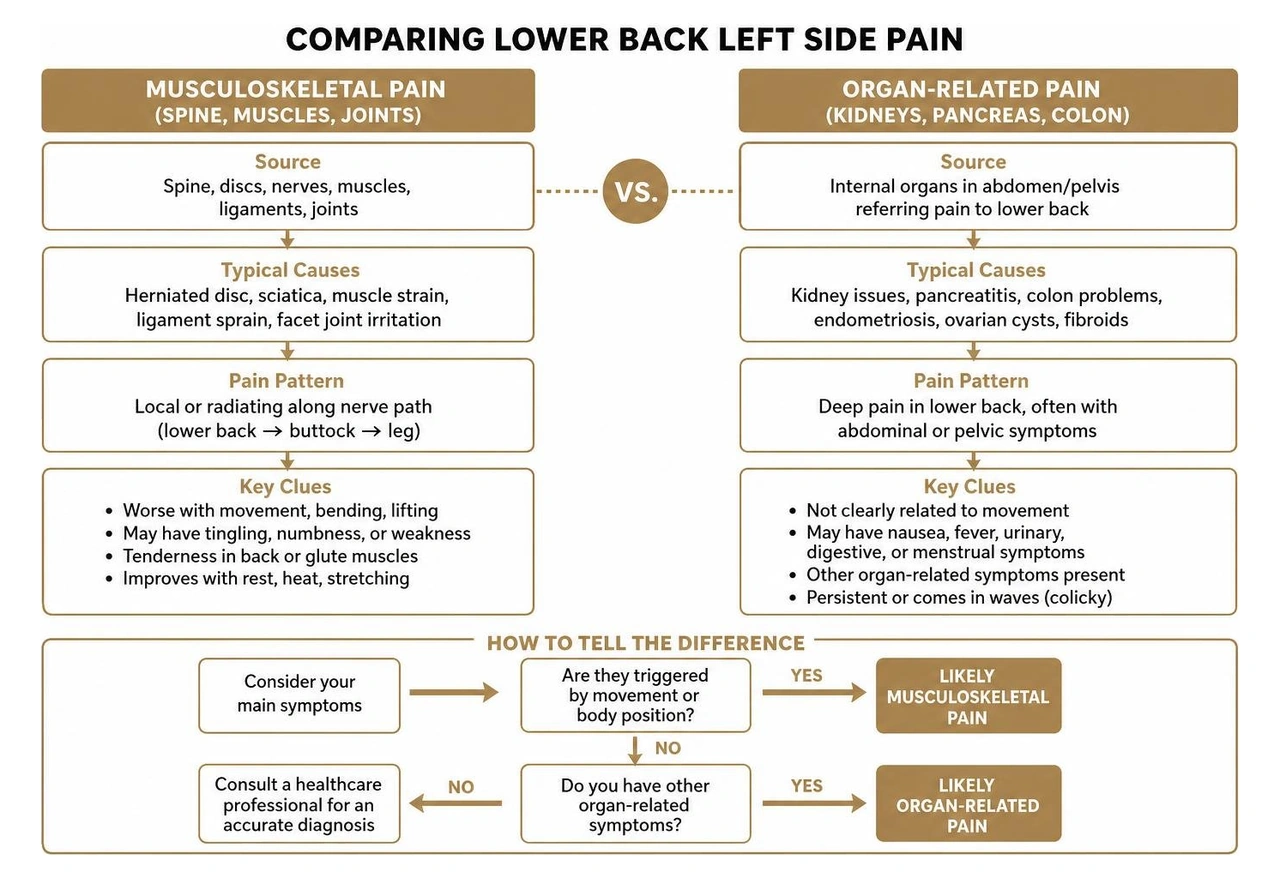
Here is a quick reference table to help you distinguish between the two:
| Feature | Musculoskeletal Pain (Spine, Muscles, Joints) | Organ-Related Pain (Kidneys, Pancreas, Colon) |
|---|---|---|
| Pain Character | Dull, aching, sore, or sharp/shooting if a nerve is pinched. | Deep, boring, throbbing, or sharp, agonizing colicky waves. |
| Positional Triggers | Pain changes with movement. Worsens when bending, twisting, or standing; improves with rest or specific positions. | Pain is constant and unaffected by position. You cannot find a comfortable position, even when lying perfectly still. |
| Palpation | The area is often tender to the touch; pressing on muscles or joints reproduces or worsens the pain. | Deep tissue palpation of the spine does not reproduce the pain, though percussion over the lower ribs (flank) might. |
| Accompanying Symptoms | Muscle stiffness, limited range of motion, localized swelling, or radiating leg numbness/weakness. | Fever, chills, nausea, vomiting, painful or discolored urination, changes in bowel habits, or abdominal pain. |
We often blame a single heavy lift or a sudden twist for our back pain, but the truth is that most episodes of lower back left side pain are slowly built over months or years of subtle, daily habits.
If you are struggling with persistent one-sided pain, consider whether these lifestyle factors are at play:
The most important thing to remember when dealing with lower back left side pain is that surgery is rarely the answer. In fact, only about one in ten patients with lower back pain ever needs surgical intervention. The vast majority of cases resolve beautifully with targeted, conservative, non-surgical care.
At Medici Orthopaedics & Spine, we believe in a synergistic, drug-free approach to healing. Our goal is to avoid the operating table and eliminate opioid dependency by combining advanced medical treatments with active rehabilitation.
To explore the full spectrum of advanced, non-surgical options available across our Metro Atlanta locations, check out The best non-surgical back pain treatments in Georgia: A 2026 guide.
Active physical therapy is the cornerstone of long-term back pain recovery. By strengthening the muscles that support your spine—your core, glutes, and hips—you can permanently reduce the mechanical load on your discs and joints.
If you are looking for localized care, you can learn more about our specialized Physical therapy for back pain in Kennesaw.
Here are three highly effective, gentle exercises to help relieve left-sided lower back pain at home:
For a complete step-by-step routine backed by our clinical team, explore our guide on Lower back pain relief: 5 physical therapy exercises that help.
While most cases of lower back left side pain are benign and resolve with conservative care, certain symptoms indicate a potentially serious underlying condition that requires immediate medical evaluation.
Seek emergency medical attention or consult a specialist immediately if your back pain is accompanied by any of the following "red flag" symptoms:
If your pain has persisted for more than two to four weeks without improvement, even in the absence of red flags, it is time to seek a formal clinical evaluation to identify the root cause.
Yes, absolutely. The descending colon and sigmoid colon sit on the left side of your lower abdominal cavity, resting very close to the muscles and nerves of your lower left back. When you experience severe constipation or stool impaction, the physical bulk and pressure of the retained stool can compress adjacent pelvic nerves and refer a dull, aching visceral pain directly to your lower left back.
Furthermore, the straining associated with difficult bowel movements can place acute mechanical stress on your lower back muscles. Staying hydrated and aiming for approximately 35 grams of dietary fiber daily can help prevent this.
Kidney stone pain is highly distinct from musculoskeletal back pain. While a muscle strain causes a localized, dull ache that worsens when you bend or twist, a kidney stone causes sudden, agonizing, colicky waves of pain. This pain is typically felt in your flank (just below your left ribs) and radiates sharply downward toward your lower abdomen and groin.
Because it is visceral pain, it will not change when you move or rest; patients with kidney stones are often found pacing the floor because they cannot find a comfortable position. It is also frequently accompanied by blood in the urine (hematuria), nausea, vomiting, and painful, frequent urination.
Yes, unilateral lower back and pelvic pain is incredibly common during pregnancy. This is primarily due to pelvic girdle pain and the release of the hormone relaxin, which loosens pelvic ligaments to prepare the birth canal. This ligament laxity, combined with a rapid shift in your center of gravity as your baby grows, places immense stress on the sacroiliac joints.
If the uterus or the baby's position presses directly against the sciatic nerve, it can also trigger classic, sharp sciatic pain radiating down the left leg.
Lower back left side pain is a highly common but complex complaint. Whether your pain is caused by a simple muscle strain, a stubborn sacroiliac joint, a herniated disc, or a referred organ issue, getting an accurate diagnosis is the first and most crucial step toward recovery.
At Medici Orthopaedics & Spine, led by Dr. Sonny Dosanjh, M.D., we are committed to Optimally Restoring your Quality of Life. We believe that many conservative therapies work synergistically—combining targeted physical therapy, lifestyle ergonomics, and advanced, non-surgical interventional treatments to help you achieve lasting relief and get back to the activities you love.
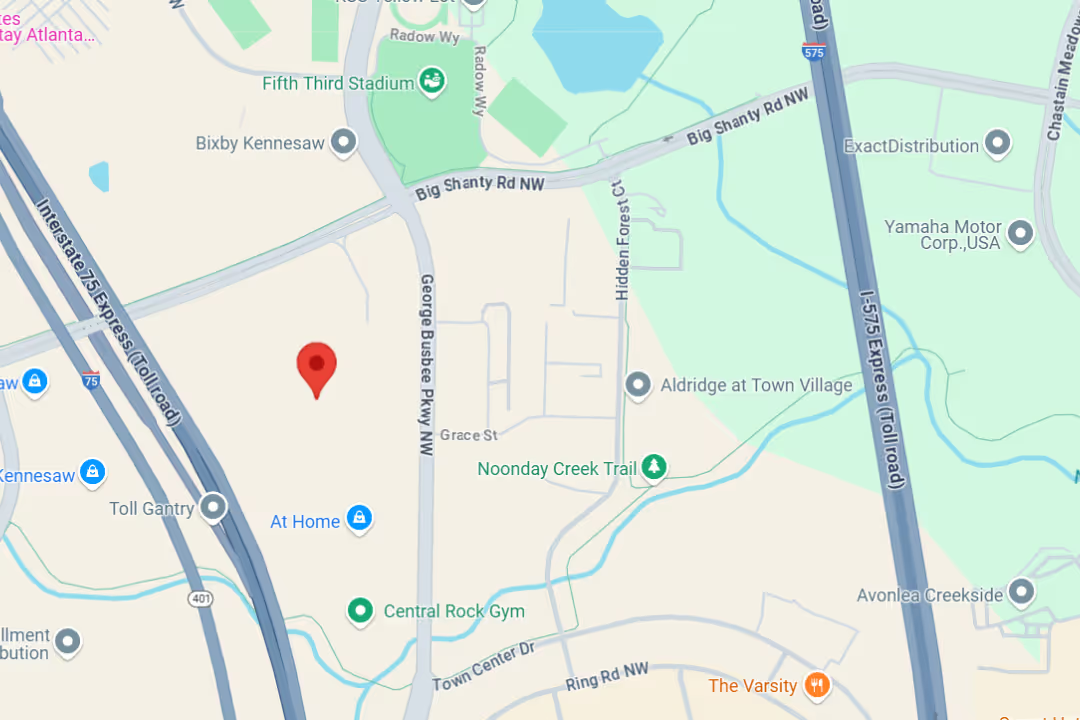
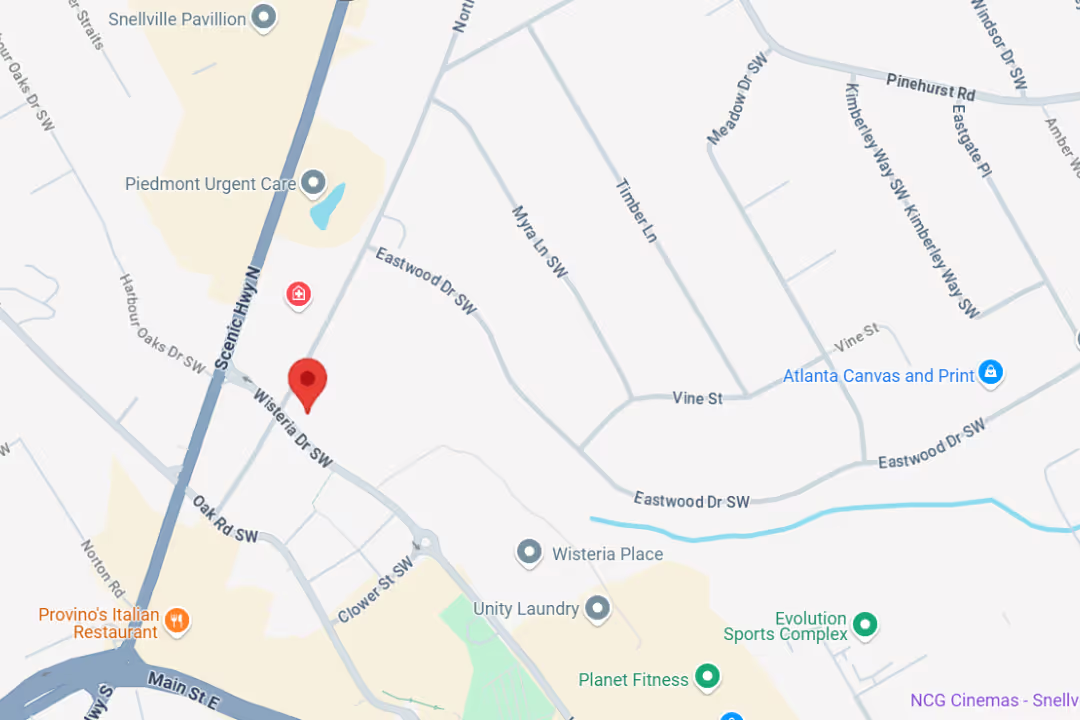
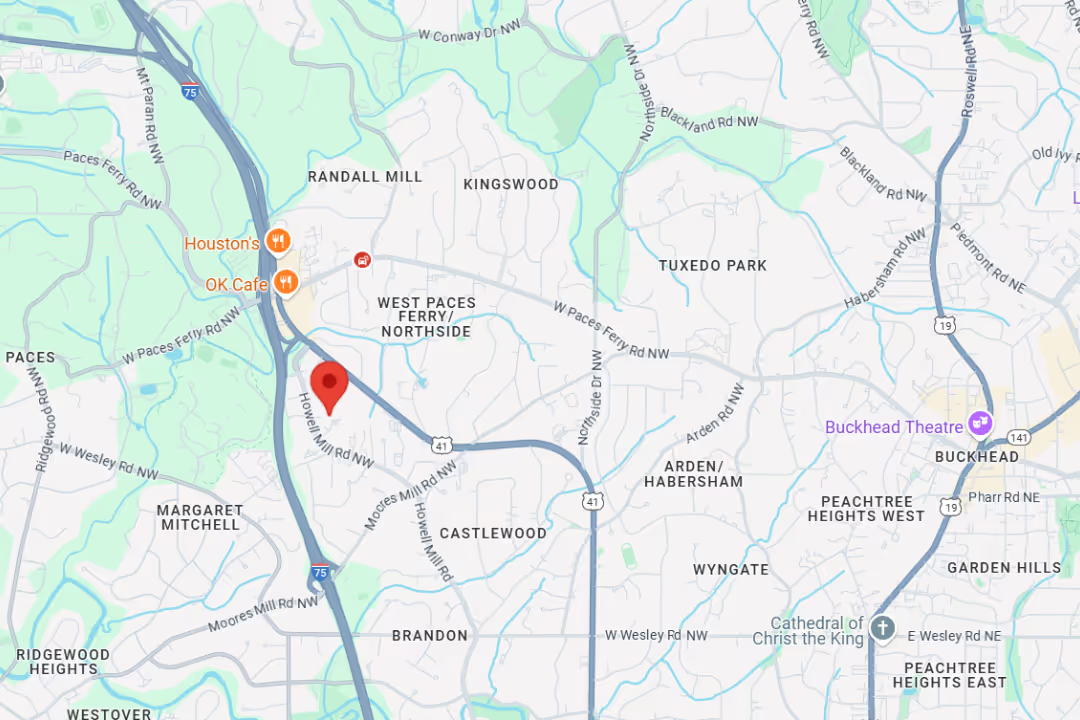
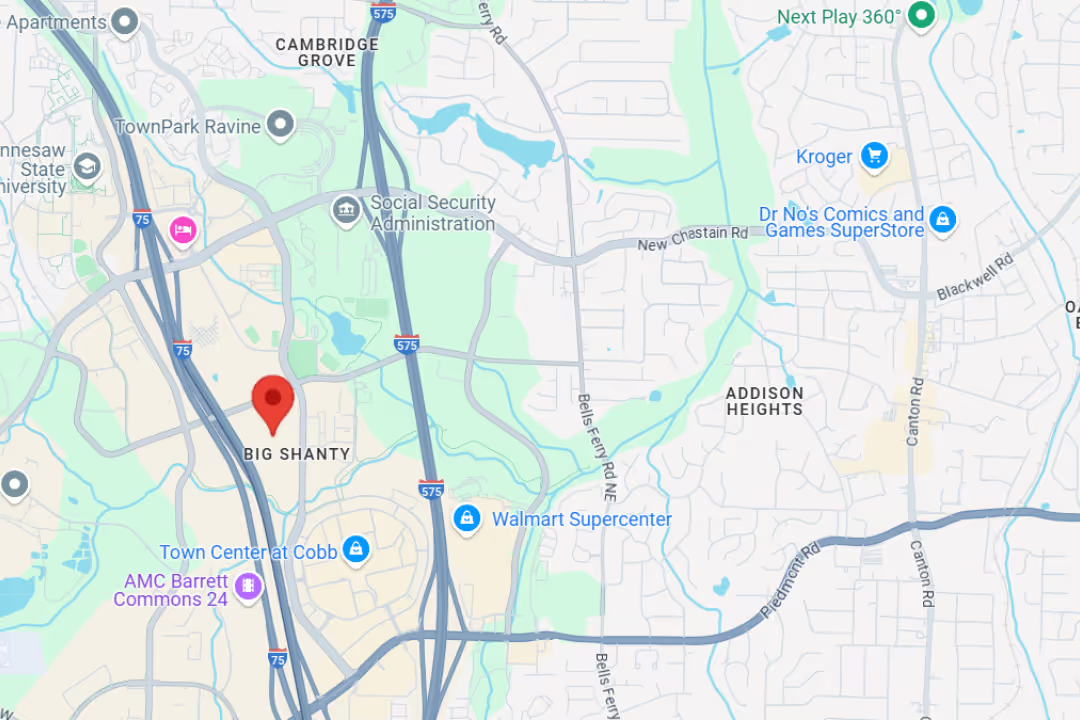
If you are ready to stop guessing and start healing, we invite you to take the first step. Schedule a comprehensive evaluation at one of our convenient Metro Atlanta locations in Kennesaw, Snellville, Buckhead, or Marietta, or visit our Medici Orthopaedics & Spine Lower Back Pain Treatment page to request an appointment online.
At Medici, you’re more than your MRI.
We take time to hear your story, understand your pain, and create a plan that actually works for you.

Our team delivers specialist care at convenient locations across Metro Atlanta:
Get expert tips on injury recovery, pain relief, joint health, and movement strategies—straight from our Fellowship-Trained team.