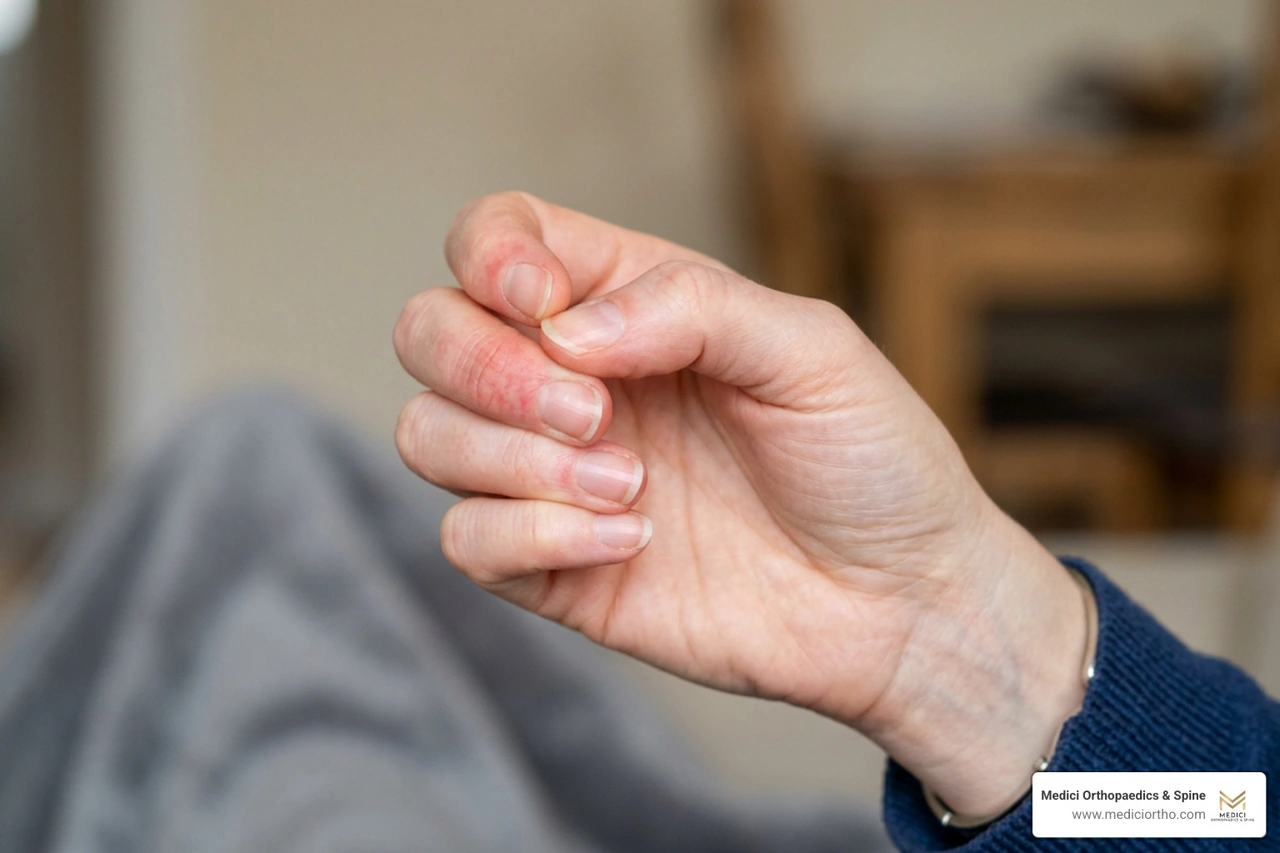
A feeling of pins and needles in fingertips is called paresthesia. It often happens when a nerve is briefly pressed, such as after sleeping on your arm or holding your wrist in one position too long. But tingling that keeps returning, wakes you at night, or affects your grip can also point to a nerve problem in the wrist, elbow, neck, or elsewhere in the body.
Quick answer: Fingertip tingling is usually caused by irritated, compressed, or damaged nerves. Common reasons include:
The exact fingers involved, whether symptoms affect one or both hands, and what triggers them can offer useful clues. For example, tingling in the thumb, index, and middle fingers can fit carpal tunnel syndrome, while symptoms in the ring and little fingers may involve the ulnar nerve.
I am Sonny Dosanjh, M.D., a board-certified Physical Medicine and Rehabilitation physician with fellowship training in multidisciplinary pain management. In my work with spine, nerve, and hand-related pain, I evaluate the feeling of pins and needles in fingertips by looking beyond the symptom to find its source and its impact on daily life.
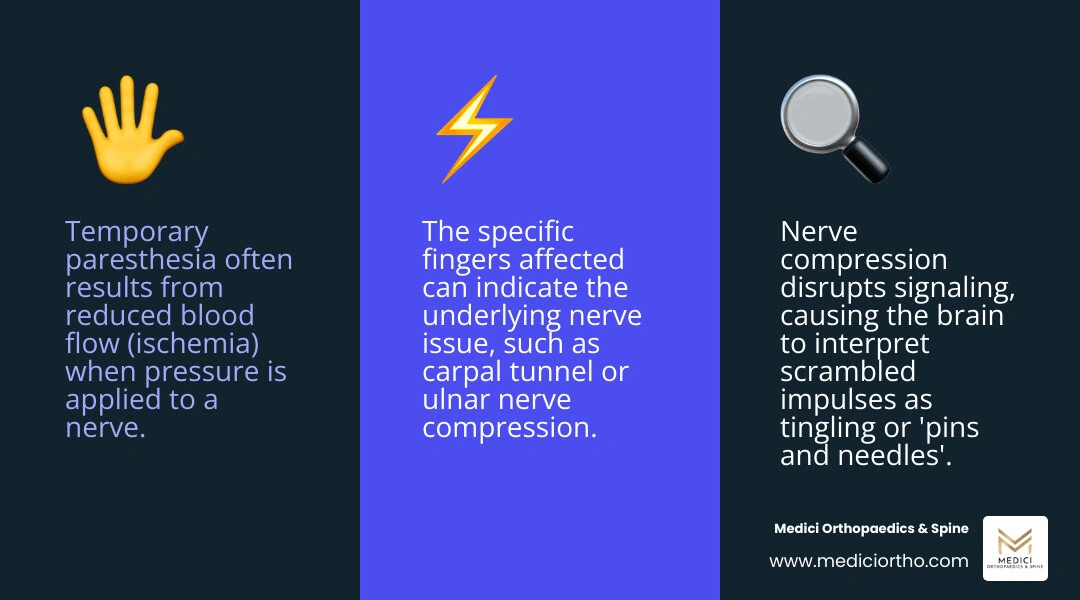
Understanding why your fingers are prickling starts with understanding how nerves communicate. Your peripheral nerves act like delicate electrical cables running from your spinal cord down your arm into each fingertip. When these pathways function properly, they deliver tactile information—like texture, warmth, and pressure—directly to your brain.
However, if physical compression or cellular stress interrupts these signals, the nerve fires off erratic messages. The brain interprets these scrambled electrical signals as a buzzing, prickling, or pins and needles sensation. In many cases, temporary paresthesia is driven by localized ischemia, which occurs when blood flow to a nerve is momentarily restricted (such as when leaning heavily on an elbow). Once you release the mechanical pressure, blood rushes back to the nerve tissue, causing a flurry of quick sensory bursts as the nerve "wakes up."
When the feeling of pins and needles in fingertips becomes chronic or recurs daily, it typically indicates that a nerve is persistently compressed, inflamed, or damaged along its pathway.
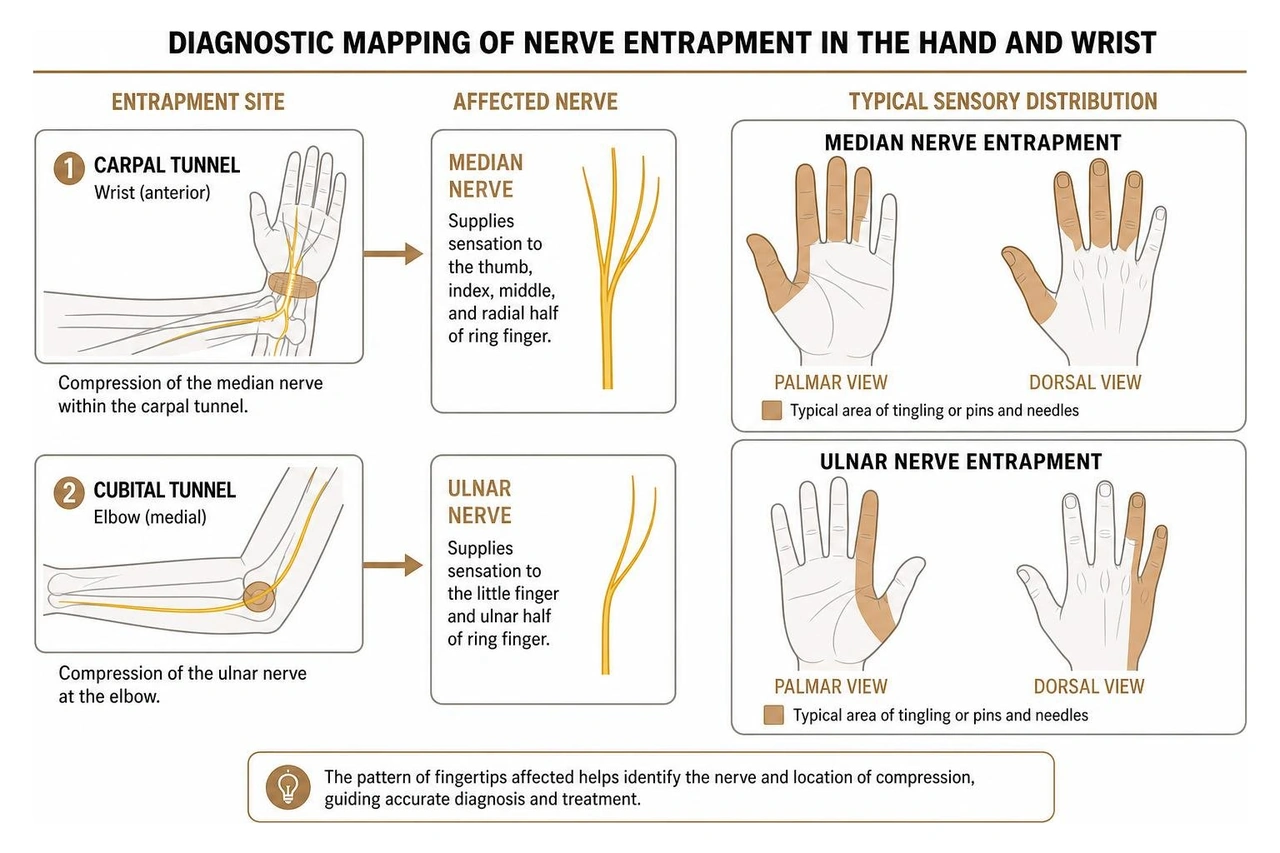
The anatomical layout of your hand and forearm helps us pinpoint exactly which nerve is under distress. Carpal tunnel syndrome is one of the most frequent structural causes of hand paresthesia, affecting roughly 5 percent of the general population. It develops when inflamed tendons or swollen tissues crowd the narrow carpal tunnel in your wrist, squishing the median nerve. Because the median nerve provides sensation to specific digits, carpal tunnel syndrome classically produces a feeling of pins and needles in fingertips involving the thumb, index finger, middle finger, and the thumb-side half of the ring finger.
Conversely, if your prickling is isolated strictly to the little finger and the outer half of the ring finger, the ulnar nerve is usually the culprit. The ulnar nerve travels down the arm and passes through a tight passage at the inner elbow known as the cubital tunnel—the area commonly referred to as the "funny bone." Cubital tunnel syndrome occurs when leaning on the elbow, bending the arm for long stretches, or repetitive strain pinches this nerve, radiating tingling straight down into the pinky fingertip.
Not all hand symptoms originate in the wrist or hand itself. In fact, many cases of persistent fingertip tingling begin higher up in the kinetic chain: the cervical spine (neck). Cervical radiculopathy pinched nerve conditions occur when a spinal disc herniates, a bone spur forms, or spinal stenosis narrows the exits where nerve roots branch off the spinal cord.
Each pair of cervical nerve roots corresponds to a specific area of skin on the arm and hand, known as a dermatome:
When a neck nerve root is compressed, simple movements like tilting your head backward or turning your chin toward the affected side can intensify the tingling in your fingertips.
Systemic health conditions can also compromise nerve function throughout the body. Chief among these is diabetic peripheral neuropathy. Research indicates that up to 50 percent of people with diabetes eventually develop peripheral neuropathy. Chronically elevated blood sugar damages both the delicate structural fibers of the peripheral nerves and the microvascular capillary networks supplying them with oxygen and nutrients.
Other metabolic and systemic triggers for fingertip paresthesia include:
To learn more about systemic causes, explore our detailed FAQ on what causes tingling and numbness in hands and feet.

Because a feeling of pins and needles in fingertips can stem from mechanical compression in the hand, structural impingement in the neck, or metabolic nerve changes, accurate diagnosis requires a thorough clinical evaluation. At Medici Orthopaedics & Spine, our physicians conduct comprehensive evaluations across our Metro Atlanta locations—including Snellville, Kennesaw, Buckhead, Marietta, and Atlanta—to pinpoint the exact source of your symptoms.
A comprehensive diagnostic evaluation typically incorporates:
For a broader look at systemic and localized triggers, review this comprehensive guide on tingling in hands and feet: 25 causes, treatments & more.
While most instances of fingertip tingling resolve with positional adjustments or conservative care, certain accompanying symptoms require urgent emergency medical attention.
You should seek immediate emergency medical care (such as calling 911 or visiting the nearest emergency department) if your hand tingling begins suddenly and is accompanied by:
These symptoms are key red flags for acute neurological events, such as a stroke.
Conversely, if your symptoms are non-emergent but you routinely wake up with numb hands, notice progressive loss of hand grip strength, drop objects frequently, or experience persistent daily tingling, scheduling a comprehensive medical consultation is essential to stop nerve damage from becoming permanent.

At Medici Orthopaedics & Spine, our treatment philosophy centers on providing effective, least invasive, least drug-dependent care customized to your specific lifestyle goals. We offer a full spectrum of interventional treatments, physical therapy, and minimally invasive techniques to relieve nerve pressure and promote recovery.
Depending on the underlying cause, medical treatments may include:
To explore the wide array of interventions available for hand nerve symptoms, read our overview on what causes nerve pain in your hands symptoms causes treatments and discover options for what is the best treatment for diabetic neuropathy.
In addition to medical care, daily self-care habits can help protect your nerves from mechanical strain:
For step-by-step natural strategies, check our resource on how to relieve tingling sensation in hands naturally.
Many people experience intensified fingertip tingling at night because of sleeping posture. When asleep, we often unconsciously curl our wrists inward (wrist flexion) or bend our elbows sharply under our pillows. Prolonged wrist flexion narrows the carpal tunnel, placing sustained mechanical pressure on the median nerve. Similarly, keeping the elbow bent tight compresses the ulnar nerve at the cubital tunnel. Using a light, supportive night splint helps maintain a neutral position and prevents nocturnal flare-ups.
Yes, Vitamin B12 is crucial for maintaining myelin, the protective fatty sheath that insulates your nerve fibers. When B12 levels drop, myelin deteriorates, causing nerve signals to slow or misfire. This frequently presents as a symmetrical feeling of pins and needles in fingertips and toes. Correcting a deficiency through dietary adjustments or supplementation under medical supervision can restore nerve health over time.
We differentiate between spinal and peripheral nerve sources through sensory mapping, physical testing, and electrodiagnostic evaluations. If tingling follows a specific dermatome pattern (such as radiating from the neck down the arm into the thumb and index finger) and intensifies when turning or tilting the neck, the issue likely stems from the cervical spine. If tingling is isolated strictly to the hand and worsens during wrist flexion, localized carpal tunnel entrapment is more likely. Nerve Conduction Studies (NCS) and cervical spine MRIs offer definitive confirmation.
A feeling of pins and needles in fingertips is a clear signal from your nervous system that a nerve pathway is irritated, compressed, or deprived of adequate circulation. Whether your symptoms stem from long hours at a keyboard, an awkward sleeping posture, a pinched nerve root in your neck, or a systemic metabolic condition like diabetes, ignoring persistent tingling can lead to progressive numbness and loss of hand function.
By tracking your symptoms early, optimizing your workspace ergonomics, and seeking a professional medical diagnosis, you can restore clear nerve communication and protect your hand mobility. At Medici Orthopaedics & Spine, Dr. Sonny Dosanjh and our dedicated team are committed to helping you regain your quality of life through effective, integrated, and non-surgical care.
If persistent fingertip tingling is affecting your daily routine, explore our guide on how to relieve tingling sensation in hands naturally or contact our Georgia clinics today to schedule a consultation.
At Medici, you’re more than your MRI.
We take time to hear your story, understand your pain, and create a plan that actually works for you.

Our team delivers specialist care at convenient locations across Metro Atlanta:
Get expert tips on injury recovery, pain relief, joint health, and movement strategies—straight from our Fellowship-Trained team.