Choosing a surgeon is one of the most personal medical decisions a person can make. It's not just about credentials on a wall or a name at the top of a search result for "best orthopedic surgeon near me." It's about finding someone who understands your goals, respects your pace, and brings real expertise to your specific condition.
Too many patients walk into surgical consultations without knowing what to ask, and they walk out having agreed to a plan they don't fully understand. That's not a knock on surgeons. It's a reflection of how little guidance patients are given about how to evaluate their care.
The questions below are designed to change that. They're the kind of questions that separate a confident, well-matched decision from one made under pressure or uncertainty.
Orthopedic surgery covers an enormous range of conditions, from spine and joint replacement to sports injuries, foot and ankle problems, and pediatric care. A surgeon who does excellent hip replacements may not be the right fit for a complex spinal condition, and vice versa.
When you're searching for a good orthopedic surgeon near me, the list of results can feel overwhelming. Here's what to look for beyond the rating:
Not every surgeon approaches care the same way. Some are quick to recommend surgery because it's what they do best. Others treat it as a last resort, exhausting conservative options first. Knowing which camp your surgeon falls into matters enormously, especially when you're in pain and looking for answers.
Ask directly: "What do you typically try before recommending surgery for a condition like mine?"
A strong answer includes physical therapy, injections, regenerative medicine options, or other interventional treatments. A surgeon who can't speak fluently to non-surgical care may not be offering you the full picture. A top-rated orthopedic surgeon understands the entire spectrum of treatment, even if their role is primarily surgical.
Also ask about their approach to surgery itself:
General surgical experience and procedure-specific experience are two very different things. A surgeon can have decades of practice and still perform your specific procedure infrequently. Volume matters in surgery. Repetition builds precision, sharpens decision-making in the OR, and reduces complication rates.
Ask these questions without hesitation:
The facility matters as much as the surgeon. Orthopedic surgery near me might return results that include both hospital-based operating rooms and ambulatory surgery centers (ASCs). Both can be excellent. What you want to understand is the accreditation status, the staff experience, and the protocols in place.
Patients often focus so much on the surgery itself that recovery becomes an afterthought. But recovery is where outcomes are made or broken. A surgeon who can't give you specific, realistic recovery expectations may not be as invested in what happens after you leave the OR.
Ask for specifics:
Surgery is sometimes the right answer. But it should rarely be the first one.
Before committing to a procedure, you deserve to understand the full range of options available to you. For many orthopedic conditions, that includes:
The relationship between a patient and their surgical team doesn't end when the consultation is over. Recovery involves questions, concerns, and sometimes unexpected symptoms. Knowing how the practice communicates, and how quickly, can save a lot of stress.
Ask the office directly:
Financial clarity is part of making a fully informed decision. There's nothing awkward about asking what your care will cost before you commit to it. In fact, understanding your financial responsibility upfront protects you from unexpected bills down the road.
Key questions to ask the billing department:
Online reviews are an imperfect tool, but they're not meaningless. When you're evaluating a good orthopedic surgeon near me, patterns in reviews tell a story that credentials alone can't.
Look for patterns, not individual reviews:
There is a version of this process that feels rushed, confusing, and one-sided, where patients nod along and hope for the best. And there is a version where patients come prepared, ask good questions, and leave the consultation with real clarity about their options, their risks, and their recovery.
You're not just choosing a procedure. You're choosing a partner in your recovery. That decision deserves real thought, honest answers, and a care team that earns your confidence before you ever set foot in an operating room.
At Medici Orthopaedics & Spine, surgery is never the default. The team evaluates every patient through the lens of the most effective, least invasive, least drug-dependent care available, and that philosophy shapes every consultation. Whether you're searching for orthopedic surgery near me or trying to figure out whether surgery is even the right path, the conversation starts here.
Pain doesn't have to be your normal. Come in, ask your questions, and find out what's actually possible.
At Medici, you’re more than your MRI.
We take time to hear your story, understand your pain, and create a plan that actually works for you.

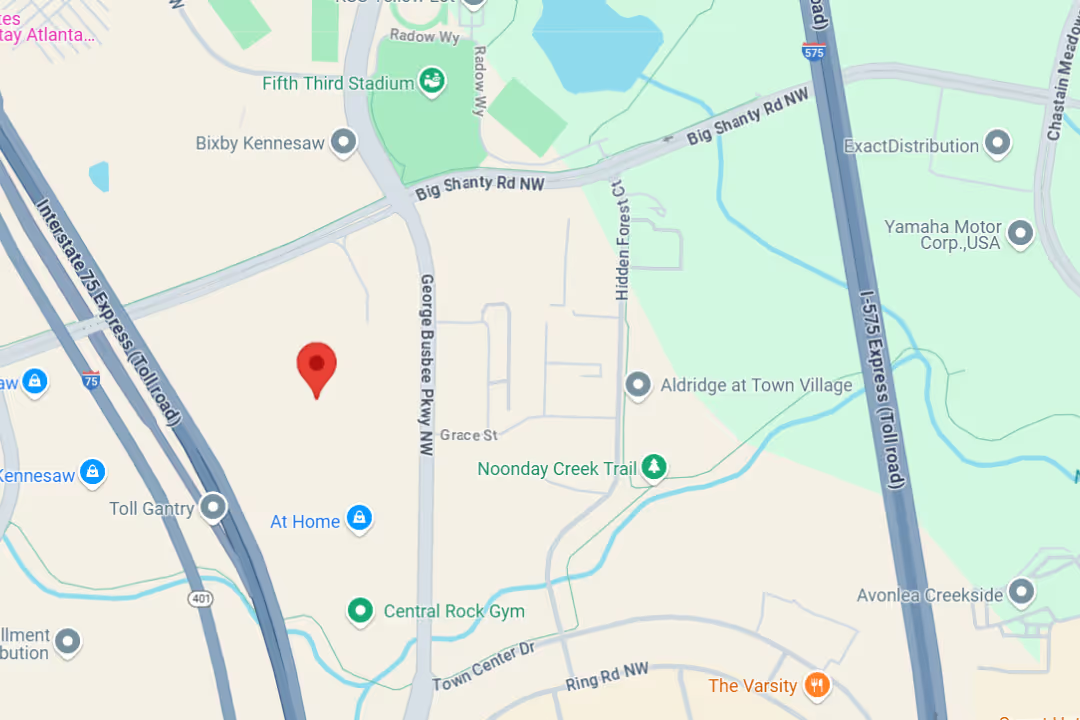
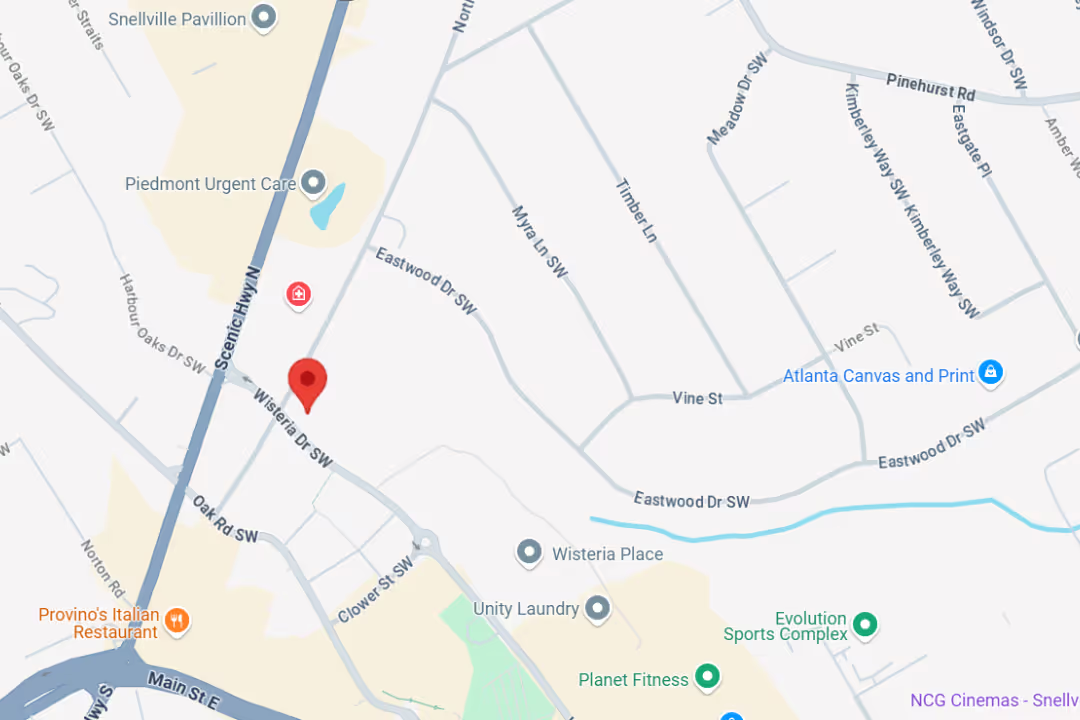
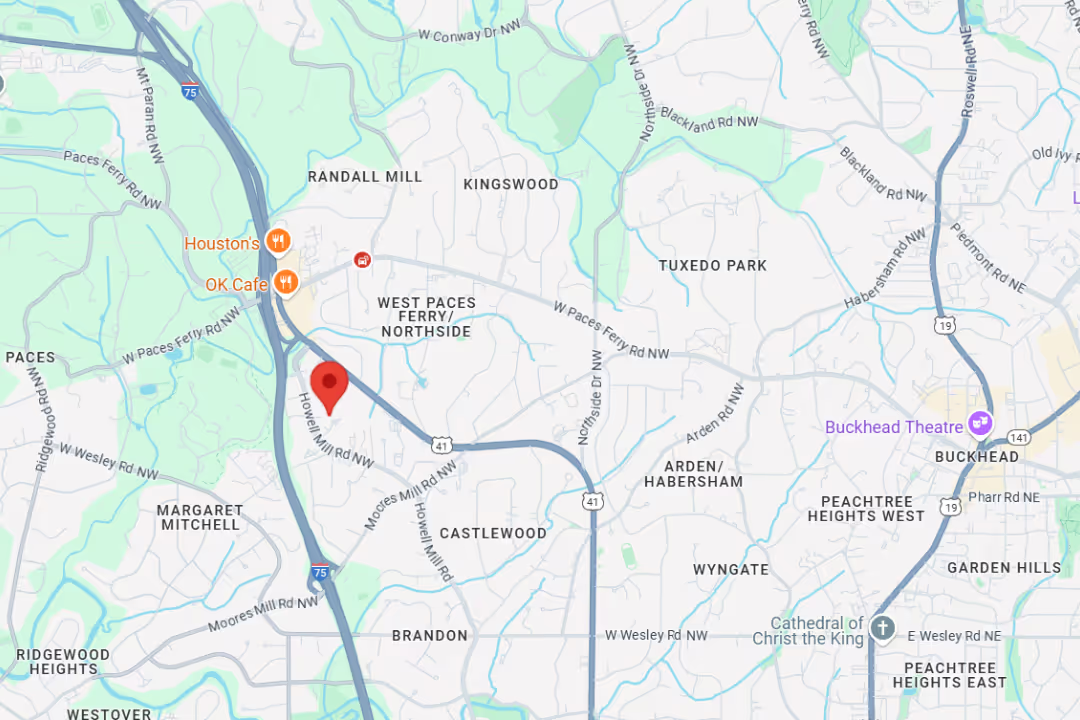
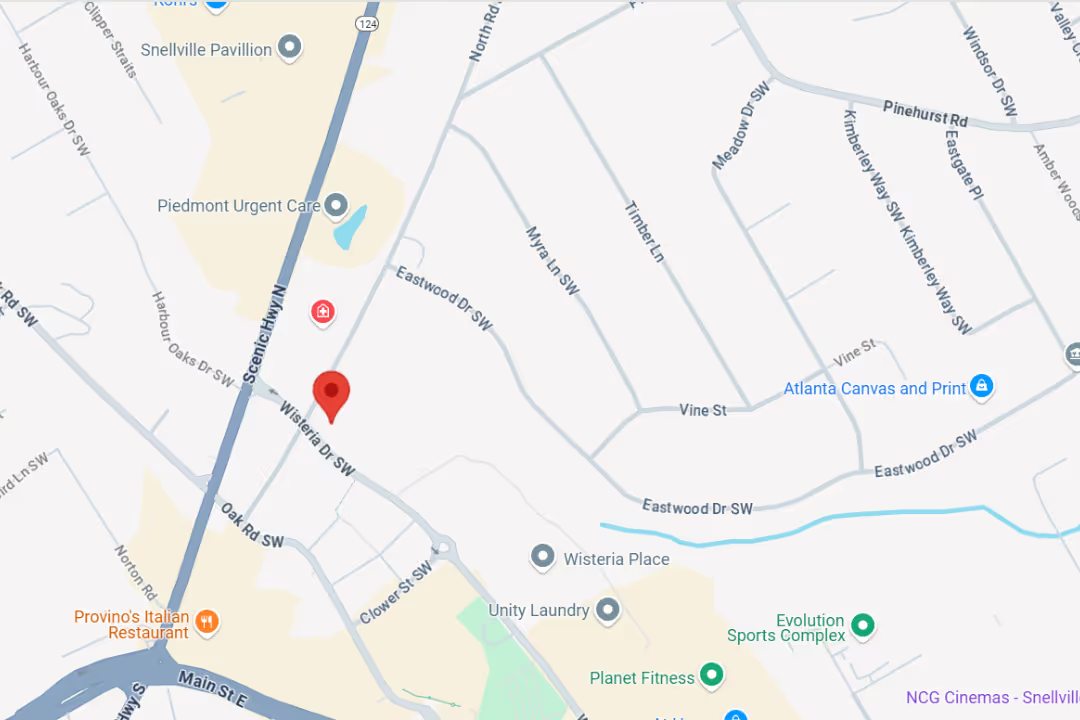
Our team delivers specialist care at convenient locations across Metro Atlanta:
Get expert tips on injury recovery, pain relief, joint health, and movement strategies—straight from our Fellowship-Trained team.