The rotator cuff tear athlete return protocol is one of the most important — and most misunderstood — roadmaps in sports medicine. Whether you're a competitive pitcher, a weekend rugby player, or a CrossFit athlete, a full-thickness rotator cuff tear can stop your sport in its tracks. And the question on every athlete's mind is the same: how long until I'm back?
Here's the short answer:
Most athletes return to sport within 6 to 12 months after arthroscopic rotator cuff repair, depending on tear size, sport type, and how well they progress through each rehabilitation phase.
| Factor | Typical Timeline |
|---|---|
| Sling immobilization | 6-8 weeks |
| Passive range of motion begins | Weeks 2-6 |
| Active range of motion begins | Weeks 8-10 |
| Strengthening begins | Weeks 12-18 |
| Return to sport (most athletes) | 6-9 months |
| Return to sport (large/massive tears) | 9-12 months |
The numbers from the research are encouraging. At least three out of four athletes return to their sport after six months of rehabilitation — including those in overhead and contact sports. But one in four athletes needs 9 to 12 months before regaining optimal strength. And return rates across published studies vary widely, from 50% to 100%, depending on the sport and the severity of the tear.
This isn't a one-size-fits-all process. The biology of tendon-to-bone healing doesn't care how motivated you are. Tissue takes time to mature, and pushing too fast increases the risk of retear and setbacks.
This guide walks you through exactly how the protocol works — phase by phase — so you and your care team can make smart, informed decisions at every step.
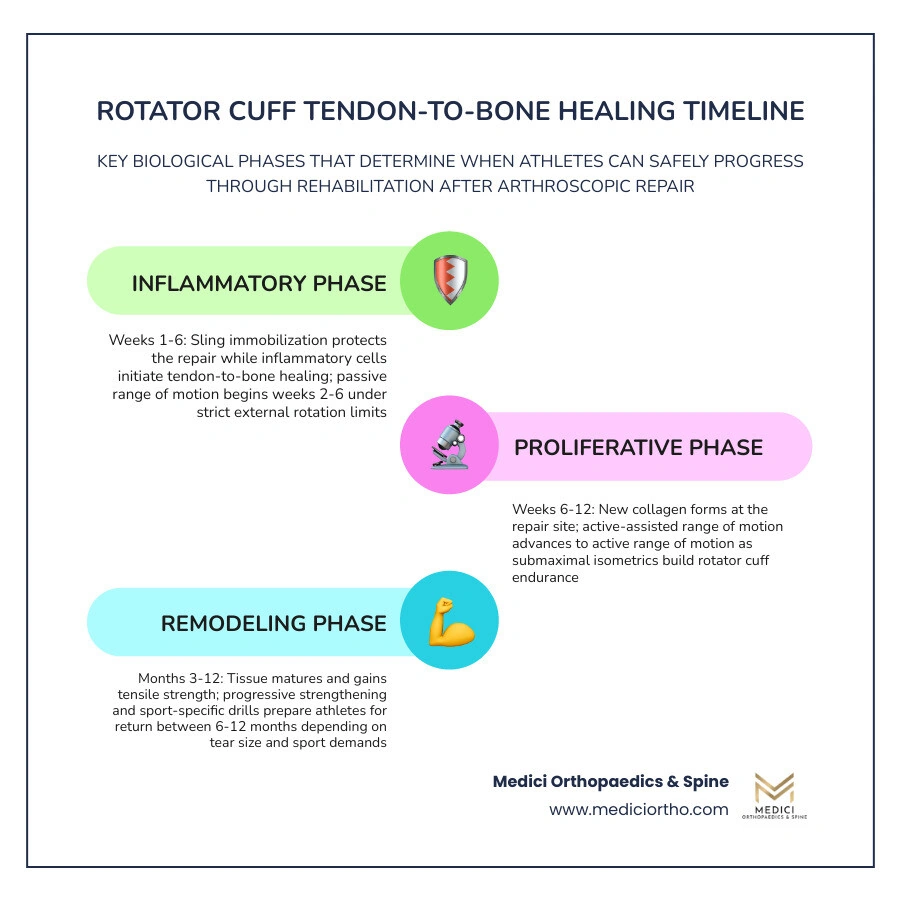
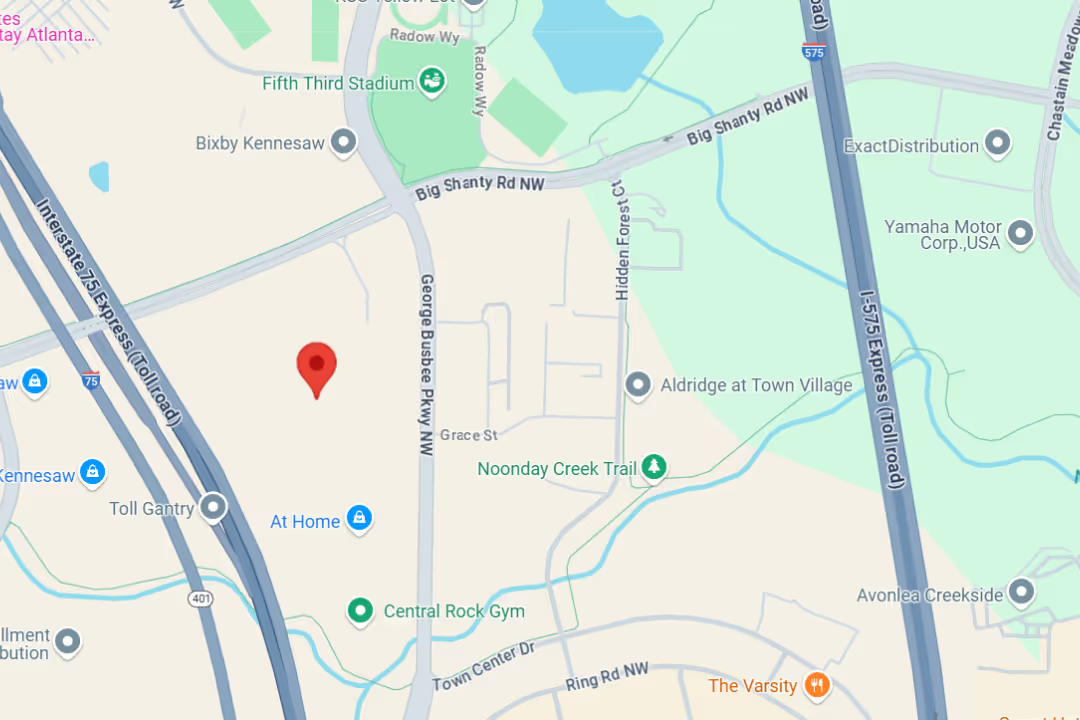
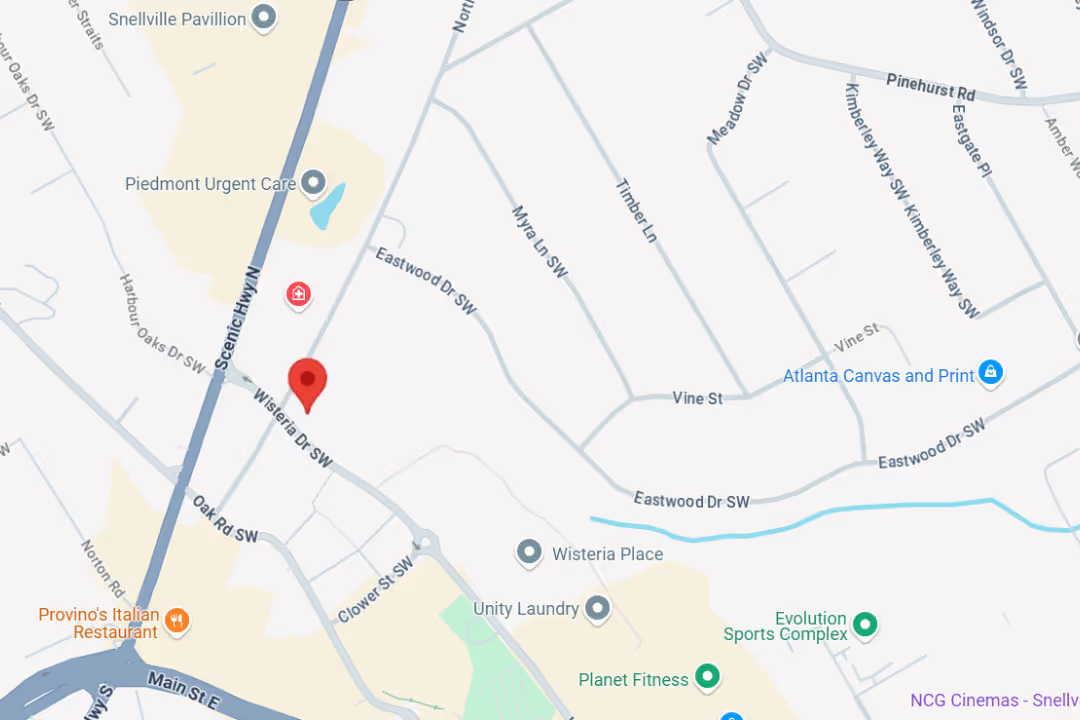
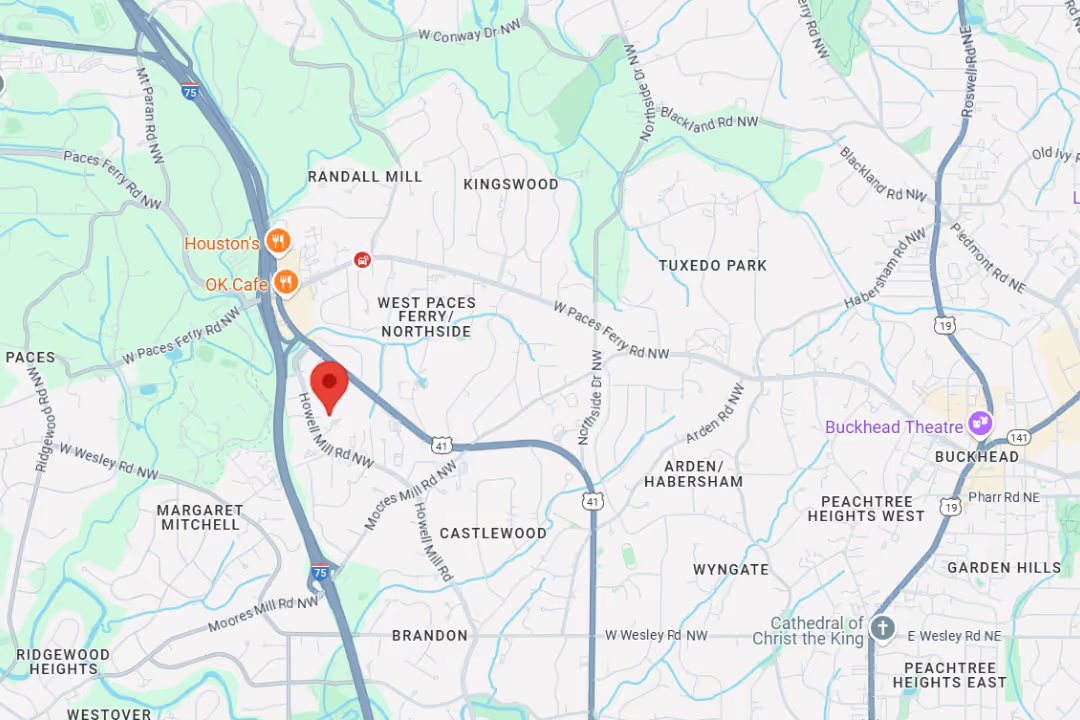
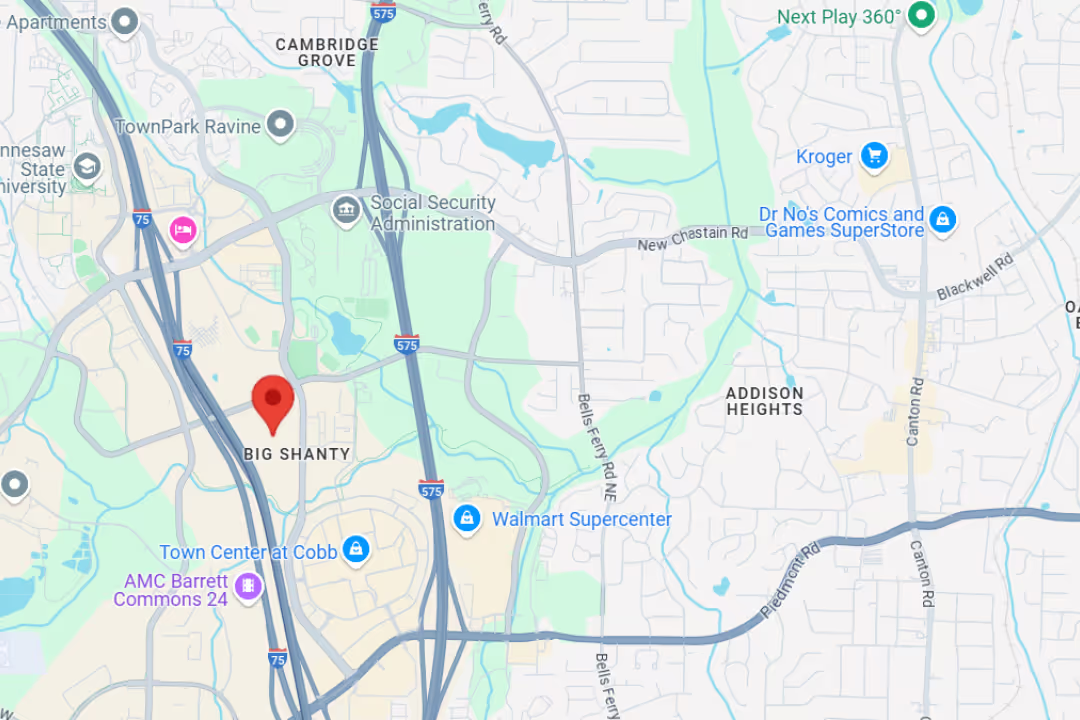
When we treat athletes at our clinics in Atlanta, Marietta, Snellville, and Kennesaw, we emphasize that recovery is a biological journey, not just a calendar countdown. A full-thickness rotator cuff tear means the tendon has pulled completely away from the humerus bone. During an arthroscopic repair, the surgeon uses anchors and sutures to pull that tendon back down and secure it.
But those anchors are just mechanical placeholders. The real magic — and the real challenge — is biological maturation.

Your body must lay down new collagen fibers, organize them, and firmly cement them back into the bone. This process is slow. In fact, soft tissue-to-bone healing requires at least 12 weeks just to establish baseline pull-out strength. Pushing your shoulder too hard before this biological bond is ready is like walking on a newly sodded lawn before the grass has taken root; you will tear up the foundation.
Because of this, modern sports medicine relies on a milestone-based progression rather than a purely time-based one. While general timelines exist, we never allow an athlete to advance to the next phase of rehab until they meet specific functional, mobility, and strength criteria.
According to the ASSET Consensus Guidelines on Rehabilitation, a structured, milestone-based framework is the safest way to balance early mobility with tendon protection. If you are aiming for a successful recovery, understanding what to expect from your physical therapy program is crucial. You can read more about what this looks like in our comprehensive guide on sports injury recovery in Marietta.
Rehabilitating a repaired shoulder is a delicate dance between protecting the surgical site and preventing stiffness. If you immobilize the shoulder for too long, you risk developing adhesive capsulitis (frozen shoulder). If you move it too aggressively, you risk tearing the repair.

To solve this, we use a structured four-phase system designed to guide you safely from the operating room back to the field. Working with a dedicated physical therapist is non-negotiable here. For a deeper look at how structured therapy helps, explore our overview of physical therapy for rotator cuff injuries.
Immediately following surgery, the primary goal is protecting the delicate tendon-to-bone interface.
Once your surgeon and physical therapist confirm that passive range of motion is restored and the tendon has achieved baseline healing, we transition to active movement.
As you build back this foundational strength, you can learn more about preparing your shoulder for the physical demands of upcoming seasons in our guide on preventing rotator cuff injuries when returning to spring sports.
Your sport dictates your recovery path. A marathon runner doesn't use their shoulder the same way a baseball pitcher or a rugby player does, which means their return protocols look vastly different.
According to a comprehensive Systematic Review on Return to Sport after Arthroscopic Repair, the overall rate and timing of returning to play varies considerably. While some athletes get back on the field in under 5 months, others require up to 14 months.
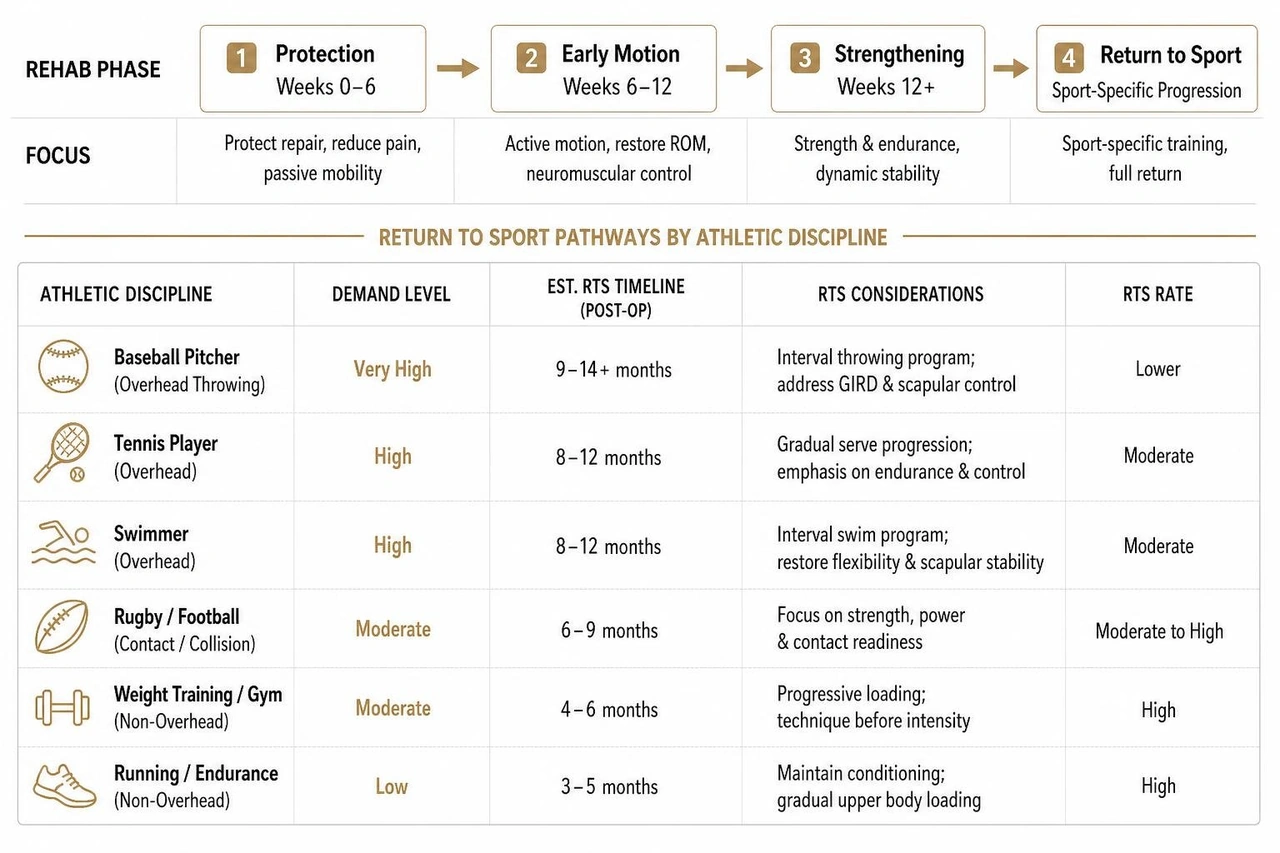
Overhead athletes (such as baseball pitchers, tennis players, and swimmers) face the most challenging recovery road. The overhead throwing motion puts extreme, high-velocity stretching and contraction forces on the rotator cuff, especially during the deceleration phase of a throw.
For contact athletes (such as football, rugby, and hockey players), the primary concern isn't repetitive overhead microtrauma; it's high-impact tolerance and joint stability.
We never clear an athlete to return to sport based on the calendar alone. Just because you are six months post-op does not mean your shoulder is ready for competitive play.
Before we grant clearance, we evaluate several critical clinical factors and objective functional benchmarks, as outlined in the literature on Clinical Criteria for Return-to-Play after Rotator Cuff Surgery:
While arthroscopic rotator cuff repair is highly successful, athletes must understand the risks of structural failure and complications.
For most athletes, a safe return to competitive sports takes 6 to 9 months. However, if you had a large or massive tear, poor tissue quality, or participate in high-demand overhead sports like baseball pitching, expect a recovery timeline of 9 to 12 months to allow for complete biological maturation of the tendon-to-bone interface.
Yes, many athletes successfully return to their pre-injury level of performance. According to published data, out of 173 athletes tracked by competitive level, 107 returned to the exact same or near pre-injury level, and 31 actually returned to a higher level of competition. However, 36 athletes either returned to a lower level of play or were unable to return, highlighting the importance of strict compliance with a high-quality rehabilitation protocol.
If a retear occurs, it does not automatically mean you need another surgery. Many retears are small or asymptomatic, and athletes can still achieve excellent function and return to play through targeted non-surgical physical therapy. If a massive retear occurs and causes severe pain or weakness, a revision surgery or alternative regenerative therapies may be considered.
To better understand your options if surgery isn't the right path for you, you can read our detailed guide on how to recover from a rotator cuff injury without surgery. We also break down the expected timelines for conservative care in our FAQ on how long it takes to recover from a rotator cuff injury without surgery.
Recovering from a full-thickness rotator cuff tear is a marathon, not a sprint. A successful rotator cuff tear athlete return protocol requires a highly coordinated, multidisciplinary approach involving the athlete, the orthopedic surgeon, and a skilled physical therapist. By focusing on biological healing, milestone-based progression, and objective functional testing, you can safely minimize your risk of re-injury and return to the sport you love with absolute confidence.
At Medici Orthopaedics & Spine, led by our founder and CEO Dr. Sonny Dosanjh, M.D., we are committed to Optimally Restoring your Quality of Life. Our unique philosophy is built around delivering the most effective, least invasive, and least drug-dependent programs medically available. We believe that physical therapy, exercise, targeted injections, and other advanced modalities work synergistically — yielding far better results together than any single treatment could alone.
If you are experiencing shoulder pain or navigating a sports injury, we are here to help you find the right path forward. You can explore our specialized non-surgical treatment options for rotator cuff injuries to see how we help athletes heal without invasive procedures.
Ready to get back in the game? Visit one of our convenient Metro Atlanta locations in Marietta, Snellville, Kennesaw, or Buckhead. Let's build your custom playbook for recovery today.
At Medici, you’re more than your MRI.
We take time to hear your story, understand your pain, and create a plan that actually works for you.
Our team delivers specialist care at convenient locations across Metro Atlanta:
Get expert tips on injury recovery, pain relief, joint health, and movement strategies—straight from our Fellowship-Trained team.