When your child is hurting, everything else takes a back seat. Whether it's a limp that appeared after soccer practice, a knee that's been aching for weeks, or a curvature in the spine your pediatrician flagged at a routine checkup, that moment of worry is real. You want answers, and you want someone you can trust to take your child seriously.
Children's bodies are not simply smaller versions of adult bodies. Bones are still developing, growth plates are open and vulnerable, and the way kids heal, compensate for pain, and respond to treatment is genuinely different from what adults experience. That's why getting the right orthopedic evaluation matters so much when a child is the patient. At Medici Orthopaedics & Spine, we bring the same comprehensive, least-invasive-first approach to younger patients that we apply across all our care, working with families to find the most appropriate path forward for each child's unique situation.
Orthopedic care for children requires a different clinical lens than care for adults. Kids have active growth plates, the areas of developing cartilage near the ends of long bones where growth occurs. These structures are softer and more susceptible to injury than fully developed bone, and damage to them can affect how a bone grows if it isn't properly assessed and treated.
Beyond anatomy, children respond differently to pain and injury. They may not be able to articulate where something hurts or how long it's been bothering them. They often keep playing through discomfort because they don't want to sit out. And certain conditions that appear in childhood, like developmental hip dysplasia or idiopathic scoliosis, have no adult equivalent at all.
The range of conditions we see in younger patients is broad. Some arrive after acute injuries; others have been managing chronic pain or a structural issue for months. Common presentations include:
Parents often wonder whether a child's complaint is serious enough to warrant a specialist visit. In general, if something has persisted for more than a few days, is getting worse, or is affecting how your child moves and participates in daily activities, it deserves attention. Specific signs to take seriously include:
Not every ache requires an urgent visit, but some do. A child who cannot put weight on a limb after a fall, or who has significant swelling and tenderness at a joint, should be evaluated promptly. Visible deformity or numbness after an injury are also reasons to act quickly rather than wait and see.
On the other hand, mild soreness after a hard practice, or general leg achiness in a rapidly growing child, may fall into the category commonly called growing pains. These tend to be diffuse, occur in the evening or overnight, and resolve with rest. The key difference is that true growing pains don't localize to a specific joint or bone, and they don't cause a limp. When you're not sure which category your child falls into, an evaluation is always the right call. Catching something early consistently leads to better outcomes.
Growth plates are present in children and adolescents until the late teenage years, when bones fully mature. Because they're made of cartilage rather than hardened bone, they're the weakest point in a child's skeletal system. In fact, a force that would sprain a ligament in an adult may instead fracture a growth plate in a child.
Untreated or mismanaged growth plate injuries can result in uneven bone growth, limb length differences, or angular deformity down the road. This is why pediatric orthopedic evaluation is so important when a child injures a limb near a joint.
Several conditions specifically affect the growth plates of active children:
Youth sports have changed dramatically over the past two decades. Kids are specializing in a single sport earlier, training year-round without adequate rest, and logging volumes of repetitive movement that were once reserved for collegiate and professional athletes. The result is a significant rise in overuse injuries among children and teenagers, including stress fractures, tendinopathies, and joint conditions that were rarely seen in young patients a generation ago.
Early specialization, combined with reduced unstructured play time, means many young athletes are placing enormous repetitive stress on developing bodies without the variety of movement that builds balanced strength and resilience.
At Medici, our default starting point is always the least invasive option that is medically appropriate. For most young athletes, that means:
Scoliosis, an abnormal lateral curvature of the spine, most commonly develops during the growth spurt just before puberty. Many cases are first identified during school screenings, but parents can also watch for uneven shoulders, a shoulder blade that protrudes more than the other, an uneven waistline, or one hip sitting higher than the other.
Idiopathic adolescent scoliosis is the most common form, and it affects girls more frequently than boys. Early detection makes a meaningful difference in treatment options and outcomes.
Treatment depends on the degree of curvature, the child's age, and how much skeletal growth remains:
At Medici Orthopaedics & Spine, we take pediatric patients seriously. We understand that parents are putting real trust in us when they bring their child in for an evaluation, and we don't take that lightly. Our team takes the time to listen, assess thoroughly, and explain findings in a way that actually makes sense, so families can make informed decisions with confidence.
Whatever your child is dealing with, whether it's a sports injury, a spine concern, chronic joint pain, or something you haven't quite been able to pin down yet, we're here to help you figure out the right path forward.
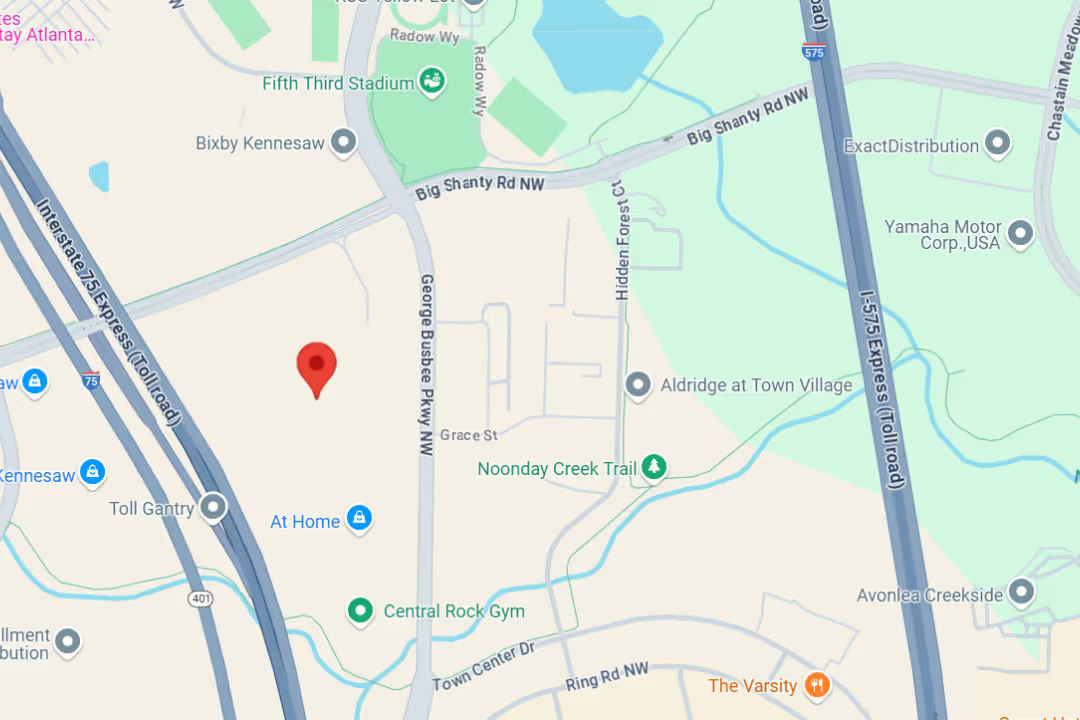
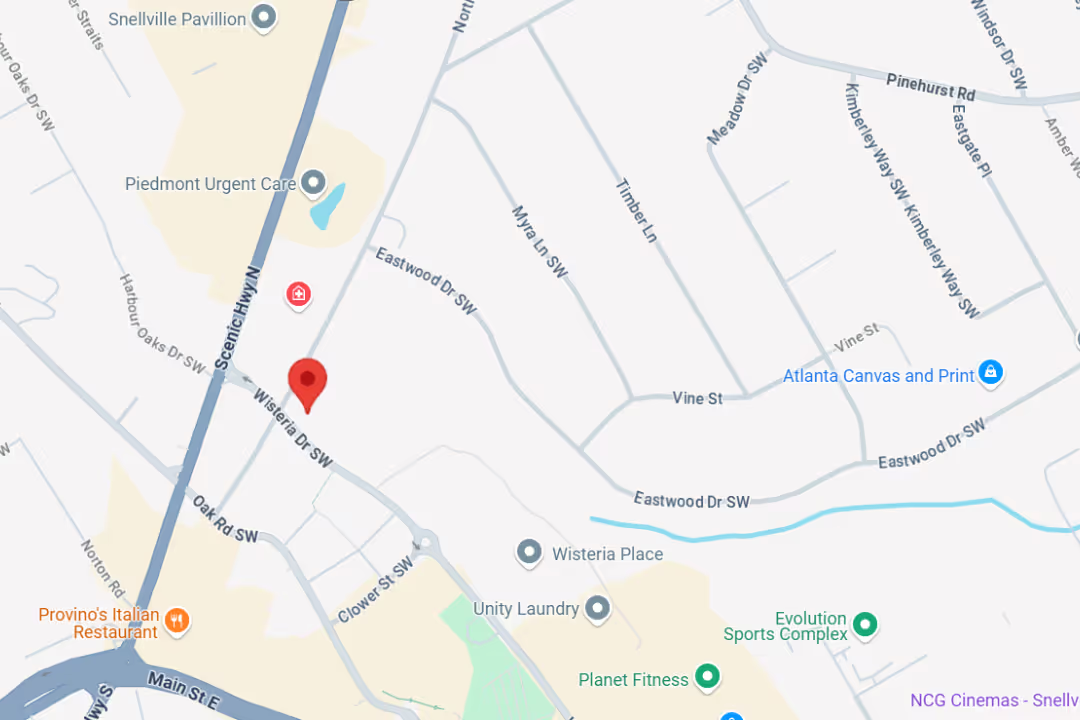
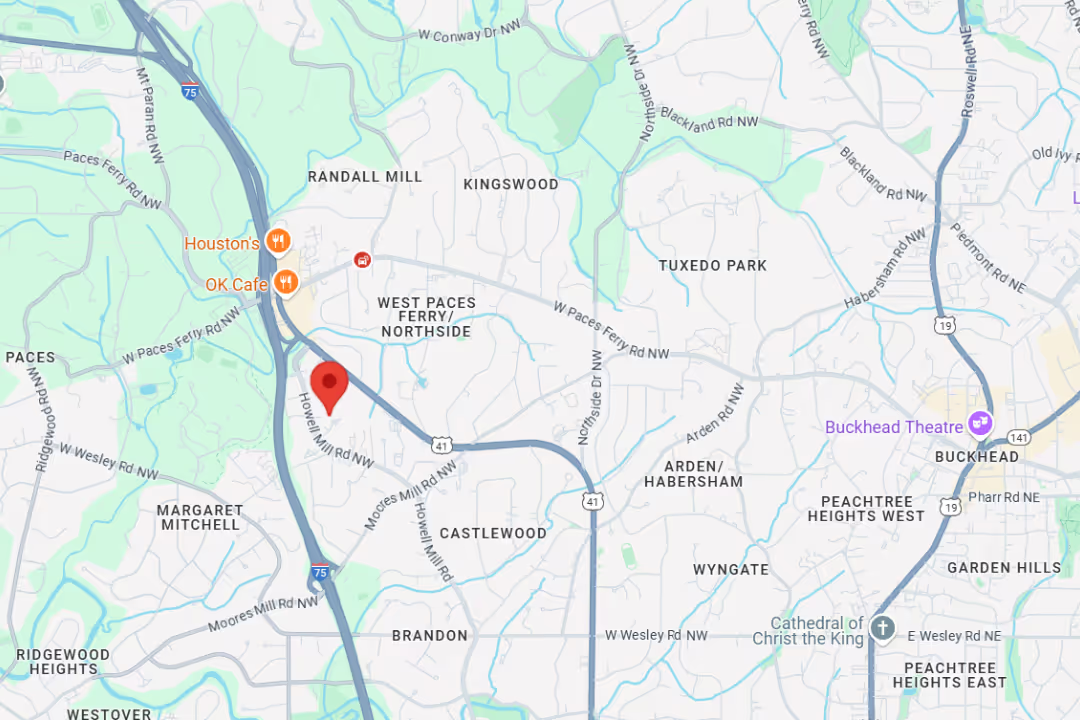
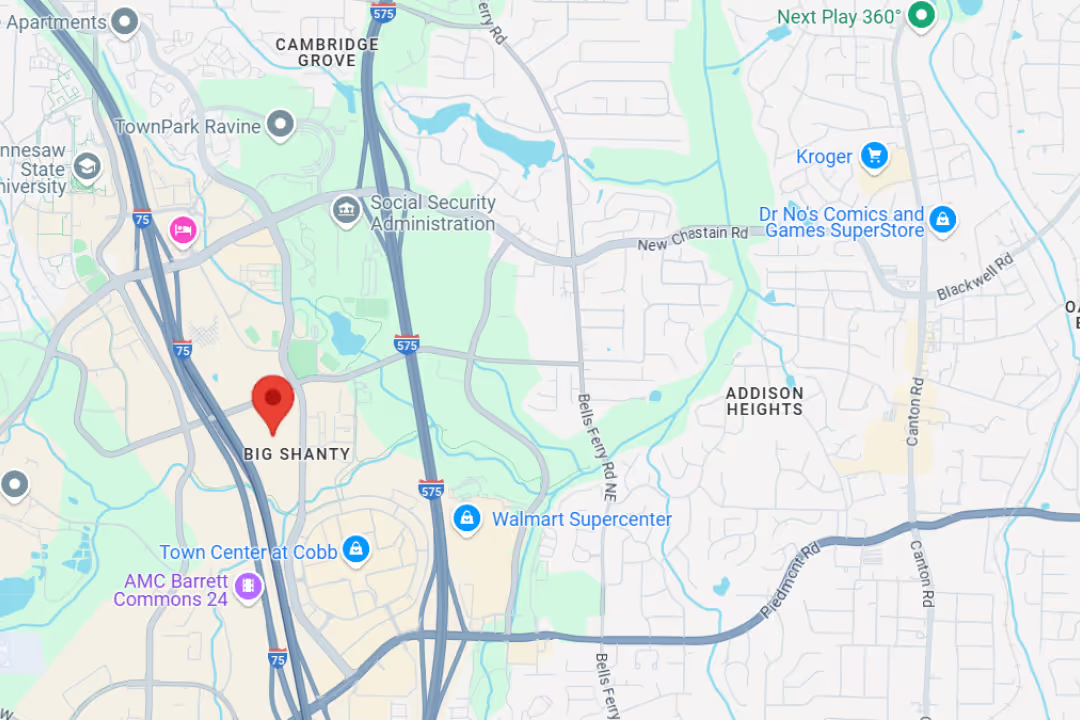
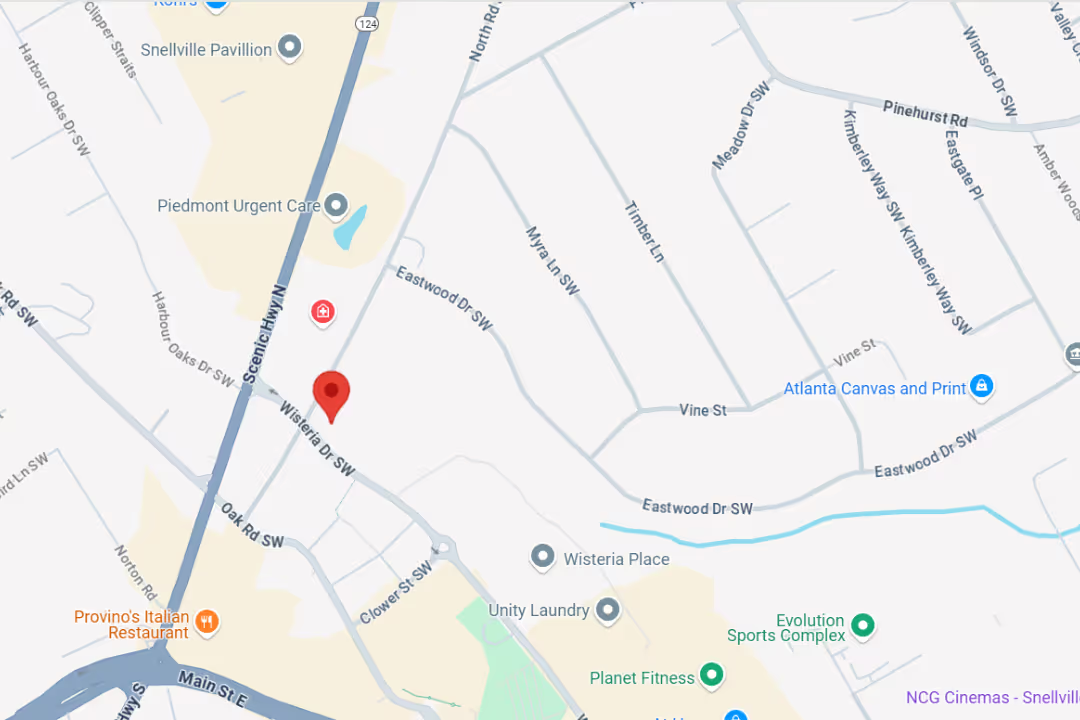
Pain doesn't have to be part of the routine. The team at Medici Orthopaedics & Spine is ready to evaluate your child, answer your questions, and help you understand every available option before making any treatment decisions. We serve families across the Atlanta metro area from our clinics in Kennesaw, Snellville, and Buckhead.
Explore our library of patient support guides covering the conditions we treat, the treatments we offer, and the questions we hear most. Each one is written to help you understand your options and feel confident about your next step. Browse the topics below to learn more, or reach out to our team anytime.

At Medici, you’re more than your MRI.
We take time to hear your story, understand your pain, and create a plan that actually works for you.
Our team delivers specialist care at convenient locations across Metro Atlanta:
Get expert tips on injury recovery, pain relief, joint health, and movement strategies—straight from our Fellowship-Trained team.